







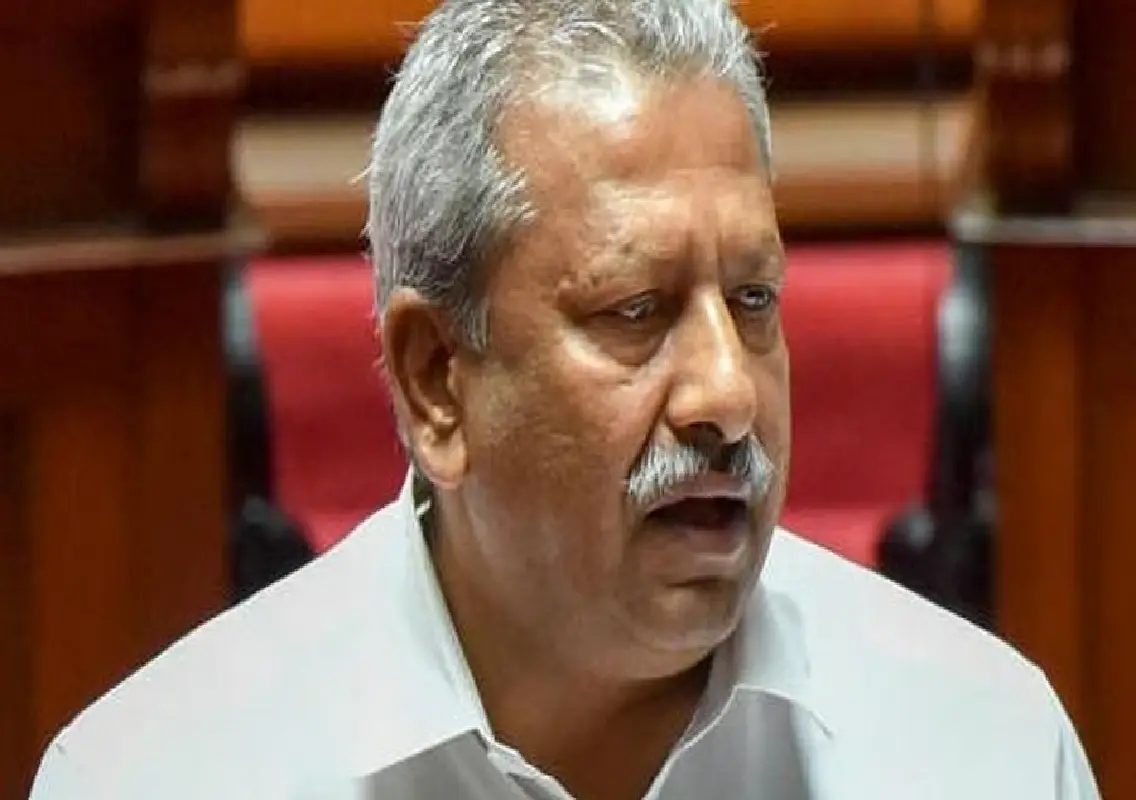


Bengaluru: A special court dealing with cases related to elected representatives on Tuesday rejected the anticipatory bail application filed by BJP MLA Byrathi Basavaraj in the Biklu Shiva murder case, dealing a significant legal setback to the KR Puram legislator.
The order was passed by the special judge after hearing detailed arguments from both the prosecution and the defence. The court had heard extensive submissions during the first half of the day and reserved its order, which was pronounced later. With the rejection of anticipatory bail, Basavaraj now faces the possibility of arrest in connection with the case, which is being investigated by the Criminal Investigation Department (CID).
Background of the case
The case pertains to the murder of Biklu Shiva, a history-sheeter, whose killing has triggered political and legal attention due to the alleged involvement of a sitting MLA. Following the incident, the investigation was handed over to the CID, considering the sensitivity of the matter and the status of the accused.
Basavaraj, who represents the KR Puram constituency, had moved the special court seeking anticipatory bail, arguing that he had been falsely implicated and that there was no direct evidence linking him to the crime. The defence reportedly contended that custodial interrogation was unnecessary and that the MLA was willing to cooperate with the investigation.
Court’s reasoning and prosecution stand
Special Public Prosecutor Ashok Naik, appearing on behalf of the CID, said the court carefully examined the evidence and the sequence of events presented by the investigating agency before rejecting the plea. According to the prosecution, the materials placed before the court indicated the seriousness of the allegations and the need for a thorough investigation.
“The court thoroughly examined the materials and arguments presented by the prosecution and rejected the anticipatory bail plea,” Naik said after the order was pronounced. He added that the CID had placed on record evidence it believed was sufficient to deny pre-arrest protection to the accused at this stage.
The prosecution is understood to have argued that granting anticipatory bail could hamper the investigation, especially in a case involving alleged criminal conspiracy and murder. It also emphasised that custodial interrogation was essential to establish the chain of events and identify the roles of those involved.
Defence arguments
During the hearing, Basavaraj’s counsel is believed to have argued that the MLA’s name had been dragged into the case due to political motives. The defence reportedly maintained that there was no direct eyewitness testimony or forensic evidence conclusively linking Basavaraj to the murder.
The counsel also submitted that as a public representative, Basavaraj had deep roots in society and was unlikely to abscond or tamper with evidence. However, the court was not persuaded by these arguments and chose to side with the prosecution’s submissions.
Legal implications for the MLA
With the rejection of anticipatory bail, Basavaraj is now vulnerable to arrest by the CID. Legal experts note that while he can still approach a higher court for relief, such as the High Court or Supreme Court, the current order significantly strengthens the prosecution’s position.
If arrested, the MLA may seek regular bail after being taken into custody, but that would depend on the progress of the investigation and the court’s assessment of the evidence collected so far.
Political reactions and significance
The development has added to the political heat surrounding the case, as it involves an elected representative from the ruling party in the state. Opposition parties have been demanding strict action and have cited the case as an example of alleged lawlessness and political patronage of criminals.
The BJP, meanwhile, has not issued an official statement immediately after the court’s order. Party sources, however, have indicated that they would wait for the legal process to unfold and respect the judiciary’s decision.
What lies ahead
The CID is expected to move swiftly following the court’s decision. Investigators may proceed with further questioning and possible arrests as part of the probe into the murder. The agency has maintained that it is following evidence-based leads and that no individual, regardless of political position, will be spared if found culpable.
As the case progresses, it is likely to remain under close public and political scrutiny, given the involvement of a sitting legislator and the serious nature of the charges.