







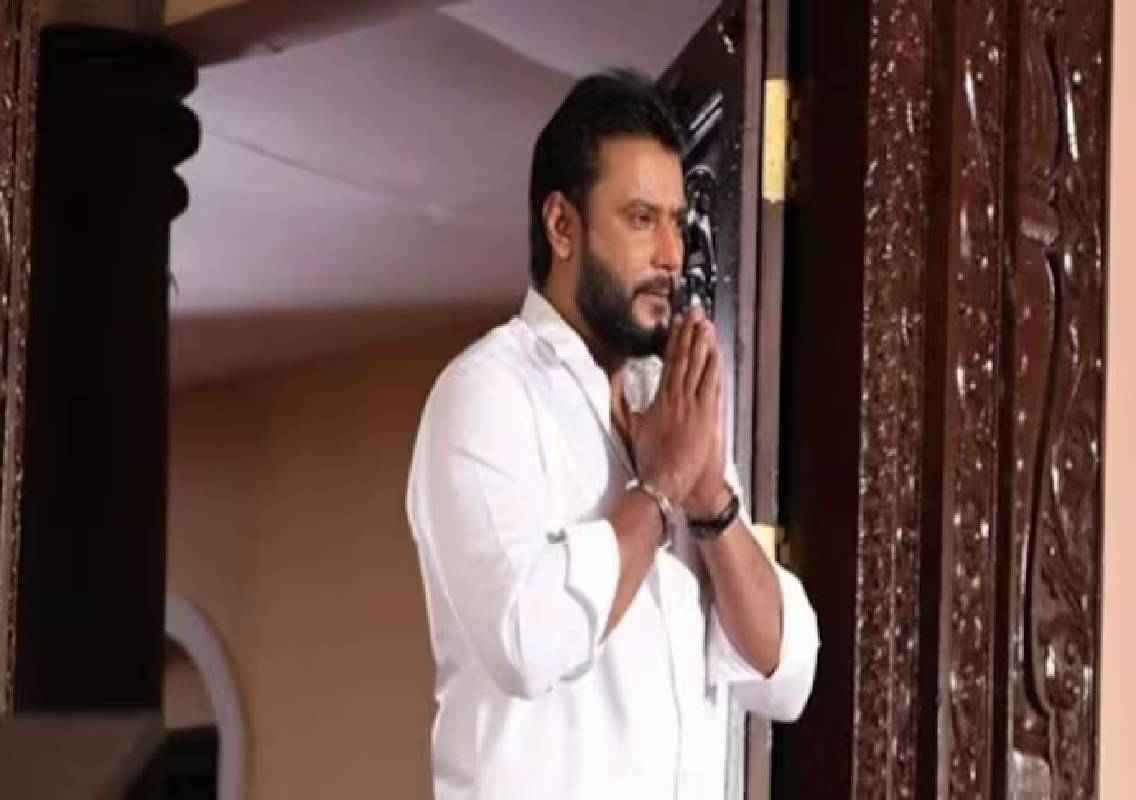


Bengaluru: Kannada actor Darshan Thoogudeepa has suffered a fresh setback in the Renukaswamy murder case after a Bengaluru court allowed co-accused Pradosh S Rao, accused No. 14, to turn approver and become a prosecution witness. The 59th City Civil and Sessions Court granted his plea on August 25, subject to conditions requiring him to make a complete and truthful disclosure of everything he knows about the case.
The development could be significant for the prosecution because Pradosh, who was earlier facing the case as an accused, may now provide evidence against Darshan and other accused persons during the trial. However, his statements and allegations will still have to be tested in court, and the court’s decision to grant him approver status does not by itself establish the guilt of any other accused.
Pradosh will remain in judicial custody during the approver proceedings and has been warned that he could lose the benefit of the pardon if he conceals facts, violates the conditions or gives false evidence.
Bengaluru court accepts Pradosh’s approver plea
The 59th City Civil and Sessions Court in Bengaluru, presided over by Judge Sujatha Madivalappa Sambrani, accepted Pradosh’s application to turn approver in the high-profile case.
Pradosh had approached the court seeking pardon in exchange for making a full disclosure about the circumstances surrounding the alleged murder and the role of the other accused.
The prosecution did not oppose his request, provided he met the legal requirements and made a complete disclosure of the facts within his knowledge.
With the court accepting his application, Pradosh will move from the array of accused to the position of a prosecution witness.
His statement is expected to be recorded subsequently, and his evidence could become an important component of the prosecution’s case.
However, becoming an approver does not mean that every allegation made by him will automatically be accepted as fact. His testimony will remain subject to judicial scrutiny and cross-examination during the trial.
What does turning approver mean?
An approver is generally an accused person who is granted pardon in exchange for providing a complete and truthful account of a crime and the involvement of others.
In this case, Pradosh has agreed to disclose all relevant information within his knowledge concerning the Renukaswamy murder.
The court has specifically made truthfulness a condition of the benefit granted to him. If he deliberately withholds information or gives false evidence, he could lose his approver status and once again face proceedings as an accused.
The court has also warned that violations could lead to separate legal proceedings, including action relating to false evidence.
This makes Pradosh’s future testimony particularly important. He cannot selectively disclose information while withholding facts that could be relevant to the case.
Pradosh to remain in judicial custody
Despite being allowed to become an approver, Pradosh has not been released from custody.
The court has directed him to remain in judicial custody until the relevant legal process is completed, with reports stating that he will remain in custody until the conclusion of the trial.
Pradosh is currently lodged at Parappana Agrahara Central Prison in Bengaluru and appeared before the court through video conference during the proceedings.
The custody condition is significant because approver status does not automatically mean freedom from judicial supervision.
His evidence will be recorded as part of the legal proceedings, while his compliance with the conditions attached to the pardon will remain important throughout the case.
Darshan had opposed the approver move
Darshan had opposed Pradosh’s attempt to become an approver and had sought an opportunity to raise objections before the trial court.
However, the Karnataka High Court earlier rejected Darshan’s challenge.
On August 13, Justice M Nagaprasanna held that a co-accused does not have a right to be heard at the stage when the court is considering whether another accused should be granted pardon and made an approver.
That ruling cleared an important legal hurdle for Pradosh’s application.
The Bengaluru court subsequently considered the plea and accepted it on August 25.
The sequence of developments means Darshan’s legal challenge to the approver proceedings has not prevented Pradosh from becoming a prosecution witness.
Why Pradosh’s testimony could matter
The prosecution’s case could potentially gain an insider account through Pradosh’s testimony.
Unlike an external witness, Pradosh was himself an accused in the case and is alleged to have knowledge of events surrounding the crime.
His application reportedly sought to disclose information concerning the alleged murder, disposal of evidence and the involvement of other accused persons.
Media reports have also carried allegations attributed to Pradosh regarding events surrounding Renukaswamy’s death and what allegedly happened afterwards.
These are allegations contained in the proceedings and will have to be established through evidence.
If his testimony is consistent with other evidence already collected by investigators, it could potentially strengthen the prosecution’s case.
If significant contradictions emerge, the defence will have the opportunity to challenge his credibility during cross-examination.
Allegations against Darshan remain to be proved
Darshan is facing trial in the Renukaswamy murder case along with several other accused persons.
The prosecution has alleged that Renukaswamy, a fan of Darshan from Chitradurga, was abducted and assaulted before his body was found in Bengaluru in June 2024. The prosecution has linked the alleged killing to a dispute involving actress Pavithra Gowda.
Darshan and Pavithra Gowda are among the accused facing trial.
The prosecution’s allegations remain subject to the judicial process. Darshan’s being an accused does not amount to a finding of guilt, and the court will ultimately determine the case based on the evidence presented during the trial.
Pradosh’s decision to become an approver could nevertheless change the dynamics of the prosecution’s case.
Court imposes strict conditions on Pradosh
The court has made it clear that Pradosh’s approver status comes with significant responsibilities.
He is required to disclose the complete truth and all facts within his knowledge about the case, including information concerning other accused persons.
If he fails to comply, the consequences could be serious.
The court has warned that concealing facts or giving false evidence could result in him losing the benefit of approver status. He could then again be treated as an accused in the case.
Separate legal action could also follow if he gives false evidence.
The conditions are intended to ensure that the approver’s testimony is not selectively presented to secure personal benefit.
Prosecution had no objection
The Special Public Prosecutor, Prasanna P Kumar, had indicated that the prosecution had no objection to Pradosh becoming an approver, provided he fulfilled the legal requirements and made a complete disclosure.
Following the court’s decision, Pradosh will now be considered a prosecution witness rather than remaining in the group of accused persons.
The prosecution could use his testimony as part of its evidence during the trial.
However, the court will independently assess the reliability and evidentiary value of his statements.
The prosecution’s agreement to the plea also indicates that investigators and prosecutors see potential value in the information Pradosh claims to possess.
Renukaswamy murder case dates back to 2024
The case relates to the death of Renukaswamy, whose body was found in Bengaluru in June 2024.
According to the prosecution, the 33-year-old Chitradurga resident was allegedly abducted and assaulted before he was killed. Darshan, Pavithra Gowda and other accused were subsequently arrested and charge-sheeted in connection with the case.
The case has remained one of the most closely followed criminal proceedings in Karnataka because of Darshan’s status as a prominent Kannada film actor.
The allegations against the accused have generated considerable public attention, while the court proceedings continue.
The trial will ultimately determine whether the prosecution’s allegations are established beyond the required legal standard.
More accused had sought approver status
Pradosh is not the only accused whose move towards approver status has affected the case.
Earlier this month, reports indicated that multiple accused had approached the court seeking to become approvers. Pradosh was the first among them to pursue the process.
The possibility of additional accused becoming prosecution witnesses could further alter the course of the trial.
If other applications are accepted, the prosecution could potentially gain testimony from more individuals who were allegedly connected to events surrounding the crime.
For the defence, however, the credibility and motives of such witnesses could become major points of challenge.
Darshan’s legal position
Darshan remains an accused in the case and continues to face trial.
The latest court order does not decide his guilt or innocence. Instead, it changes the status of one of his co-accused and potentially gives the prosecution access to new testimony.
The actor’s legal team is expected to scrutinise Pradosh’s statements and the circumstances under which he received approver status.
The defence could challenge inconsistencies, contradictions or any claims that are not supported by independent evidence.
Such scrutiny is a normal part of a criminal trial, particularly when testimony comes from a former accused who has received a legal benefit in exchange for cooperation.
Evidence will be tested during trial
Pradosh’s testimony could attract significant attention once it is formally recorded.
However, the evidentiary value of his statement will depend on several factors, including whether it is consistent, whether it is supported by other evidence and how it withstands cross-examination.
The court will also have to consider the conditions under which his pardon was granted.
If he provides a complete and truthful account, his evidence could become important to the prosecution.
If he is found to have concealed material information or provided false evidence, his approver status could be jeopardised.
A potentially important development for prosecution
The prosecution has already presented its case against Darshan and the other accused through investigation and charge-sheet proceedings.
An approver who was allegedly connected to the accused group could provide information that investigators may use to establish links between different events and individuals.
This does not automatically guarantee a conviction.
Courts require evidence to meet the applicable legal standard, and the defence will have the opportunity to challenge every relevant claim.
Nevertheless, the addition of an insider witness can be significant in a complex criminal case involving multiple accused.
Public interest remains high
The Renukaswamy case has continued to attract widespread attention across Karnataka because of Darshan’s popularity and the circumstances surrounding the alleged murder.
Every major development in the proceedings has generated considerable public discussion.
The decision to allow Pradosh to turn approver is particularly significant because it changes his role from an accused person to a prosecution witness.
The next major step will be the recording of his statement and the subsequent examination of his evidence during the trial.
What happens next?
With the court accepting Pradosh’s plea, the legal process will now move towards recording his statement as an approver.
The prosecution will seek to place his account before the court, while the defence will have the opportunity to test his version through cross-examination.
Pradosh must also continue to comply with the conditions imposed by the court.
His approver status is therefore conditional rather than an unconditional release from the case.
If he remains truthful and fulfils the conditions, he will continue as a prosecution witness. If he violates them or gives false evidence, he could face the consequences outlined in the court’s order.
Conclusion
Bengaluru: The Renukaswamy murder case involving Kannada actor Darshan has taken a significant turn after the 59th City Civil and Sessions Court allowed co-accused Pradosh S Rao to turn approver. He will now serve as a prosecution witness and is required to disclose all facts within his knowledge about the case.
The court has imposed strict conditions, including continued judicial custody and a requirement that Pradosh make a complete and truthful disclosure. If he conceals facts, violates the conditions or gives false evidence, he could lose his approver status and once again face proceedings as an accused.
Darshan had challenged Pradosh’s move, but the Karnataka High Court had already ruled that a co-accused did not have a right to be heard at the stage of considering the pardon application.
Pradosh’s eventual testimony could become an important part of the prosecution’s case, but his allegations will have to be tested through the judicial process. The latest development is therefore a setback for Darshan’s defence, but it does not by itself establish the guilt of Darshan or any other accused.