







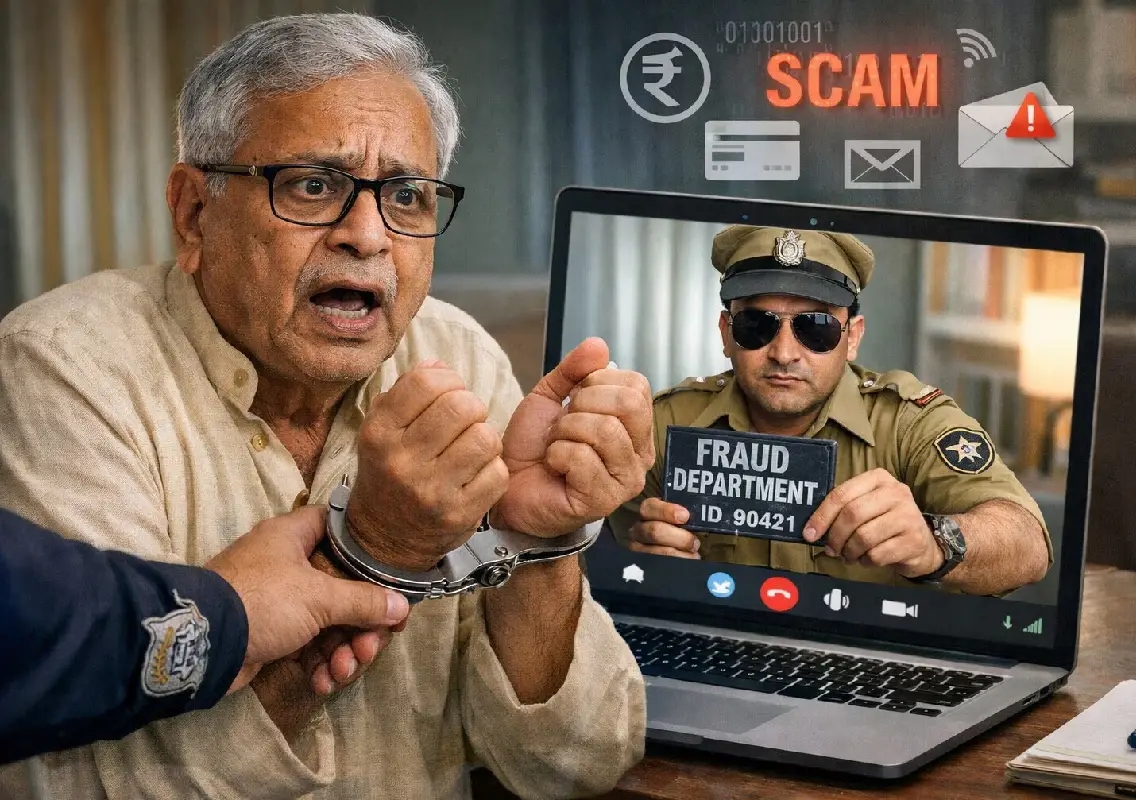


In a disturbing case of cyber fraud, a 74-year-old resident of Domlur was cheated of ₹50 lakh by scammers who staged an elaborate “digital arrest” drama involving fake court orders, threatening video calls and even sending a person to his home to deliver medicine.
The victim, identified as Pratap (name changed), lodged a complaint with the East Division Cyber Crime Police, describing how the fraud unfolded over several days.
Fraudsters pose as officials
According to the complaint, Pratap received a phone call on March 5 from a man claiming to be a telecom official. The caller alleged that Pratap’s mobile number had been linked to a money laundering case and that he was required to undergo an inquiry.
Soon after, the fraudsters initiated a WhatsApp video call and claimed that he was under “digital arrest”, warning him not to inform anyone about the matter.
They sent documents titled “Financial Transaction Committee Order” bearing the letterhead of the Supreme Court of India and claimed the investigation was being conducted by the Central Bureau of Investigation.
The scammers told him that officers were monitoring his movements and that field personnel had been deployed near his home.
Medicine delivery deepens fear
On March 7, Pratap told the callers that he needed to step out to purchase medicine for his blood pressure. The fraudsters insisted that one of their “officers” would deliver it.
Within minutes, a stranger arrived at his residence carrying medicine, reinforcing the scammers’ claim that he was under surveillance. However, Pratap refused to accept it.
Later that morning, the fraudsters arranged what they described as a virtual court proceeding through a video call and told him he would be acquitted if he followed their instructions.
Victim transfers ₹50 lakh
The scammers then pressured him to transfer ₹50 lakh as part of the “court order”. Believing the staged proceedings and threats, Pratap transferred the money through RTGS to an account in the name of Payncare Technologie.
He later realised he had been cheated and contacted his bank, which advised him to call the national cybercrime helpline 1930 and file a complaint.
Police said the victim was alone at home during the incident, as his son works abroad and his wife was away visiting him.
Authorities have begun investigating the case and warned citizens to remain cautious of such digital arrest scams.