







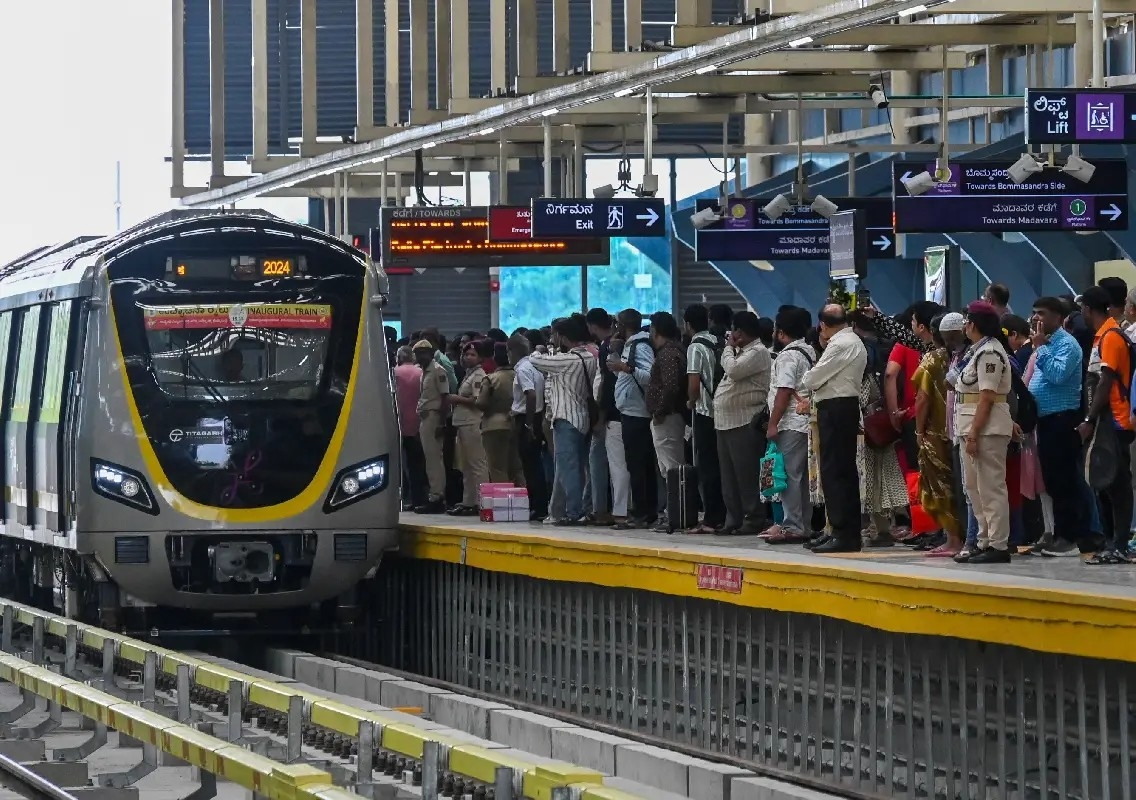


The elevation of DK Shivakumar to Karnataka’s top office has raised hopes of faster progress for Namma Metro, one of Bengaluru’s most important infrastructure projects aimed at easing the city’s growing traffic woes.
Having previously served as Bengaluru Development Minister, Shivakumar played a key role in overseeing metro expansion and introducing major initiatives, including the concept of double-decker viaducts for future metro corridors. Sources familiar with the project believe his leadership could help accelerate pending works through quicker decisions and better coordination among agencies.
Key metro deadlines ahead
A major challenge before the new leadership is meeting the target of adding 41.01 km to Bengaluru’s metro network by December 2026. This includes the completion of the 21.26-km Pink Line and the 19.75-km Blue Line Phase 2A.
While Bengaluru added only 26.44 km of metro lines over the past three years, officials believe Shivakumar’s direct involvement could help remove bottlenecks and speed up execution.
Push for Phase 3 and Phase 3A
Attention is also focused on Metro Phase 3 and Phase 3A projects. Phase 3 includes two major corridors spanning more than 44 km, while Phase 3A proposes the 36.59-km Sarjapur-Hebbal line.
Officials say Shivakumar’s strong rapport with the Union government may help secure pending approvals and clearances required for these projects.
Funding support remains crucial
During his tenure as Bengaluru Development Minister, Shivakumar ensured that Bangalore Metro Rail Corporation Limited (BMRCL) received additional financial support to meet project costs and loan repayment obligations. This assistance proved significant amid financial pressures and revised project estimates.
However, experts caution that long-term success will depend not only on political support but also on structural reforms within BMRCL. Some believe appointing a long-term technocrat to lead the organisation could improve project delivery and operational efficiency.
As Bengaluru continues to grapple with traffic congestion, citizens will be watching closely to see whether the renewed political focus translates into faster metro expansion on the ground.