







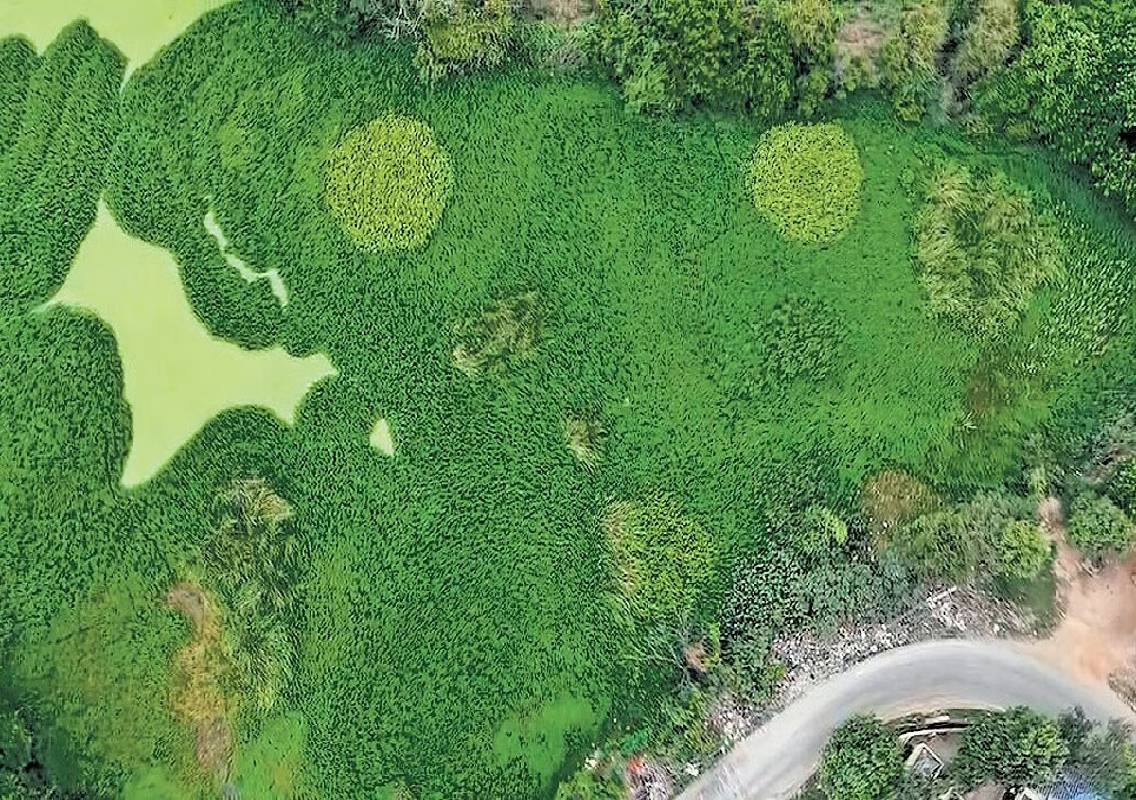


Bengaluru: The prolonged dry spell that affected large parts of the city in recent months has unexpectedly turned into an advantage for environmental restoration efforts, allowing Bengaluru-based organisation SayTrees to revive two key water bodies Krishna Sagara Lake in Yelahanka and Valagere Kallahalli Lake near Sarjapura.
While recent rainfall has brought relief to Bengaluru residents after weeks of arid conditions, conservationists say the dry weather created ideal conditions for large-scale restoration work that would have otherwise been difficult during the monsoon season.
Dry weather created ideal restoration conditions
According to SayTrees co-founder Deokant Payasi, reduced water levels during the dry spell made restoration activities significantly easier and more effective.
He explained that lower water levels improved access to the lake beds and reduced the challenges associated with dewatering and water diversion processes. The dry terrain also enabled smooth movement of heavy machinery required for earthwork and bund strengthening activities.
“The dry spell was critical because it allowed uninterrupted access to the lake area before the arrival of monsoon rains,” Payasi said.
Environmental experts often consider summer and dry months the most suitable period for lake rejuvenation projects, especially in urban regions where waterlogged terrain can delay restoration work.
Krishna Sagara Lake faced boundary issues
The restoration of Krishna Sagara Lake in Yelahanka encountered initial hurdles due to the absence of clearly marked lake boundaries.
According to SayTrees co-founder Kapil Sharma, this created concerns among sections of the local community and delayed certain phases of the work. The issue was later resolved after the concerned department formally demarcated the lake boundaries.
Another challenge emerged from natural groundwater seepage at the site. While conservationists considered this a positive ecological sign indicating healthy underground water movement, it complicated the engineering work.
“Groundwater seepage was beneficial for the lake’s long-term health, but it required additional intervention during bund and revetment construction because the lake would refill overnight and had to be dewatered again,” Sharma explained.
Despite the technical challenges, restoration teams continued work to improve the lake’s storage capacity and ecological sustainability.
Valagere Kallahalli Lake required sensitive handling
The restoration work at Valagere Kallahalli Lake near Sarjapura presented a different set of complexities. The lake shares part of its boundary with a graveyard, requiring the restoration work to be carried out with additional sensitivity and care.
Project teams reportedly coordinated closely with local stakeholders to ensure that the work did not disturb surrounding areas or create social concerns.
Sharma also pointed out that external economic and weather-related factors affected the pace of the project. Rising fuel prices and unexpected weather interruptions had an impact on budgeting and execution schedules.
“External factors such as fuel price fluctuations, along with weather delays, influence both project costs and timelines,” he noted.
Wildlife protection remained a key focus
The lake restoration activities were carried out in coordination with officials from the Karnataka Forest Department to ensure that wildlife conservation protocols were followed throughout the process.
Officials and volunteers encountered several species during restoration activities, including pond terrapins, snakes and other reptiles living in and around the lakes.
According to Payasi, rescue measures were implemented to safely relocate the animals without causing ecological harm.
“Animals encountered during restoration activities were safely rescued and either released into suitable environments or handed over to organisations such as People For Animals,” he said.
Conservationists stressed that urban lake restoration projects must balance infrastructure work with biodiversity protection, especially in cities like Bengaluru where lakes act as important ecological habitats.
Bengaluru’s lakes under growing pressure
Bengaluru’s lakes have faced increasing pressure over the years due to rapid urbanisation, encroachment, sewage inflow and declining groundwater levels. Environmental groups have repeatedly warned that neglecting urban water bodies could worsen flooding, water scarcity and ecological degradation.
Organisations such as SayTrees have been actively involved in reviving lakes across the city through desilting, bund strengthening, afforestation and community participation programmes.
Experts believe restored lakes can play a crucial role in improving groundwater recharge, supporting biodiversity and reducing urban heat during extreme weather conditions.
Conclusion
The recent dry spell, though challenging for residents, provided a crucial opportunity for environmental restoration teams to carry out large-scale rejuvenation work at two important Bengaluru lakes. With restoration efforts continuing alongside wildlife conservation measures, the projects highlight the growing importance of sustainable urban water management in the city.