









The adage “It takes a village to raise a child” has long reflected the collective role of family, neighbours, and community in nurturing a child. But as family structures, migration patterns, and social interactions evolve, experts say the idea of a “village” itself is undergoing a transformation.
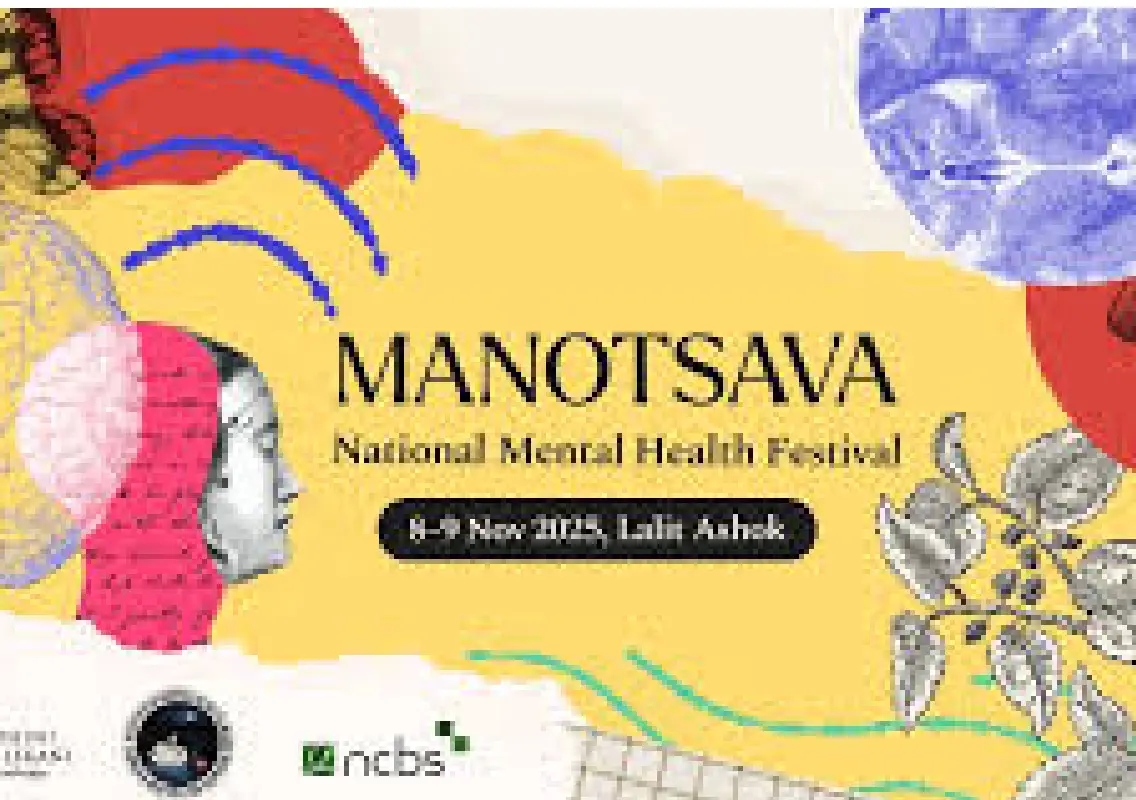
At the first day of Manotsava, the national mental health festival organised by Rohini Nilekani Philanthropies, NIMHANS, and the National Centre for Biological Sciences (NCBS) on Saturday, mental health professionals explored how modern parents are now building their own “villages” — often virtual — to navigate the psychological and emotional complexities of parenting.
Matrescence and maternal mental health
Speaking at a panel titled “Maternal Health, Unfiltered: Strain, Stories, and Studies”, Dr Prabha Chandra, professor and head of psychiatry at NIMHANS, explained the concept of matrescence — the period of physical, psychological, and emotional transformation during pregnancy, childbirth, and postpartum.
“Matrescence brings brain changes similar to adolescence,” Dr Chandra said, adding that this makes women more vulnerable to depression, anxiety, and other mental health challenges.
She pointed out that the demands of motherhood often heighten stress levels. “When we conduct cognitive tests, mothers often perform worse at home than in labs,” she noted. “It’s not because their ability decreases, but because of the constant pressure and multitasking expected of them in their domestic environment.”
Dr Chandra emphasised the need for greater recognition of this phase and for social systems that support mothers during and after childbirth.
Cultural expectations and guilt in modern motherhood
Poornima Mahindru, clinical psychologist at The Green Oak Initiative, discussed how cultural expectations around motherhood play a dual role — offering structure and community on one hand, but also creating guilt and emotional strain on the other.
“In migrant-heavy cities like Bengaluru, Delhi, and Mumbai, many women navigate motherhood in isolation,” Mahindru said. “Without family or elders around to validate their experiences, they often face dilemmas about how they ‘should’ mother — a conflict that can fuel anxiety and depression.”
She added that while cultural narratives in India still uphold the image of the self-sacrificing mother, the realities of nuclear families, work pressures, and urban living demand a new understanding of what support means for mothers today.
Choosing new ‘villages’ — from caregivers to online communities
Bakul Dua, clinical psychologist and founder of Mommy Mix Tape, highlighted the evolution of parenting support networks in the digital age. “I don’t think many children today are growing up with their grandparents,” she observed. “But there’s been a welcome change — parents are consciously choosing their own villages, even if that means hiring caregivers or building online communities.”
Dua said these virtual groups — from social media networks to dedicated parenting forums — now play a major role in offering emotional support, practical advice, and solidarity. “They may be digital, but they serve the same purpose as traditional communities did — sharing experiences and easing the loneliness of motherhood.”
She added that the rise of paid caregiving networks and professional childcare services has also redefined how mothers seek help. “It’s not a sign of failure but an adaptation — a reflection of changing social realities,” Dua said.
Government explores virtual support for mothers
Dr Chandra also revealed that the government has begun recognising the value of virtual support systems for maternal mental health. “The Prime Minister’s Office recently reached out to explore virtual interventions for communities of mothers, especially in rural areas,” she said.
Experts at the event underscored that while digital communities cannot replace in-person care, they can significantly reduce isolation, particularly for new mothers in remote or migrant settings.
The broader message of Manotsava
The Manotsava festival, which brings together researchers, clinicians, and the public, focuses on promoting awareness around mental health through talks, art, and interactive sessions. This year’s edition is especially centred on maternal and child mental health, highlighting the need for empathy-driven policies and inclusive social ecosystems.
Panelists agreed that as society modernises, parents — especially mothers — must be supported by new forms of “villages” that blend traditional values of care with contemporary tools of connection.
“Motherhood is not just about raising a child; it’s also about nurturing the mother,” Dr Chandra said. “Whether through extended families, peer groups, or online communities, the village must continue to exist — even if it looks different today.”