







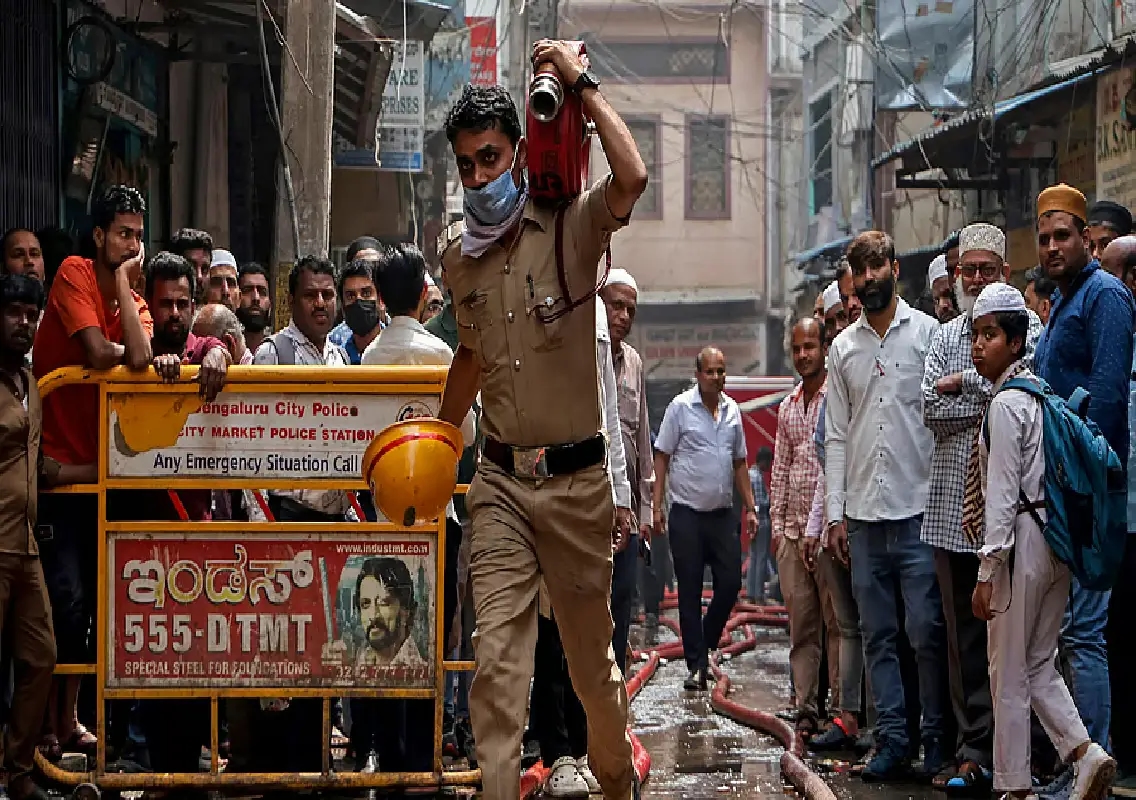


Bengaluru: The historic Pete areas of Bengaluru — including Chickpet, Thigalarapet, Nagarthpet and Kumbarpet — are known for their bustling wholesale markets dealing in hardware, electrical and plastic goods. Every day, thousands of traders, labourers, transporters and shoppers crowd the narrow lanes lined with ageing multi-storey buildings packed with merchandise.
However, repeated fire incidents have raised serious concerns about safety standards and preparedness in these densely built commercial pockets.
On Wednesday morning, a massive blaze destroyed 21 shops housed in a three-storey building in Kumbarpet. Though no casualties were reported in the latest incident, it has once again highlighted the vulnerability of these tightly packed localities to fire hazards.
Series of fire incidents
The recent blaze is not an isolated occurrence. In August 2025, a tragic fire on the ground floor of a five-storey building in Rajanna Lane, located in Nagarathpet, claimed the lives of a family, including two children. The narrow bylanes and congested structures hampered evacuation and rescue efforts during that incident.
Officials say the structural pattern of the Pete areas — buildings constructed wall-to-wall with minimal ventilation and limited emergency exits — significantly increases the risk during fires.
A senior police officer from Halasuru Gate police station observed that in the event of a blaze, smoke can engulf entire structures within minutes, trapping occupants inside. Customers and workers on upper floors may find staircases filled with smoke, while those in storage areas often have little space to escape.
Firefighting challenges in narrow lanes
Fire officials admit that responding to emergencies in the Pete areas poses operational difficulties. Jayaramaiah PS, Chief Fire Officer, Bengaluru East Zone, said fire tenders often struggle to enter the congested lanes.
“In several incidents, firefighting vehicles could not reach the exact spot. Fire personnel had to drag hoses over long distances to control the flames,” he said.
The narrow roads, frequent traffic congestion and encroached footpaths further complicate access for emergency vehicles. During peak business hours, movement becomes even more restricted, raising fears that a major blaze could result in heavy casualties.
Overload and unsafe storage
Traders operating in the area acknowledge that electrical overload and improper storage practices are common. Many buildings house bulk quantities of inflammable materials such as plastic goods, packaging materials and electrical components.
Local traders point out that in several buildings, goods are stacked up to ceilings without adequate spacing. Ageing electrical wiring and overburdened circuits further add to the danger.
Sundar Abhimanyu, a resident of Kumbarpet, said poor ventilation, bulk storage of inflammable materials and limited access for emergency vehicles have turned parts of the area into a potential fire trap. He added that encroachment of footpaths and roads by shopkeepers displaying goods leaves little room for pedestrians, let alone firefighting vehicles.
Need for stricter enforcement
Authorities have indicated that regular inspections are carried out, but enforcement remains a challenge in such a densely populated commercial zone. Fire officials stress the importance of compliance with fire safety norms, including installation of extinguishers, functional alarms, clear exit pathways and proper electrical maintenance.
Urban planners note that the Pete areas were originally designed decades ago for lower commercial loads. Over time, rapid expansion of trade and storage without corresponding infrastructure upgrades has increased vulnerability.
Traffic police have also been urged to take stricter action against illegal parking and encroachments to ensure that emergency vehicles can pass through without delay.
Balancing heritage and safety
The Pete markets are an integral part of Bengaluru’s trading history and contribute significantly to the city’s wholesale economy. However, repeated fire incidents underscore the urgent need for coordinated measures involving traders, civic authorities, fire services and police.
Experts suggest a comprehensive fire audit of all major commercial buildings in the area, coupled with awareness drives for traders and workers on emergency response procedures.
As investigations continue into Wednesday’s blaze that destroyed 21 shops, the broader concern remains: without structural upgrades and stricter adherence to safety norms, the risk of another major incident looms large.
Ensuring the safety of thousands who work and shop daily in these historic markets will require sustained enforcement, infrastructural improvements and collective responsibility from all stakeholders.