







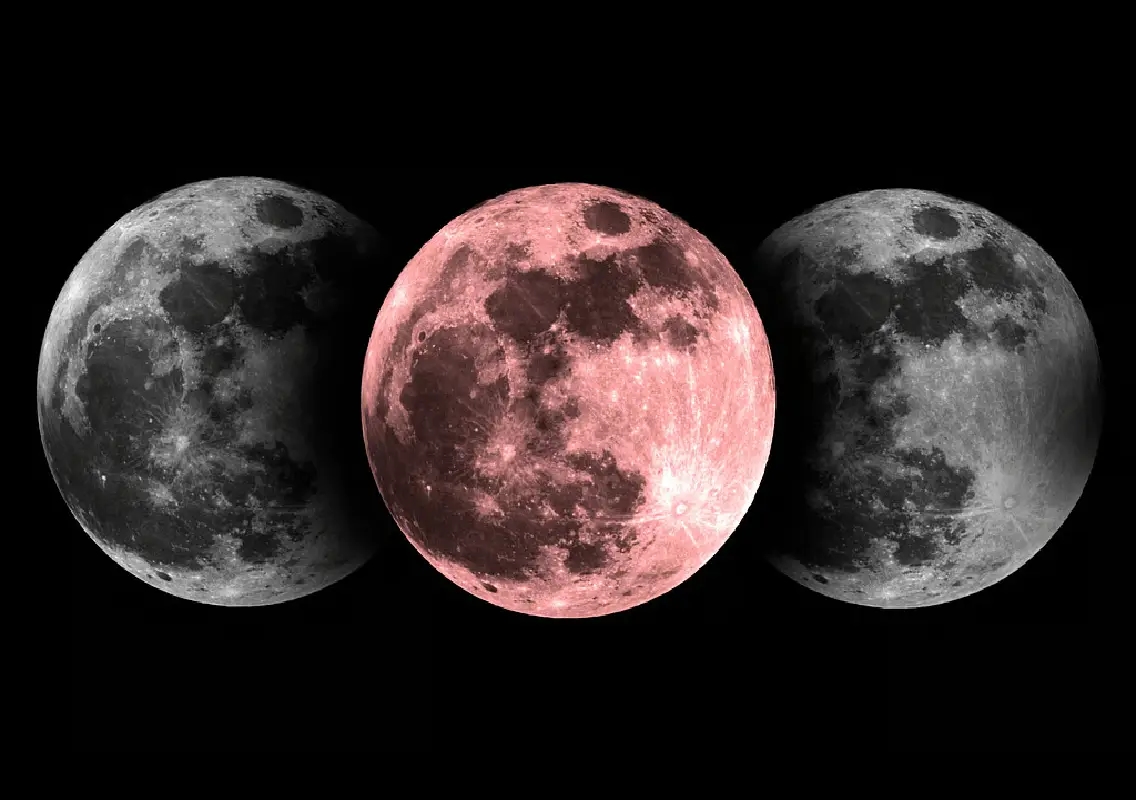


Bengaluru: A civil society group in Bengaluru is set to organise a food festival on March 3 to challenge long-held superstitions associated with lunar eclipses, particularly the belief that people should refrain from eating during the celestial event.
The programme is being organised by the Moodanambike Virodhi Okkoota (Anti-Superstition Federation) with the stated aim of promoting scientific temper and dispelling food-related taboos linked to eclipses.
The lunar eclipse on March 3 is expected to be visible in several parts of the world, including North and South America, Europe, Africa and East Asia. In India, at least a partial phase of the eclipse is likely to be visible, subject to local weather conditions.
Challenging traditional beliefs
T Narishma Murthy, a human rights activist and one of the organisers, said that many people continue to follow eclipse-related superstitions without understanding the scientific reasoning behind the phenomenon.
“Pandits say that during the eclipse, no one should eat or step outside, especially pregnant women. Superstitions are believed without understanding the scientific reasoning,” he said.
According to traditional beliefs observed in many households, food cooked before an eclipse is considered impure unless certain rituals are performed. Some families avoid cooking or eating altogether during the eclipse period. Pregnant women are often advised to remain indoors and refrain from routine activities.
Murthy questioned the practical implications of such beliefs. “What would a woman do if she is about to give birth and is told not to go to the hospital? Both the mother and child could be in danger. Who will take responsibility if something happens to them?” he asked.
He added that the objective of the event is not to hurt religious sentiments but to encourage rational thinking and evidence-based understanding of natural events.
A range of dishes on the menu
Organisers said that a variety of food items will be served during the eclipse period to symbolically counter the taboo against eating. The menu includes egg biryani, vegetable biryani, holige (sweet), samosas, fruits, biscuits and black tea, among other refreshments.
The event is expected to draw activists, students and members of the public who support the idea of promoting scientific awareness.
Dalit Sangharsh Samiti (DSS) state general coordinator Mavalli Shankar said that the food festival has been organised during previous eclipses as well.
“The food festival is celebrated during every solar and lunar eclipse; this is not the first time,” he said, indicating that the initiative has become a recurring feature during such astronomical events.
Mixed responses from citizens
However, not everyone agrees with the approach. Vishrutha R, a postgraduate student from Bengaluru, said she continues to follow religious customs associated with eclipses as instructed by her family.
“I follow the religious aspects as instructed by my parents,” she said. “Before the eclipse, we add dried grass to raw food, and the grass is removed while cooking food, so that it is not affected during the eclipse. I usually finish eating before the eclipse begins.”
Her response reflects the coexistence of scientific awareness and traditional practices in many Indian households, where cultural customs are observed alongside modern education.
Promoting scientific temper
India’s Constitution encourages the development of scientific temper, humanism and the spirit of inquiry and reform among citizens. Activist groups such as Moodanambike Virodhi Okkoota argue that questioning superstitions is part of fulfilling that constitutional vision.
At the same time, organisers emphasise that participation in the festival is voluntary and that the aim is dialogue rather than confrontation.
As the lunar eclipse approaches, the event is likely to spark conversations about faith, tradition and science in a city known for its educational institutions and vibrant civil society.
Whether attendees come out of curiosity, conviction or solidarity, the food festival represents an effort to turn a moment of celestial significance into an opportunity for critical thinking and public engagement.