







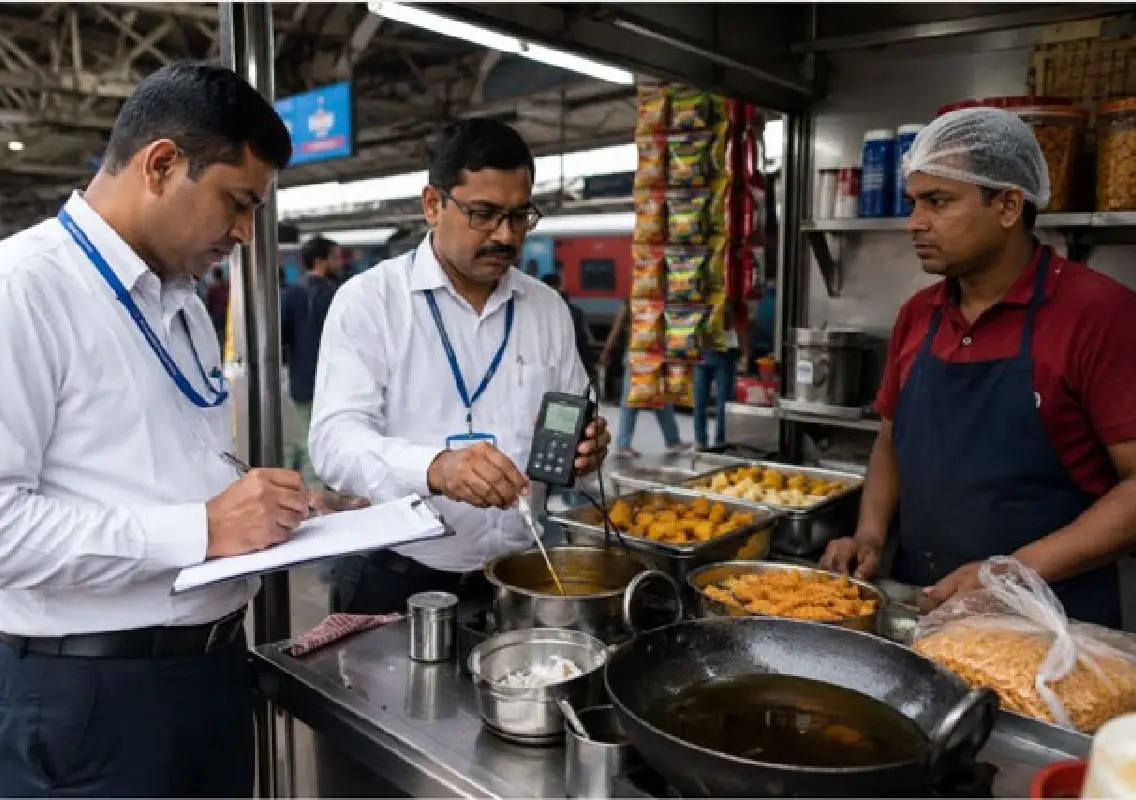


Bengaluru: Special food safety inspections at railway stations across Karnataka have uncovered several violations, including suspected use of non-permitted colours, expired dairy products, unhygienic food preparation, improper storage and fungal growth in vegetables.
The Food Safety and Drug Administration department conducted inspections at 112 food establishments across 36 railway stations on Thursday as part of a special drive to check the quality and safety of food supplied to railway passengers.
The inspections covered railway pantries, hotels, catering establishments, food outlets and food served on trains.
Non-permitted colours detected in sweets
Officials reportedly detected suspected use of non-permitted colours in food products during the inspections.
Yellow colour was reportedly found in jalebi, while pink colour was detected in khova peda.
The use of unauthorised food colours can pose health concerns and is subject to food safety regulations. Officials are examining the violations and are expected to initiate action against food business operators found to have breached prescribed standards.
Expired dairy products were also detected during the inspections. Expired curd and packets of standardised milk were reportedly found at a railway station in Haveri district.
The findings have prompted officials to step up scrutiny of food products being sold to passengers at railway stations.
Unhygienic conditions found at outlets
At Krishnarajapuram Railway Station, an associated hotel was reportedly found operating under unhygienic conditions.
Inspection teams also identified problems with food preparation and storage at other locations.
At Mysuru Railway Station, officials reportedly found idlis being prepared using plastic material. Expired food products were also found in the kitchen.
The use of unsuitable materials in food preparation and the presence of expired products have raised concerns over hygiene and food safety practices at railway catering establishments.
Officials are expected to take action against establishments found violating the prescribed requirements.
Fungal growth found in vegetables
The inspection teams also found fungal growth on onions and other vegetables at some locations.
Chutney was reportedly being stored in plastic buckets that were considered unsuitable for food storage.
The findings indicate violations at different stages of food handling, from the storage of raw materials to the preparation and serving of cooked food.
The Food Safety and Drug Administration department said railway authorities and designated officials would be informed about the violations.
Legal action will be initiated against food business operators found to have violated food safety requirements, the department said.
Major railway stations inspected
The special inspection covered several important railway stations across Karnataka.
These included KSR Bengaluru, Yeshwanthpura, Krishnarajapuram, Yelahanka, Mysuru, Haveri, Udupi, Koppal, Gadag, Davanagere, Bagalkote, Karwar, Yadgiri, Kadur, Ballari, Hosapete, Hubballi and Mangaluru.
The wide-ranging inspection was aimed at checking food establishments operating at railway stations as well as catering services associated with trains.
The drive comes amid increased focus on food safety at public transport facilities, where large numbers of passengers depend on railway catering outlets for meals and refreshments.
South Western Railway launches 14-day drive
Meanwhile, South Western Railway (SWR) has launched an intensive 14-day Special Food Safety Drive across its divisions in accordance with directives issued by the Railway Board.
The drive focuses on several aspects of railway catering, including hygiene and cleanliness, validity of FSSAI licences, expiry dates of food products and food-handling practices.
SWR’s monitoring network covers 428 catering establishments across its Bengaluru, Mysuru and Hubballi divisions.
The network includes 34 major units, 272 minor units, 122 IRCTC units, 38 pantry cars and key base kitchens.
The railway authorities are monitoring these establishments to ensure that food served to passengers meets the prescribed safety and hygiene standards.
271 inspections conducted in 2026-27
During 2026-27 up to July, railway food safety officers conducted 271 inspections.
Officials issued 29 improvement notices during this period and collected 170 food samples for testing.
Statutory proceedings were initiated against three samples that were found to be unfit.
The inspections form part of the railway administration’s continuing efforts to monitor catering establishments and take action when violations are detected.
SWR has also provided details of enforcement action taken during the previous financial year.
Surprise inspections and penalties
During 2025-26, SWR conducted 4,373 surprise inspections at catering establishments and imposed penalties totalling Rs 5.22 lakh.
A further 1,377 inspections conducted up to July this year resulted in penalties of Rs 64,000.
According to SWR, irregularities such as improper storage, unauthorised packaging, use of unapproved food colours and sale or storage of expired food products can attract show-cause notices and financial penalties.
In serious cases, contracts with catering and vending operators can also be terminated under the applicable provisions.
The enforcement measures are intended to ensure that food operators maintain hygiene and comply with licensing and food safety requirements.
Railway authorities promise strict action
SWR Chief Public Relations Officer Manjunath Kanamadi said railway authorities remained committed to maintaining high standards of food safety and hygiene.
He said strict action would be taken against vendors who failed to meet the prescribed requirements.
The latest inspections have highlighted the need for continuous monitoring of railway food outlets, particularly because passengers may have limited choices when purchasing food during train journeys.
With food safety teams now carrying out inspections at stations across the state and SWR conducting its own 14-day drive, authorities are expected to continue monitoring catering and vending establishments.
The findings also reinforce the importance of proper food storage, hygienic preparation, valid licences and adherence to approved food safety standards.
Further action against establishments where violations were detected is expected following examination of the inspection findings and food samples.