







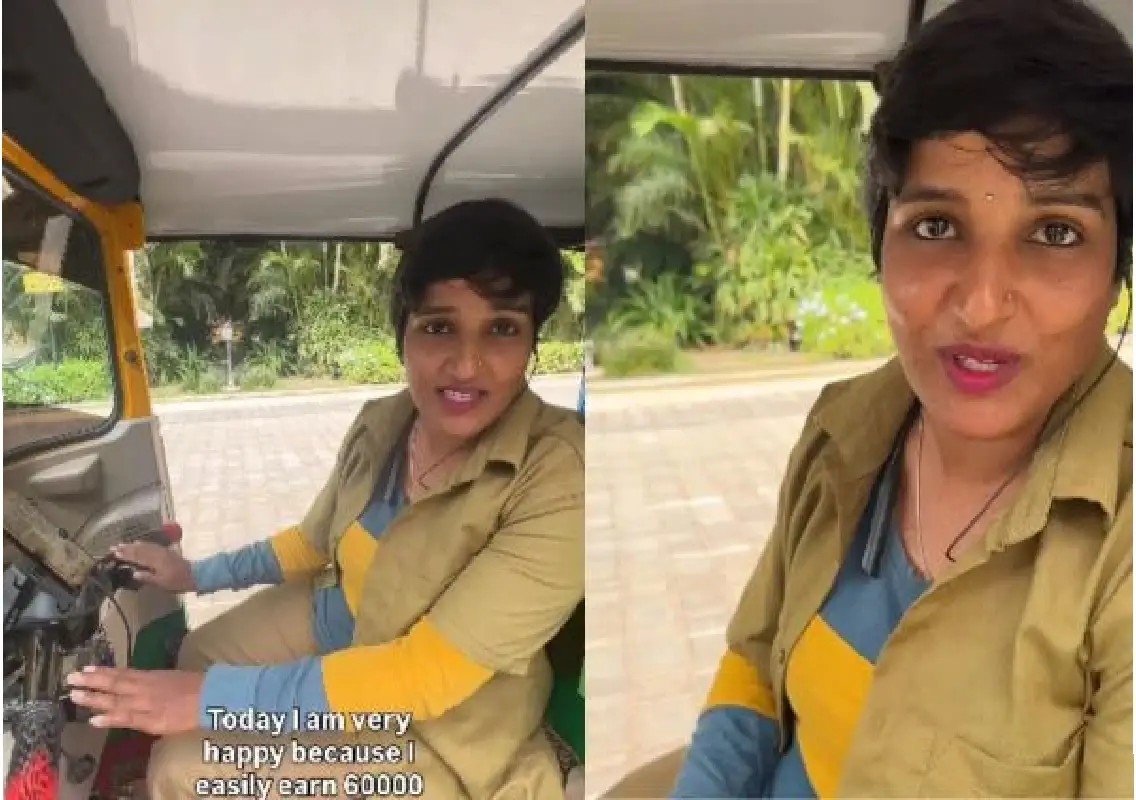


Bengaluru: A woman who left behind a well-paying corporate career in the information technology sector to become an auto-rickshaw driver has captured widespread attention on social media. Her unconventional career shift, driven by a desire for a healthier work-life balance and reduced stress, has sparked conversations about personal happiness, career choices and the pressures of corporate life.
The woman’s story has resonated with many professionals who relate to the challenges of managing demanding work schedules while maintaining personal well-being.
Corporate stress prompted career change
According to reports, the woman was employed in the IT sector and was earning an attractive salary package. However, she reportedly experienced significant mental stress due to the demands of her job and found it increasingly difficult to maintain a balance between her professional responsibilities and personal life.
Over time, the pressure associated with corporate work reportedly began affecting her quality of life. Seeking greater flexibility and peace of mind, she made the decision to leave her job and explore an alternative source of livelihood.
Rather than pursuing another corporate role, she chose to become an auto-rickshaw driver, a profession that offered her greater control over her working hours and daily routine.
Earning steady income with greater freedom
The woman stated that her decision has enabled her to enjoy a more balanced lifestyle while continuing to earn a stable income.
According to her, she now earns around ₹60,000 per month through auto-rickshaw driving. More importantly, she says the profession allows her to decide her own schedule and spend more time focusing on personal priorities.
Reflecting on her journey, she explained that the constant struggle to manage work-related stress and personal commitments had become exhausting. The move away from corporate employment was motivated by a desire to live a simpler and more peaceful life.
She said she is now happier with her daily routine and enjoys a greater sense of satisfaction than she experienced in her previous role.
Story goes viral on social media
The woman’s story gained widespread attention after a video featuring her experiences began circulating on social media platforms.
Many users praised her decision to prioritise mental well-being and personal happiness over societal expectations regarding career success. Several commenters described her move as courageous, noting that it challenged conventional perceptions about professional achievement and financial security.
The viral nature of the video has sparked broader discussions about the evolving definition of career success, particularly among younger professionals seeking a better balance between work and personal life.
Netizens discuss work-life balance
The story prompted numerous reactions from social media users, many of whom shared their own experiences with workplace stress.
One user remarked that despite spending nearly 18 years in the IT industry, endless meetings, urgent conference calls and constant work pressure continue to create stress and fatigue.
Others suggested that the woman’s decision reflected a growing desire among professionals to prioritise quality of life over high salaries and prestigious job titles.
Some users speculated that she may have accumulated significant savings during her corporate career, which could have provided financial security while transitioning to a different profession. However, no official information regarding her financial background has been disclosed.
Changing perceptions of career success
Experts have increasingly observed that conversations around work-life balance, mental health and career satisfaction are becoming more prominent in modern workplaces.
While corporate careers continue to offer attractive salaries and growth opportunities, many professionals are reassessing what constitutes long-term success and personal fulfilment.
The Bengaluru woman’s journey has become a talking point because it highlights a growing trend where individuals are willing to explore unconventional career paths if they believe such choices will improve their overall quality of life.
Her story serves as a reminder that career decisions are often shaped not only by income and status but also by personal happiness, flexibility and mental well-being. As discussions continue online, many users have viewed her experience as an example of choosing peace of mind over professional prestige.