







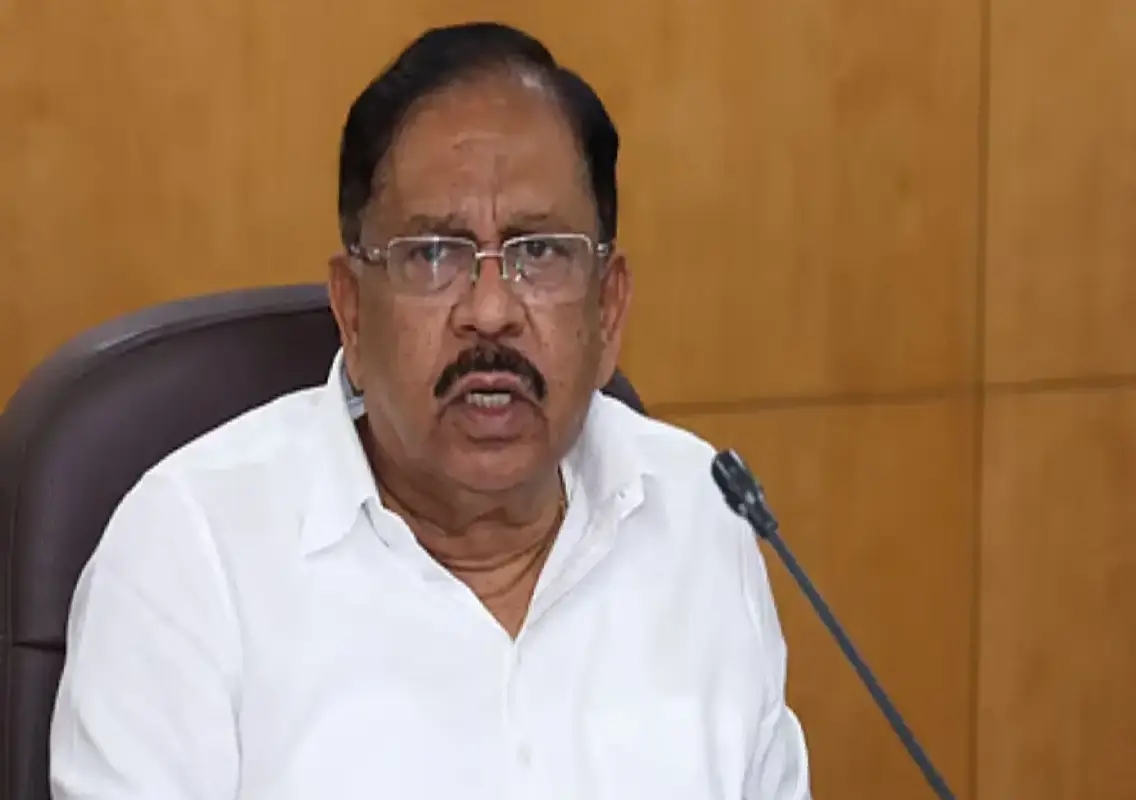


Bengaluru: Around 80 per cent of Karnataka’s population — roughly 5.6 crore people — have been covered under the ongoing socio-economic and educational survey, popularly referred to as the caste census, according to Home Minister G. Parameshwara. Addressing reporters in Bengaluru on Monday, the minister said that the remaining population will soon be enumerated with the cooperation of local residents.
“Enumeration has been done for about 80 per cent of the population. Some districts are moving slowly, and they need to complete their work before October 7,” Parameshwara said, adding that the exercise is progressing steadily despite logistical challenges.
Possible extension of survey deadline
The minister indicated that the survey deadline — currently set for October 7 — might be extended depending on the chief minister’s decision. “The Chief Minister is reviewing the situation, and I am unsure whether they may extend the process for a few days to complete it. It has to be completed; there’s no option for us,” Parameshwara told the media.
The state government launched the comprehensive enumeration on September 22, aiming to collect data on the social, educational, and economic status of roughly seven crore residents.
A special team led by Madhusudan Naik, along with five members, has been tasked with coordinating data collection across districts, covering an estimated 50,000 households per day.
Addressing objections and public concerns
Responding to objections raised in various districts, Parameshwara maintained that the enumeration must be completed to ensure accurate representation in policymaking. “Yes, objections were raised by many people, but 80 per cent of the population has already participated. If the remaining 20 per cent cooperate, we will complete it,” he asserted.
The Home Minister reiterated that the survey is crucial for understanding the real socio-economic conditions across communities and for future welfare planning.
Villagers in Shivamogga boycott survey over connectivity
Earlier in the day, residents of four villages in Sagar taluk of Shivamogga district — Barur, Kallukoppa, Theppagodu, and Mulukeri — boycotted the survey, citing the absence of BSNL network connectivity. Villagers protested outside the Barur Gram Panchayat office, demanding installation of a mobile tower before participating in the census.
Shashikumar, a resident of Barur, said the boycott was not against the survey itself but against the government’s failure to address long-pending demands for basic connectivity. “We are not opposing the survey, but we have been asking for a network tower for over three years. Without it, even digital enumeration becomes impossible,” he said.
Authorities have assured the villagers that talks are underway with BSNL officials to resolve the issue soon, though residents have refused to cooperate until a permanent solution is found.
Deputy CM defends survey amid criticism
Deputy Chief Minister D.K. Shivakumar also defended the ongoing enumeration, stating that the earlier caste census conducted in Karnataka was “inaccurate,” prompting the government to commission a new and detailed survey.
“Anyone may express objections to the caste census. However, this survey needs to be conducted — even the court has said so. There is no meaning in opposing it,” Shivakumar said on Sunday.
He added that the government is committed to completing the enumeration fairly and transparently, ensuring that no section of society is misrepresented.
Background: Push for accurate caste data
The ongoing survey follows the state government’s October 2024 decision to establish a one-person commission to study internal reservations for Scheduled Castes (SCs). The commission, headed by a retired High Court judge, was tasked with reviewing available data and advising the government on equitable implementation of reservations.
The fresh socio-economic and educational survey is expected to provide critical data to guide future policies on social justice, welfare distribution, and reservation structures.
Officials said that while the majority of districts have achieved significant progress, rural and hilly areas have faced challenges related to network connectivity, accessibility, and public apprehension regarding data privacy.
Conclusion
With 80 per cent of Karnataka’s population already covered, the government remains optimistic about completing the survey within the next few days. However, factors like rural resistance, digital challenges, and field-level coordination continue to test the administrative machinery.
The final decision on extending the deadline is expected to be taken by Chief Minister Siddaramaiah after reviewing district-level progress reports. Once completed, the survey is likely to become one of the largest socio-economic data collection exercises undertaken by any Indian state.