







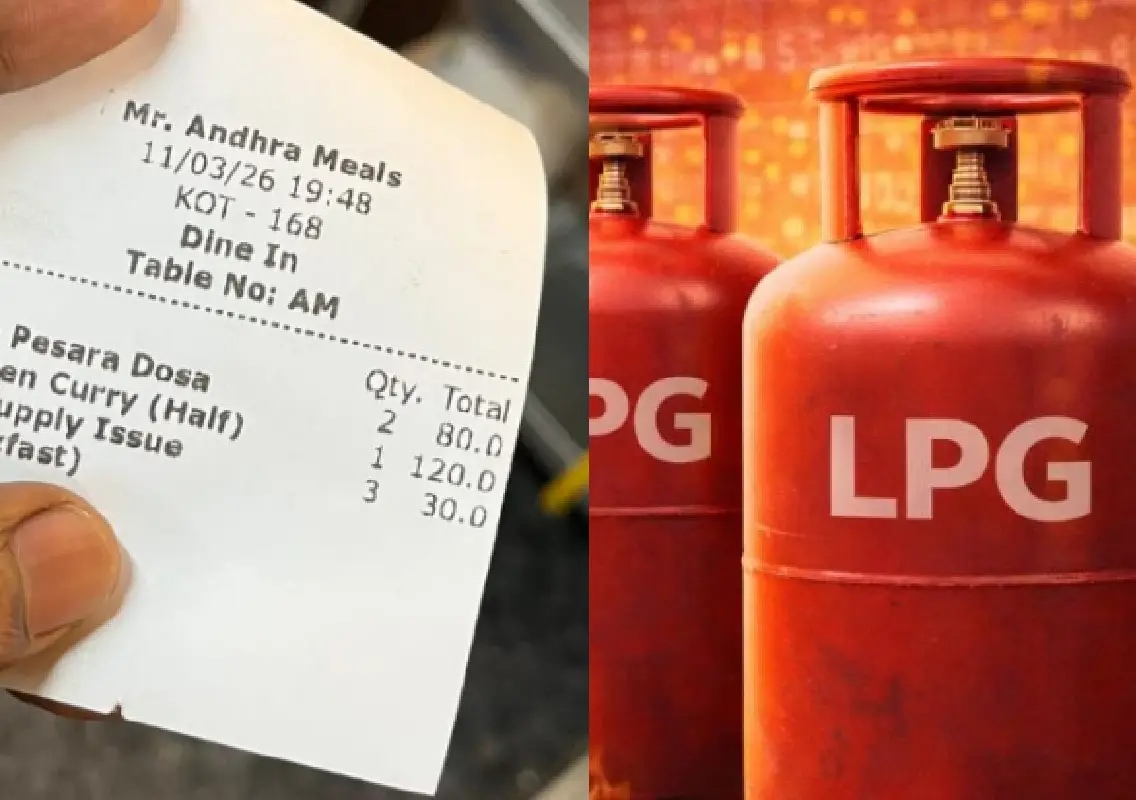


A restaurant bill from Bengaluru showing an additional ₹30 charge per item due to a gas shortage has gone viral on social media, sparking a debate about rising costs in the hospitality industry.
The receipt, which included items such as Hyderabadi chicken dum biryani, egg omelette and fried rice, carried a printed note stating that an extra ₹30 was being added because of the current shortage of commercial gas cylinders. The note mentioned that the charge was temporary and requested customers to cooperate.
Viral post triggers mixed reactions
The image was shared widely on Instagram by a page focused on Bengaluru issues, accompanied by a caption urging people to cook at home instead of depending on hotel breakfasts, tea and food delivery.
The post quickly attracted hundreds of reactions and comments, with users debating both the additional charge and the broader issue of dining habits in the city.
Support for hotels facing rising costs
Several social media users defended the restaurant, saying the prices on the bill appeared reasonable and that businesses were struggling due to rising fuel costs.
Some pointed out that a plate of biryani priced at ₹120 was already relatively cheap, arguing that a temporary ₹30 surcharge was understandable given the increase in commercial LPG cylinder prices.
Others working in the food industry said the hospitality sector operates on thin margins and even small increases in input costs can significantly affect profits.
Concerns about surcharge method
At the same time, some users criticised the method of charging the extra amount.
Many argued that applying the ₹30 surcharge per item instead of per bill could significantly increase the total cost for customers ordering multiple dishes.
Others suggested that restaurants could instead slightly raise menu prices rather than adding a separate charge.
Larger issue of gas supply disruptions
The debate comes amid reports of disruptions in the supply of commercial LPG cylinders affecting hotels and restaurants in several Indian cities.
Industry members say that shortages and rising prices of cooking gas have placed additional pressure on small eateries and roadside restaurants.
As discussions continue online, the viral bill has highlighted the growing challenges faced by both customers and businesses in balancing affordability with rising operational costs.