







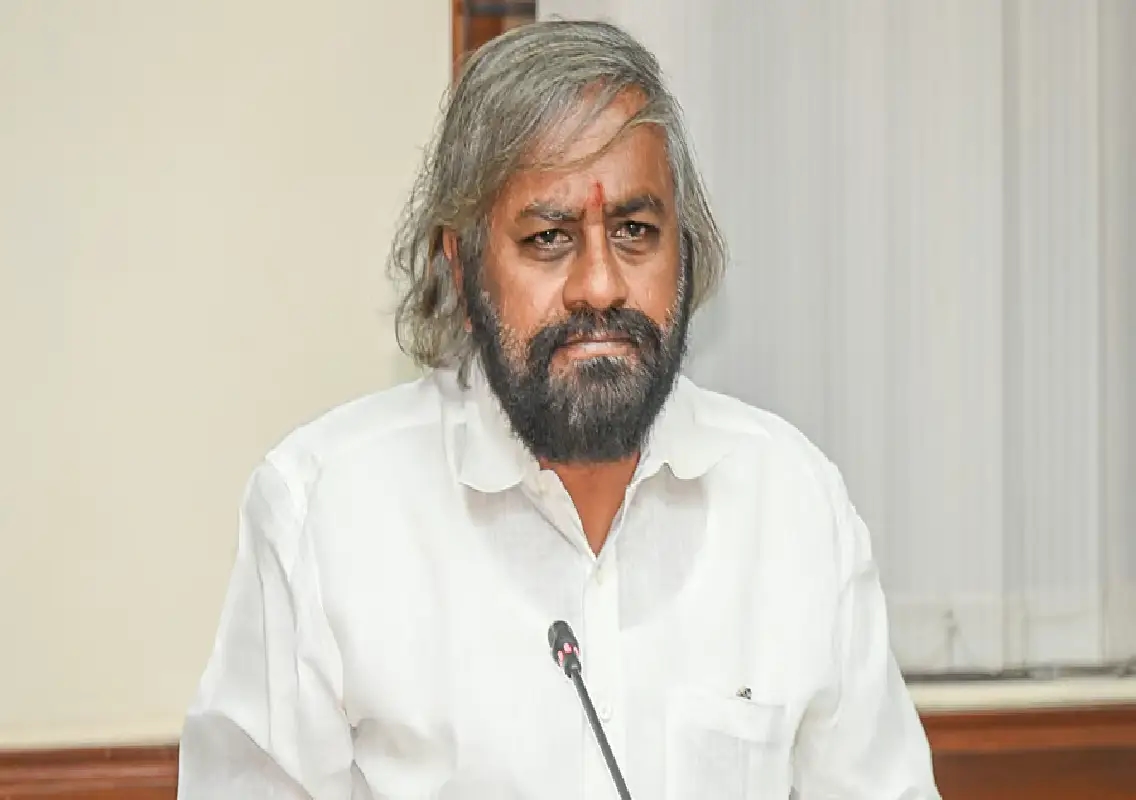


Bengaluru: The Greater Bengaluru Authority (GBA) and respective city corporations will be held accountable if air quality deteriorates in the city, Forest, Ecology and Environment Minister Eshwar Khandre said on Thursday. He warned that strict measures, including notices and legal action, could be initiated if pollution levels cross permissible limits.
The Minister said the government would soon convene a meeting with the city’s 28 MLAs to devise comprehensive and bipartisan measures to curb rising air pollution.
Warning against ‘gas chamber’ situation
Khandre made the announcement after a discussion with Rajajinagar MLA S Suresh Kumar, who raised concerns about health issues linked to increasing air pollution in Bengaluru.
“Bengaluru should not turn into a gas chamber like Delhi. A meeting of the city’s public representatives will be held to evolve bipartisan measures with wider support,” Khandre said.
He added that Deputy Chief Minister D K Shivakumar, who also holds the Bengaluru Development portfolio, will chair the proposed meeting. Senior officials from urban local bodies (ULBs) are expected to participate.
Khandre said he would discuss the matter with Shivakumar at the earliest to finalise the meeting schedule and outline an action plan.
Notices if AQI crosses 100
Highlighting the seriousness of the issue, the Minister said official air quality data in Bengaluru is generated through 11 stationary Continuous Ambient Air Quality Monitoring Stations (CAAQMs) and 13 mobile monitoring units.
He stated that if the Air Quality Index (AQI) crosses 100 — moving beyond the ‘satisfactory’ category — the urban local body concerned should be issued a notice directing it to initiate time-bound corrective measures.
“If no action is taken, a case should be filed against them,” he said, stressing that accountability mechanisms must be enforced to prevent further deterioration.
Focus on green cover and enforcement
The Minister also called for concrete steps to increase the city’s green cover as a long-term strategy to combat pollution. He emphasised the need to strengthen enforcement of the ban on single-use plastic by forming vigilance squads.
In addition, Khandre sought a detailed report on the status of wastewater recycling in the city, indicating that sustainable urban management practices must be integrated into the broader environmental strategy.
Need for coordinated action
With vehicular emissions, construction dust and rapid urbanisation contributing to declining air quality, the government’s move signals a push towards coordinated and institutional accountability.
By involving legislators across party lines and holding civic bodies responsible, the State government aims to prevent Bengaluru’s air quality from reaching alarming levels seen in other metropolitan cities.
Further deliberations are expected in the upcoming meeting, which may outline specific timelines and responsibilities for agencies concerned.