









Bengaluru: A seemingly fancy pub snack has left social media amused after a man discovered that what he ordered as a gourmet dish turned out to be a familiar childhood treat with a premium twist.
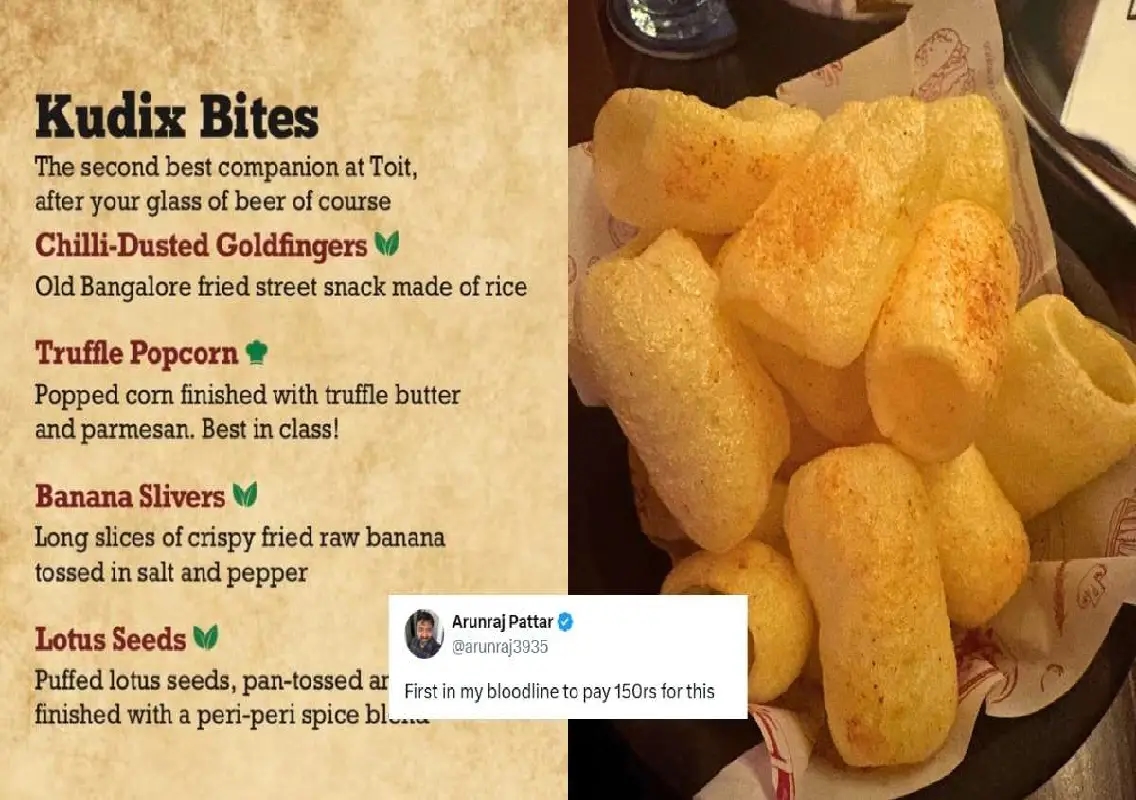
The incident came to light after Arunraj Pattar shared his experience on X, where he ordered a dish named “Chilli-Dusted Goldfingers” at a city pub.
From fancy name to familiar snack
On the menu, the dish appeared to be an upscale bar bite, with a name suggesting a creatively prepared delicacy. However, when it arrived at the table, it looked strikingly simple—puffed, cylindrical fryums lightly coated with मसाला.
The presentation lacked elaborate plating or garnish, resembling a basic snack that many associate with childhood memories rather than a premium offering.
Viral post and humorous reaction
Sharing images of the dish online, Arunraj captioned his post humorously: “First in my bloodline to pay ₹150 for this,” highlighting both his surprise and amusement at the pricing.
The contrast between the menu description and the actual serving quickly caught the attention of social media users, turning the post viral.
Netizens join the joke
The comments section saw users poking fun at the growing trend of giving simple foods elaborate names to justify higher prices.
One user joked about similar menu tactics, saying dishes are often renamed with confusing titles like “flame-tossed special masala earth nuts” for what are essentially roasted peanuts.
Another pointed out the stark price difference, noting that the same snack would have cost just ₹5–₹10 during their childhood, calling the situation “daylight robbery.”
Trend of rebranding simple snacks
The incident reflects a broader trend in urban dining, where familiar, low-cost snacks are repackaged with creative names and presented as gourmet offerings in pubs and cafés.
Such practices often rely on branding and ambience to enhance perceived value, even when the underlying food remains simple.
Social media highlights pricing culture
Users also discussed how easily nostalgia-driven items can be repositioned as premium products, especially in metropolitan settings like Bengaluru, where experimental menus and quirky names are common.
The episode struck a chord with many, as it combined humour, relatability, and a subtle critique of pricing trends in the food and beverage industry.
Conclusion
While the “Chilli-Dusted Goldfingers” episode may have started as a light-hearted post, it has sparked a wider conversation about pricing, presentation, and perception in modern dining. For many, it served as a reminder that sometimes, behind a fancy name, lies a very familiar snack.