







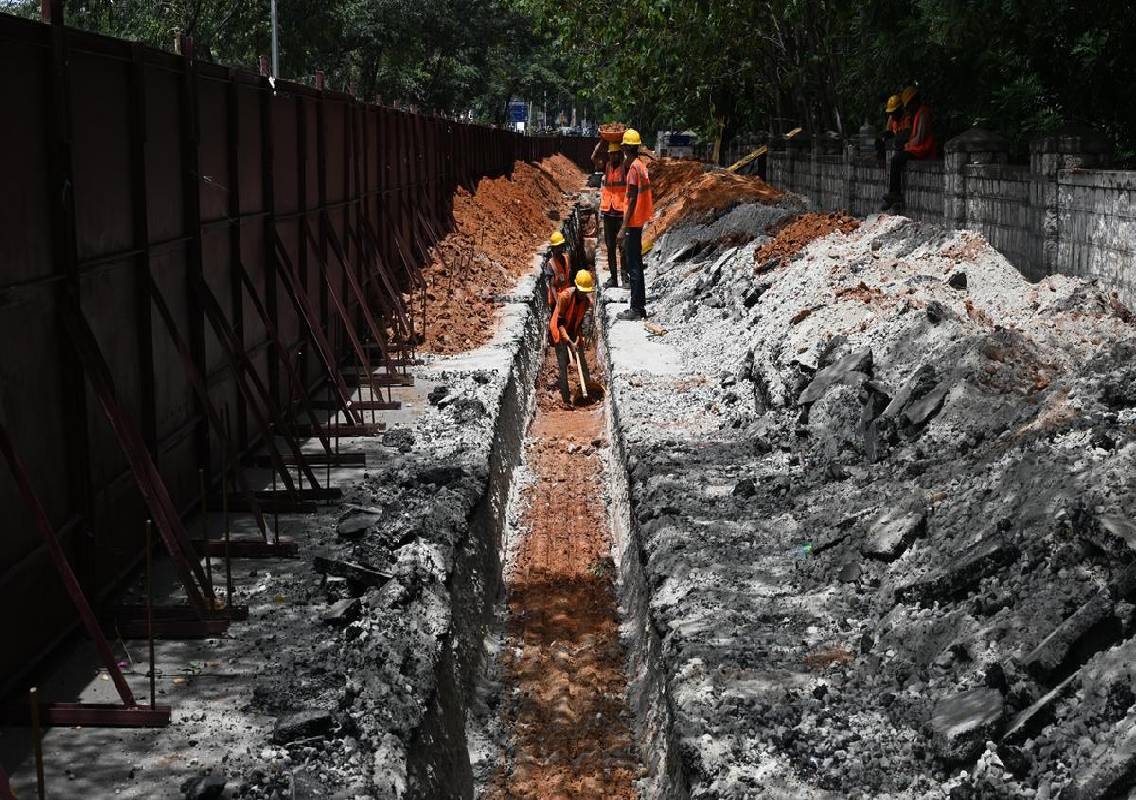


Bengaluru: The Bangalore Development Authority (BDA) plans to transplant 1,072 trees and fell 56 others for the proposed Hebbal short-tunnel project, BDA chairman N.A. Harris has said. The plan has renewed discussion over the environmental impact of the infrastructure project, which is intended to ease traffic congestion around one of Bengaluru’s busiest junctions.
The proposed tunnel is expected to connect the Hebbal Junction area with the University of Agricultural Sciences (UAS) staff quarters and the veterinary college campus. While the BDA maintains that the project will help address traffic bottlenecks, environmentalists and citizen groups have raised concerns about the loss of greenery and the potential impact on the surrounding ecosystem. BDA outlines tree transplantation plan
According to the BDA’s figures, 1,072 trees identified along the project corridor are proposed to be transplanted, while 56 trees are slated to be felled. The proposed action concerns greenery in and around the Hebbal area, including the tree park, the lake’s surroundings, the veterinary college campus and nearby institutional premises.
The transplantation plan is intended to retain a significant number of the trees affected by the infrastructure work. However, the process involves more than relocating trees, as their survival after transplantation depends on factors such as species, age, root damage, site conditions and subsequent maintenance.
The proposed tree removal and transplantation have drawn public attention because the area contains established green spaces and a variety of native, flowering and fruit-bearing trees. Environmental concerns have also focused on the cumulative effects of infrastructure development around Hebbal Lake.
The proposed numbers and the eventual implementation of the plan remain important issues for residents and environmental groups monitoring the project.
Hebbal tunnel project aims to address traffic congestion
The short tunnel is planned as a road infrastructure intervention to improve traffic movement around Hebbal Junction, a major connection for commuters travelling between north Bengaluru, the city centre and Kempegowda International Airport.
The project has been discussed alongside an elevated corridor planned in the surrounding road network. BDA officials have argued that the tunnel and elevated corridor can complement each other and improve traffic flow when supported by appropriate junction management, lane arrangements and traffic regulation.
The authority has also cited traffic assessments to support the need for interventions at Hebbal, where vehicles converge from multiple routes. The junction is an important passage for airport-bound traffic as well as commuters travelling towards central Bengaluru.
However, the extent to which the short tunnel will reduce congestion across the wider road network remains a subject of debate. Mobility experts and activists have questioned whether the project will provide lasting relief or shift bottlenecks to adjoining stretches.
The project’s environmental implications and its relationship with other proposed transport infrastructure have therefore become central to the discussion.
Environmental concerns over tree loss
The proposed transplantation and felling have prompted concerns from environmentalists and residents who say the trees around Hebbal form part of a larger network of urban green spaces.
Citizen groups have pointed to the ecological importance of the area, which includes the surroundings of Hebbal Lake, the veterinary college campus and the UAS staff quarters. They have warned that large-scale excavation and the loss of mature trees could affect biodiversity, local green cover and the urban environment.
In early October, residents and activists staged a protest by embracing trees and forming a human chain. They called for meaningful public consultation and greater transparency regarding the trees that could be affected by the project.
Protesters have also sought access to relevant project and environmental information so that citizens can understand the likely impact on individual trees and surrounding green spaces.
The debate has extended beyond the number of trees proposed for removal. Environmental groups have questioned whether transplantation can adequately compensate for the loss of mature trees and the ecological functions they perform.
Hebbal Lake and the surrounding ecosystem
The tunnel proposal has also attracted scrutiny over its proximity to Hebbal Lake. The BDA has maintained that the project will not cause lasting damage to the lake and has said that the affected area will be restored after temporary construction-related use.
According to the authority, measures are planned to monitor groundwater levels and manage water that could enter the construction area. Officials have also said that the tunnel alignment and associated works have been assessed in relation to the surrounding road network and site conditions.
Environmental concerns remain focused on how construction could affect the lake’s surroundings, groundwater movement and connected green spaces. The questions are particularly significant because the project involves extensive excavation in an established urban area.
The BDA’s assurances and the concerns raised by environmental groups have placed the project under continued public scrutiny, with residents seeking clarity on safeguards and the long-term consequences of the work.
Tree protection remains a key issue
The proposal to transplant 1,072 trees and fell 56 highlights the challenge of balancing infrastructure development with environmental protection in Bengaluru. While the BDA says the tunnel is intended to ease congestion at Hebbal Junction, critics have called for closer examination of its environmental costs and long-term transport benefits.
The implementation of the tree plan, including the necessary approvals and the survival of transplanted trees, will be important factors in assessing the project’s environmental impact.
The debate also reflects a wider question facing Bengaluru as it expands its road infrastructure: how can traffic problems be addressed while protecting mature trees, lakes and the green spaces that contribute to the city’s ecological health?
For residents and environmental groups, the final outcome will depend not only on the number of trees retained or relocated, but also on the effectiveness of environmental safeguards and the project’s ability to deliver sustained improvements in traffic movement.