







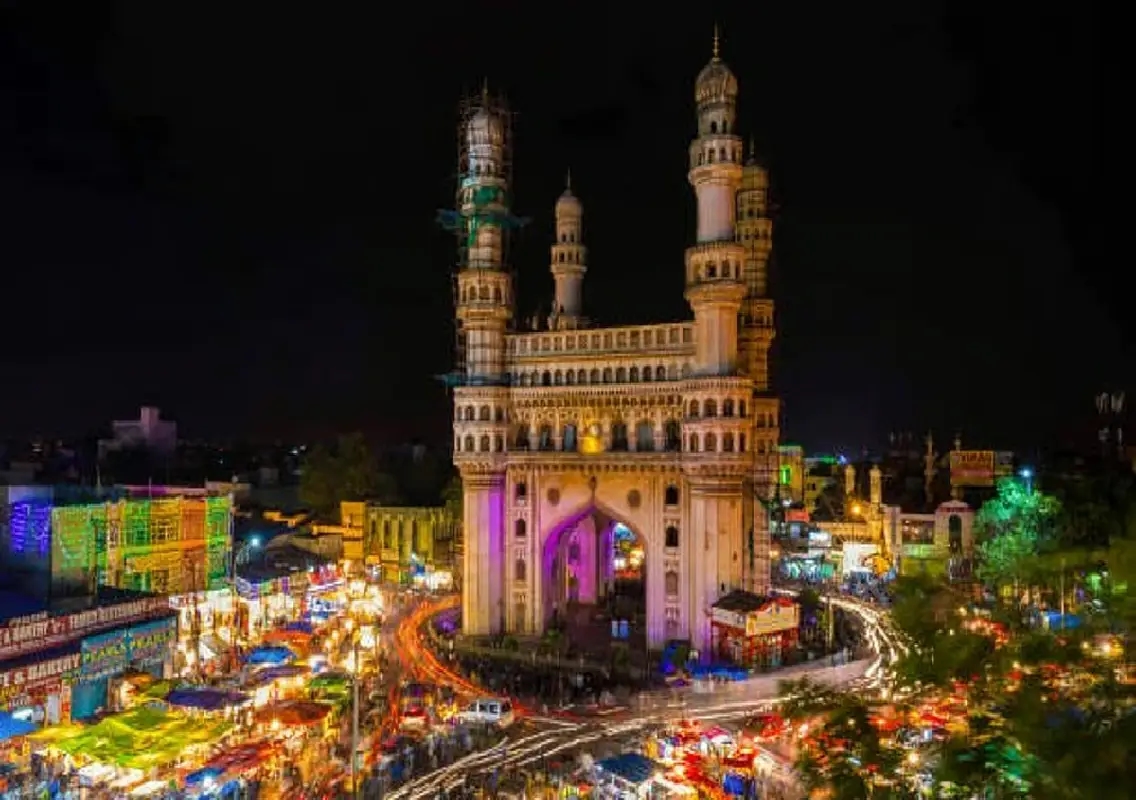


Bengaluru: Hyderabad has emerged as India’s most liveable metropolitan city, surpassing Bengaluru, according to a new report that evaluates urban living conditions across major cities using multiple parameters.
The findings are part of the ‘WeAreCity 2026’ report released by UnboxingBLR during the Indiaspora Global AI Summit. The study assessed eight major cities based on 15 metrics capturing overall ease of living.
Hyderabad leads with balanced performance
Hyderabad secured the top position due to its balanced performance across key indicators such as housing, diversity, infrastructure, and lifestyle factors. The report noted that while the city still faces challenges in commute times, its overall consistency across categories helped it outperform others.
In contrast, Bengaluru ranked second, with strong scores in areas such as weather, diversity, and lifestyle or “going-out” options. However, issues related to infrastructure and commute time significantly affected its overall ranking.
Ranking of major Indian cities
The report ranked eight metropolitan cities based on ease of living. Following Hyderabad and Bengaluru, Kolkata secured the third position.
Other cities in the ranking include Chennai (fourth), Delhi NCR (fifth), Pune (sixth), and Mumbai (seventh). Ahmedabad was placed at the bottom of the index.
Commute and infrastructure key concerns
One of the major differentiators between Hyderabad and Bengaluru was commute efficiency. Both cities report an average one-way travel time of around 58–59 minutes. However, Hyderabad commuters typically cover longer distances—around 22 km—compared to Bengaluru’s shorter average commute distance.
Infrastructure constraints and traffic congestion were identified as key challenges for Bengaluru, contributing to its second-place ranking despite otherwise strong performance.
Bengaluru retains economic edge
Despite losing the top spot in liveability, Bengaluru continues to dominate as India’s leading employment hub. The report highlights that the city tops the Workforce Pull Index due to its strong base of formal employment, high concentration of tech talent, and robust hiring momentum, especially in high-end roles.
Bengaluru’s ecosystem of startups, global capability centres (GCCs), and a well-established innovation pipeline continues to attract talent from across the country.
However, Hyderabad is rapidly emerging as a competitor, particularly in areas such as new company formation, Grade-A office space development, and expansion of GCCs.
Broader economic insights
In terms of overall economic strength, the Economic Heft Index—based on 30 indicators measuring historical influence and recent growth—placed Delhi NCR and Greater Mumbai at the top. Bengaluru, however, was noted as a fast-rising contender in this category.
The report emphasises that cities like Hyderabad and Bengaluru are driving more than half of India’s urban growth, shaping trends in employment, consumption, and mobility.
Understanding the ‘City Indices’
The 159-page report introduces “City Indices” to provide a nuanced understanding of urban life. These indices evaluate cities across parameters such as commute, housing, diversity, infrastructure, weather, and lifestyle.
According to Malini Goyal, co-founder of UnboxingBLR, such city-level indices are relatively uncommon in India. She noted that the growing availability of data has enabled a more detailed and realistic assessment of urban living conditions.
Conclusion
The latest rankings underline a shifting urban landscape in India, where Hyderabad is gaining ground as a well-rounded, liveable city while Bengaluru continues to excel as an economic powerhouse. The findings highlight the need for cities to balance growth with infrastructure development and quality of life improvements to remain competitive.