







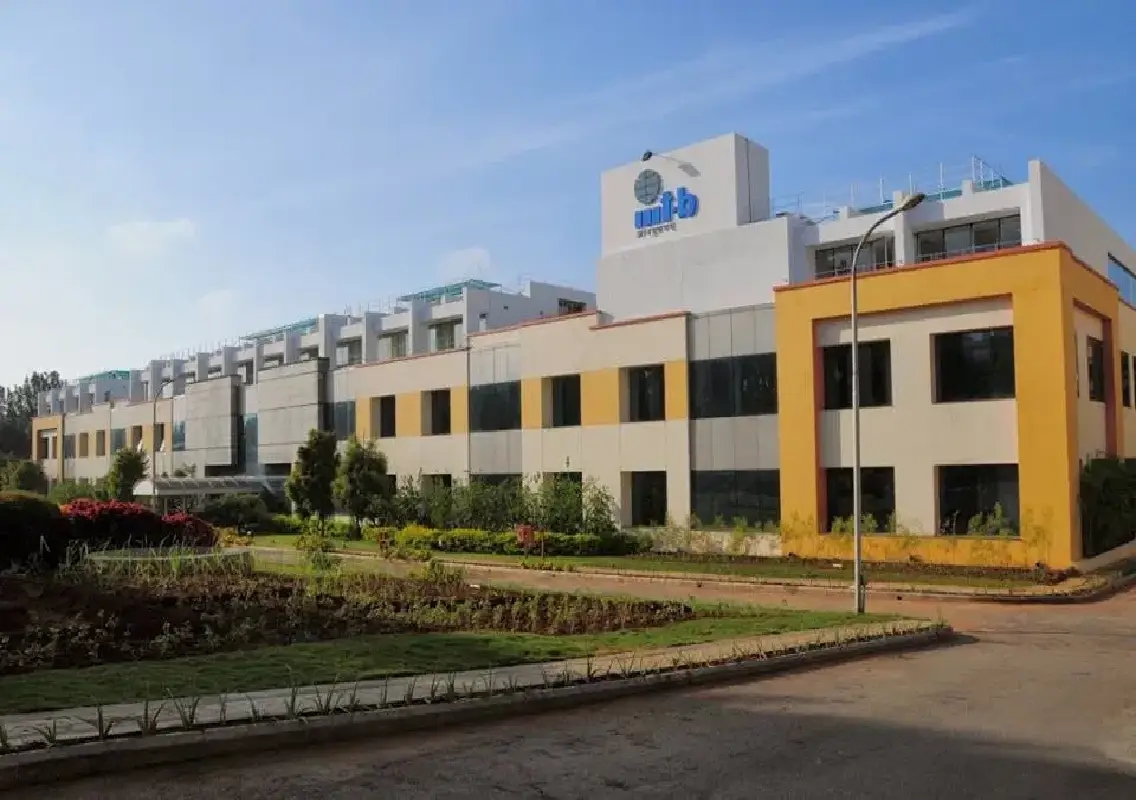


Bengaluru: Researchers at the International Institute of Information Technology Bangalore (IIIT-B) are developing machine learning-based optimisation models to address one of the renewable energy sector’s toughest challenges — how to generate enough clean power without driving up costs or destabilising the grid.
The team’s research blends mathematics, artificial intelligence, and systems engineering to create models that can help India achieve its clean energy goals while maintaining affordability and reliability.
Balancing cost, carbon, and reliability
Led by Aswin Kannan, Assistant Professor at IIIT-B, the project focuses on building multi-objective optimisation models that forecast renewable energy generation and simultaneously balance accuracy, cost, and reliability.
“Over-predicting reduces reliability, while under-predicting increases operational costs. We found that bias in data can distort results quietly. By combining optimisation with learning, we can detect these biases and build forecasts that balance cost, reliability, and fairness for real-time grid operations,” Prof. Kannan explained.
The models allow grid operators to make more transparent and data-driven decisions, helping them plan and allocate resources effectively as renewable energy inputs fluctuate through the day.
Global data, local insights
The IIIT-B team used datasets from Germany (Netztransparenz, SMARD), the United States (NREL), and India, linking weather variables such as irradiance, temperature, and air pressure with real power-output data to improve the precision of their models.
While much of Prof. Kannan’s early research was based on European energy systems, he said that India’s energy landscape presents a more complex challenge due to its highly variable solar and wind patterns.
“India’s renewable data quality is actually very good, sometimes better than Europe, but its variability is much higher. Unlike Germany’s uniform weather, India’s solar and wind conditions change drastically across States and seasons,” he noted.
He added that India’s publicly managed transmission systems are better positioned to handle such diversity compared to Europe’s privatised network model.
A challenge of scale
According to Prof. Kannan, India’s energy transition is primarily difficult because of its sheer scale, not because of policy gaps or technology.
“In Europe, the transition meant retrofitting existing pipelines for hydrogen. In India, the challenge is creating new microgrids, battery systems, and transmission lines for variable renewable power,” he said.
The research also highlights how environmental factors like humidity, dust, and terrain affect power generation, noting that higher solar radiation does not necessarily translate to higher output in Indian conditions.
Towards a hydrogen–electricity network
Prof. Kannan’s ongoing research now focuses on the integration of solar, wind, and hydro systems into a joint hydrogen–electricity network. The models developed at IIIT-B differ from standard industry tools, as they go beyond accuracy to assess trade-offs between cost, bias, and operational risk.
By dynamically switching algorithms based on data quality and weather conditions, the models are designed to be resilient to uncertainty and better suited for real-time energy management.
Policy and industry implications
The implications of this work extend to policymakers, grid operators, and renewable energy developers. Accurate and fair forecasting can reduce costly imbalances in power markets, minimise wastage, and support flexible energy pricing mechanisms — key steps in achieving India’s clean energy goals.
The IIIT-B team hopes its framework can bridge the gap between research and policy, providing practical tools to accelerate India’s transition towards a more sustainable and inclusive power ecosystem.