







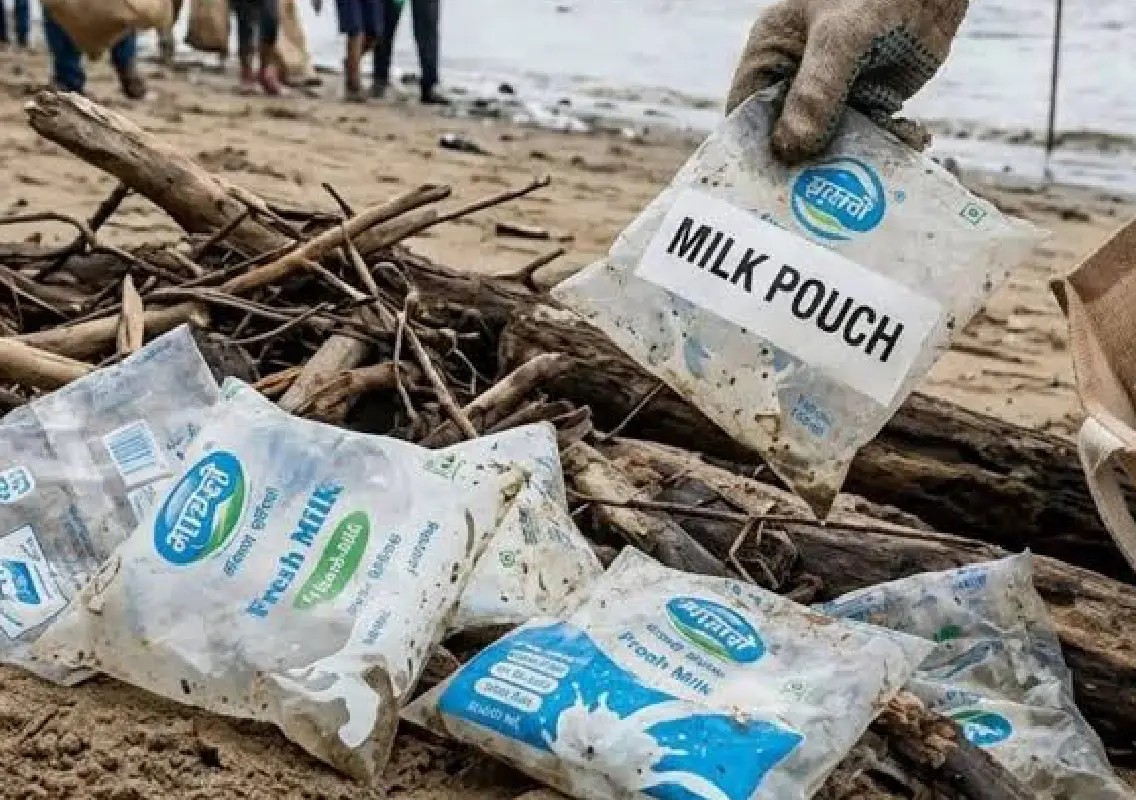


Bengaluru: Scientists at the Indian Institute of Science (IISc), Bengaluru, have developed and patented an innovative technology that converts discarded plastic milk pouches into high-performance engineering plastic capable of being recycled multiple times without losing its strength.
The breakthrough could offer a sustainable solution to one of India’s growing plastic waste challenges, where millions of used milk pouches are discarded every day.
New technology tackles plastic waste challenge
According to a 2025 report by Chintan Environmental Research and Action Group, India discards an estimated 100–120 million plastic milk pouches daily, amounting to 36.5–43.8 billion pouches annually.
Although milk pouches are made from recyclable polyethylene (PE), they often end up in landfills, water bodies or as litter due to collection challenges and their limited recycling value. Conventional recycling also weakens the material after each cycle, reducing its usability.
Patented process improves strength and recyclability
The research was led by Professor Suryasarathi Bose from IISc’s Department of Materials Engineering, along with researchers Bhashkar Bohra and Debashrita Kundu.
The team developed a process that blends discarded polyethylene milk pouches with a specially engineered polypropylene vitrimer made from post-consumer recycled polypropylene sourced from items such as shampoo and oil bottles.
The vitrimer acts as both a reinforcing material and a compatibiliser, allowing two different waste plastics to combine into a strong engineering-grade material. Tests showed that the optimised blend nearly doubled the tensile strength of conventionally recycled polyethylene while retaining its mechanical properties even after three recycling cycles.
Wide range of practical applications
Professor Bose said the technology can utilise milk pouches from any brand, making it suitable for large-scale adoption.
He added that the recycled material can be 3D printed into various products and even replace concrete in certain applications. Potential uses include manufacturing road dividers, bus shelters and logistics containers.
The researchers also stressed the importance of properly segregating plastic packaging from wet and biomedical waste to improve the quality of recycled products.
The innovation marks a significant step towards creating a circular economy by transforming everyday plastic waste into durable, reusable materials with real-world engineering applications.