







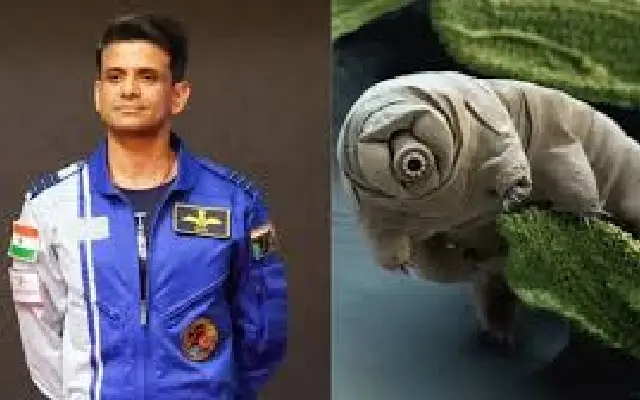


Indian astronaut Shubhanshu Shukla, currently aboard the International Space Station (ISS), has wrapped up a landmark first week filled with pioneering scientific experiments.
Shukla, part of the Axiom-4 (Ax-4) mission, conducted six out of seven ISRO-led investigations. Among them, the highlight was the Voyager Tardigrades experiment, featuring a unique strain of tardigrades—or “water bears”—from Bengaluru. This resilient species, studied by the IISc team led by biochemist Sandeep Eswarappa, can absorb deadly ultraviolet radiation and emit harmless blue fluorescence, showcasing an extraordinary survival mechanism.
ISRO confirmed that Shukla completed the microgravity study examining the tardigrades’ survival, revival, and reproduction in orbit. The findings could drive advances in therapeutics and stress-resilience research on Earth.
In parallel, Shukla launched the Myogenesis experiment exploring muscle degradation in microgravity inside the Life Sciences Glovebox. This research could help mitigate astronaut health issues during long missions.
He also began monitoring the Cyanobacteria Growth Experiment, assessing how photosynthetic bacteria could sustain life support systems by recycling CO₂ into oxygen.
Additional studies underway include cultivating microalgae to investigate their nutritional and regenerative potential in space, and running cognitive assessments under the Electronic Displays study to refine crew interaction with digital systems.
With half of his mission complete, Shukla’s work is laying the foundation for future deep-space exploration and life-support innovations.