







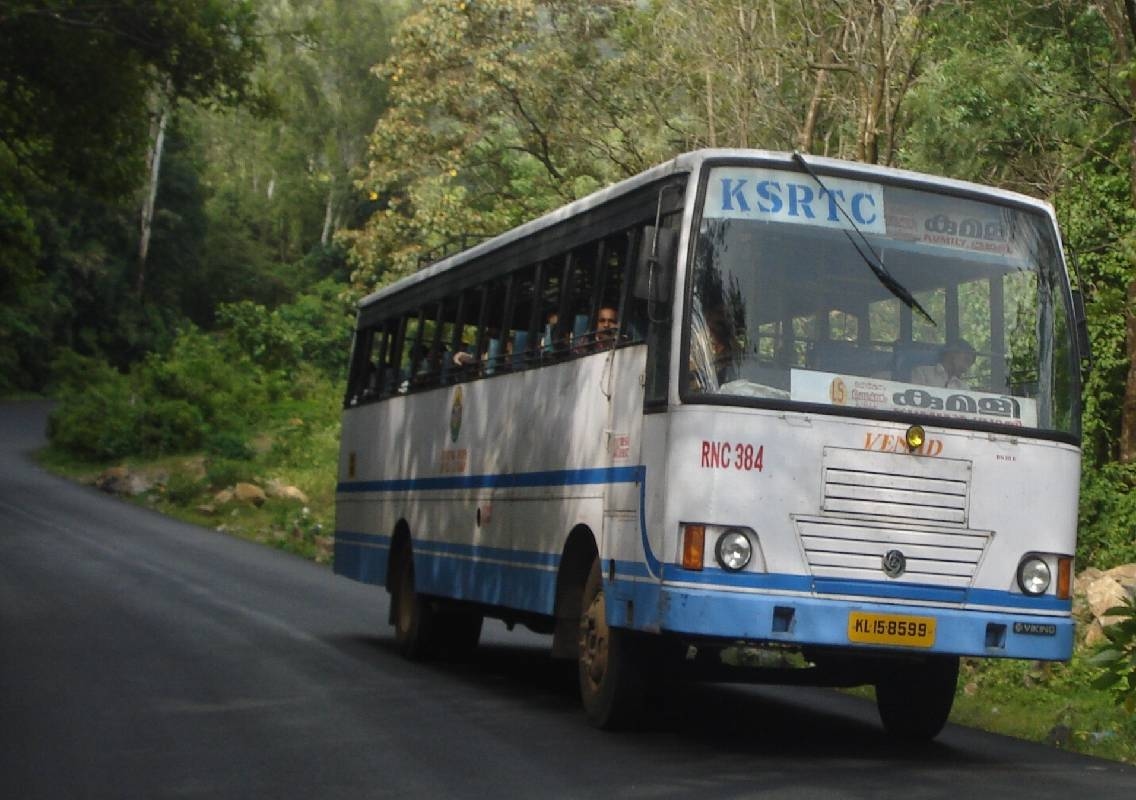


Bengaluru: Bus services across Karnataka are likely to face major disruption from Tuesday as transport employees’ unions move ahead with an indefinite strike after conciliation talks with the state government failed to produce a resolution.
The strike, called by the Joint Action Committee (JAC) of transport trade unions, threatens to severely affect public transport services operated by the Karnataka State Road Transport Corporation (KSRTC), Bengaluru Metropolitan Transport Corporation (BMTC) and other state-run transport bodies.
The development has raised concerns of large-scale commuter inconvenience in Bengaluru and several districts, with lakhs of passengers expected to face travel difficulties if the agitation continues for an extended period.
Talks fail to resolve wage dispute
The conciliation meeting, organised by the labour commissioner on Monday, involved representatives of transport unions along with officials from KSRTC and BMTC. However, discussions reportedly ended without any agreement on the employees’ wage revision demands.
Transport unions are demanding a 25 per cent salary hike with retrospective effect from January 1, 2024. The Karnataka government is understood to have proposed a 12.5 per cent wage increase effective from April 1, 2025, but the offer was rejected by the unions.
Union representatives maintained that the implementation date of the revised pay structure remains a key issue and said they are unwilling to compromise on making the revision effective from January 2024.
The unions have also demanded clearance of pending salary arrears without deductions. According to union leaders, no concrete proposal has yet been received from the transport corporation managements.
Following the breakdown of talks, the JAC announced that the indefinite strike would continue as planned unless the state government intervenes immediately.
Over 1.25 lakh employees expected to participate
More than 1.25 lakh employees from Karnataka’s four state-run transport corporations are expected to participate in the strike, potentially affecting a large share of bus operations across the state.
The impact is expected to be most severe in Bengaluru, where BMTC buses serve as the backbone of daily public transport. Lakhs of office-goers, students and daily commuters rely on BMTC services for regular travel across the city.
BMTC currently operates more than 7,000 buses, including electric buses, and caters to nearly 35.8 lakh passengers every day. A significant reduction in services could leave commuters struggling to find alternative transportation options.
Apart from Bengaluru, intercity services connecting major cities such as Mysuru, Hubballi, Mangaluru, Shivamogga and Kalaburagi are also expected to witness disruption if the strike intensifies.
Passengers travelling for work, education and medical purposes may face delays and cancellations due to reduced bus availability.
Metro stations likely to witness heavy rush
With bus services likely to remain limited, many commuters are expected to shift to Namma Metro, leading to overcrowding at key stations during peak hours.
Transport experts have warned that stations such as Majestic, Baiyappanahalli and Nadaprabhu Kempegowda could witness long queues, overcrowded platforms and extended waiting times if BMTC operations are suspended.
Although Bengaluru’s Metro network has expanded considerably in recent years, its passenger-handling capacity remains lower than BMTC’s daily ridership.
Metro connectivity also does not cover several residential areas and outer suburban localities, meaning many passengers continue to depend on buses for first- and last-mile connectivity.
As a result, even Metro commuters may have to rely more heavily on autos, cabs and bike taxis to complete their journeys, potentially increasing travel expenses significantly.
Traffic congestion and higher travel costs feared
The strike is also expected to increase pressure on Bengaluru’s already congested road network.
Experts believe that reduced bus operations could force thousands of commuters to use private vehicles, leading to higher fuel consumption, increased traffic congestion and longer travel times across the city.
Demand for autos, app-based taxis and bike taxis is also expected to rise sharply, potentially resulting in surge pricing during peak hours.
Transport analysts have repeatedly stressed that BMTC plays a crucial role in reducing the number of private vehicles on Bengaluru roads. Any prolonged disruption to bus services could therefore worsen traffic conditions substantially.
Daily commuters have expressed concern over the uncertainty surrounding transport availability, especially during office hours.
Government urged to intervene immediately
Union representatives have appealed to the chief minister to directly intervene in the dispute and hold discussions with employee representatives to avoid a prolonged public transport crisis.
At the same time, transport corporation officials have stated that another round of talks has been scheduled for May 25 in an attempt to resolve the issue.
KSRTC Managing Director Akram Pasha reportedly said trade unions cannot legally proceed with a strike while conciliation proceedings are still underway.
Officials also pointed out that the chief minister has already conducted four rounds of discussions with union leaders, while Transport Minister Ramalinga Reddy has separately held multiple meetings regarding the wage revision issue.
Corporation authorities warned that disciplinary action could be initiated if employees proceed with the strike despite ongoing negotiations.
Public transport uncertainty continues
With no breakthrough yet in negotiations, uncertainty continues over the functioning of Karnataka’s public transport system.
The Joint Action Committee has maintained that the strike will proceed from May 20 unless the state government takes immediate steps to address employee demands.
If the deadlock continues, Karnataka may witness one of its biggest public transport disruptions in recent years, affecting lakhs of passengers across Bengaluru and other parts of the state.
Commuters are now closely watching for any last-minute intervention by the government that could prevent large-scale disruption of bus services and ease pressure on the city’s transport infrastructure.