







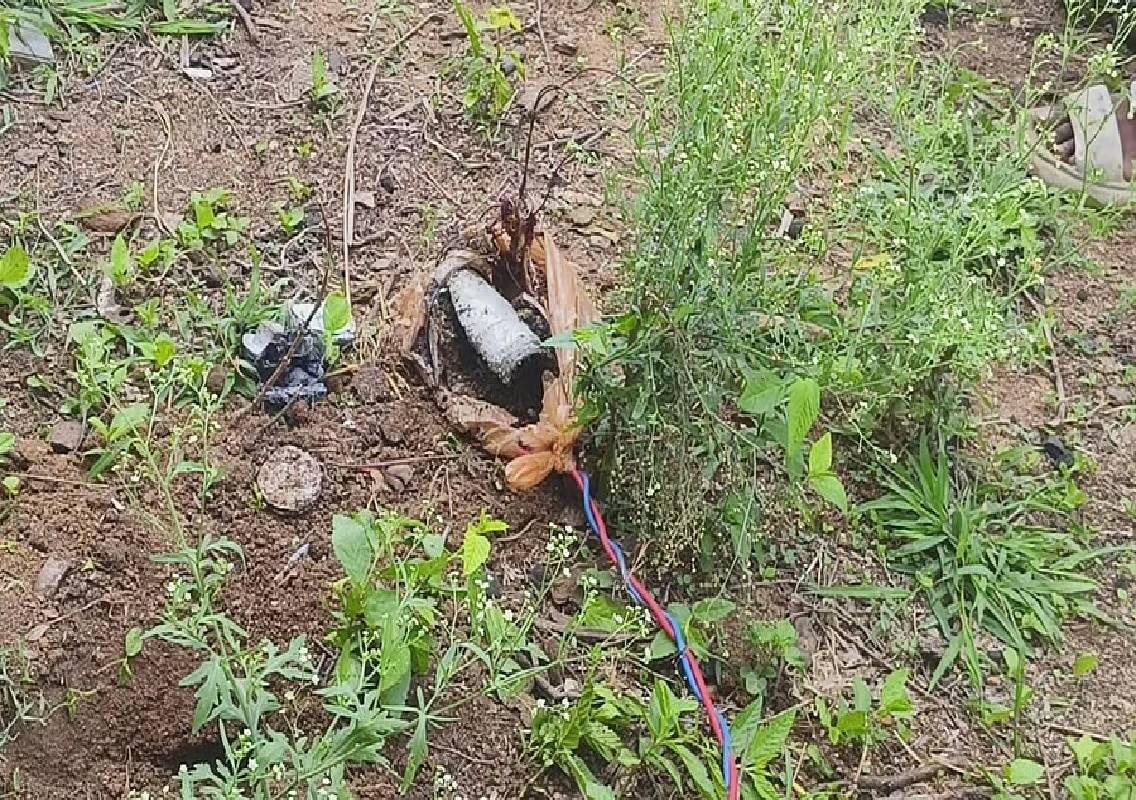


Karnataka: A country-made bomb exploded in an agricultural field in Karnataka, triggering concern among local residents and prompting authorities to investigate the circumstances surrounding the explosive device.
The incident has brought renewed attention to the risks posed by illegally prepared explosives in rural areas, particularly when such devices are placed in agricultural fields where farmers, workers and livestock may come into contact with them.
According to the report, the explosion occurred in an agricultural field and officials have begun looking into the incident. Further details about the exact location, the circumstances in which the bomb was placed and whether anyone was responsible for keeping the device there are being investigated.
Bomb explodes in agricultural field
The incident took place when a country-made explosive went off in an agricultural area in Karnataka.
Such incidents can pose a serious risk because agricultural fields are regularly accessed by farmers, labourers and cattle. An explosive device left concealed in a field can remain undetected until someone accidentally comes into contact with it.
Authorities are expected to examine the site and gather evidence to determine the nature of the explosive and how it reached the field.
The investigation will also seek to establish whether the device was deliberately placed at the location or whether it was connected to any other criminal activity.
Police begin investigation
Following the explosion, authorities have begun investigating the circumstances surrounding the incident.
Investigators are likely to examine the area around the field and speak to people who may have information about the device.
The police may also look into whether similar explosive devices have been reported in nearby areas.
Establishing the origin of the bomb will be an important part of the investigation. Authorities will need to determine who made or possessed the device and why it was present in the agricultural field.
Risks associated with country-made bombs
Country-made explosives can be particularly dangerous because they may be manufactured outside regulated facilities and without proper safety controls.
The devices can also be difficult to identify when concealed in agricultural areas.
Previous incidents in southern India have highlighted the dangers of such explosives being used in fields. In Coimbatore, for example, a bull was seriously injured after biting a fruit concealing a country-made explosive that had allegedly been placed in an agricultural field to hunt wild boars. Police subsequently arrested a man and seized additional country-made bombs from his residence.
The incident demonstrates how explosives intended for hunting can also endanger farmers and animals.
Agricultural fields vulnerable to hidden explosives
Farmers regularly work across large areas of land, making it difficult to identify suspicious objects before they are disturbed.
An explosive device concealed among crops, vegetation or other material can remain unnoticed for extended periods.
This creates a significant safety concern, particularly in areas where people may also allow livestock to graze.
Authorities therefore typically need to secure the location and determine whether any additional suspicious objects are present before allowing normal activity to resume.
Investigation to establish motive
One of the key questions for investigators will be the reason behind the presence of the explosive.
Country-made bombs have been associated with different forms of illegal activity, including hunting and criminal disputes.
However, the motive in the Karnataka incident has not been established based on the available information.
Police will need to verify the circumstances before reaching any conclusion.
Officials may examine local disputes, recent activity in the area and reports of suspicious persons or vehicles as part of the investigation.
Safety concerns for farmers
The incident serves as a reminder of the risks farmers can face when unknown objects are found in agricultural areas.
Any suspicious object discovered in a field should be treated as potentially dangerous and should not be handled or moved.
The appropriate response is to move away from the area and inform the police or other authorities so that trained personnel can assess the situation.
This is especially important when an object resembles an explosive device.
Authorities expected to examine the site
The location of the blast will be important to the investigation.
Officials may collect material from the site to establish the type of explosive involved and understand the circumstances of the explosion.
A detailed examination can also help investigators determine the approximate location where the device was placed.
The evidence could subsequently assist police in identifying the person or people responsible.
Possibility of illegal hunting examined
One possible line of investigation in cases involving country-made explosives in agricultural fields is their use for hunting wild animals.
Authorities in other parts of South India have previously encountered explosives allegedly used to target wild boars.
Such practices are dangerous not only for wildlife but also for people and livestock living or working nearby.
However, there is no indication from the available information that the Karnataka incident was connected to hunting, and investigators will need to establish the facts.
Wider concern over illegal explosives
The incident also highlights the broader problem of illegal explosives and their potential availability outside authorised channels.
The Union Home Ministry’s annual report for 2024-25 recorded seizures involving country-made bombs and other explosive materials, underlining the continuing presence of such devices in criminal activity.
Law enforcement agencies regularly conduct investigations and seizures involving illegal explosives.
The Karnataka incident could therefore prompt authorities to examine whether similar devices are being stored or used in the surrounding region.
Importance of forensic evidence
Forensic examination can play an important role in identifying the materials used in an explosive device.
Investigators can use evidence recovered from the site to establish the nature of the bomb and potentially trace its origin.
The findings may also help police determine whether the device was assembled locally or brought from elsewhere.
Such evidence could become important if the investigation leads to arrests.
Police may question local residents
Investigators may speak to farmers, agricultural workers and residents living near the field to establish whether anyone noticed suspicious activity before the explosion.
Information about unfamiliar people, vehicles or unusual movements could help police establish a timeline.
The authorities may also examine whether the field had been accessed by anyone other than the landowner or workers.
No immediate conclusion on responsibility
At this stage, responsibility for placing the country-made bomb should not be attributed to any individual without confirmation from investigators.
The police investigation will have to establish the facts through evidence and witness statements.
Authorities are also likely to determine whether the explosion was accidental or connected to a deliberate act.
Further details are expected as the investigation progresses.
Importance of preventing similar incidents
The incident highlights the need for authorities to remain alert to the presence of illegal explosives in rural areas.
Awareness among farmers and agricultural workers can also help prevent accidental injuries.
People working in fields should avoid touching unfamiliar objects and report anything suspicious to authorities.
Prompt reporting can allow police and bomb-disposal personnel to secure the area before anyone is injured.
Karnataka authorities face safety challenge
For Karnataka, the incident adds to concerns over the misuse or illegal possession of explosive devices.
Although country-made bombs are often associated with local criminal activities, their presence in public or agricultural areas can create risks for people who have no connection with such activities.
Effective investigation and enforcement will therefore be important to prevent similar incidents.
What happens next
The immediate priority for authorities will be to establish the circumstances of the explosion and determine whether any additional explosive devices are present in the area.
Investigators will also work to identify the source of the bomb and determine whether it was deliberately placed in the field.
If evidence points to illegal possession or use, police action could follow against those responsible.
Further details are expected once the investigation progresses.
Conclusion
Karnataka: A country-made bomb has exploded in an agricultural field in Karnataka, prompting an investigation into the origin and circumstances of the explosive device.
The incident has raised safety concerns because agricultural fields are frequently accessed by farmers, workers and livestock. Similar incidents elsewhere in South India have shown how country-made explosives can cause serious injuries when they are concealed in fields.
Authorities are expected to examine the blast site, collect evidence and determine who placed or possessed the device. Investigators will also establish whether the incident was accidental or linked to any illegal activity.
The incident underlines the dangers posed by unregulated explosives in rural areas and the importance of reporting suspicious objects to authorities rather than attempting to handle them.