









Bengaluru,: The Karnataka government has constituted a five-member cabinet sub-committee to examine the challenges faced by students across the state and recommend reforms aimed at improving the education system.
The decision to constitute the panel was taken at the state cabinet meeting held on August 21. The committee has been given one month to study the issues and submit a comprehensive report to the government.
The move comes amid concerns over examination and recruitment irregularities, question paper leaks, rising education costs, inadequate infrastructure and shortages of teachers and other essential facilities.
U T Khader to head five-member panel
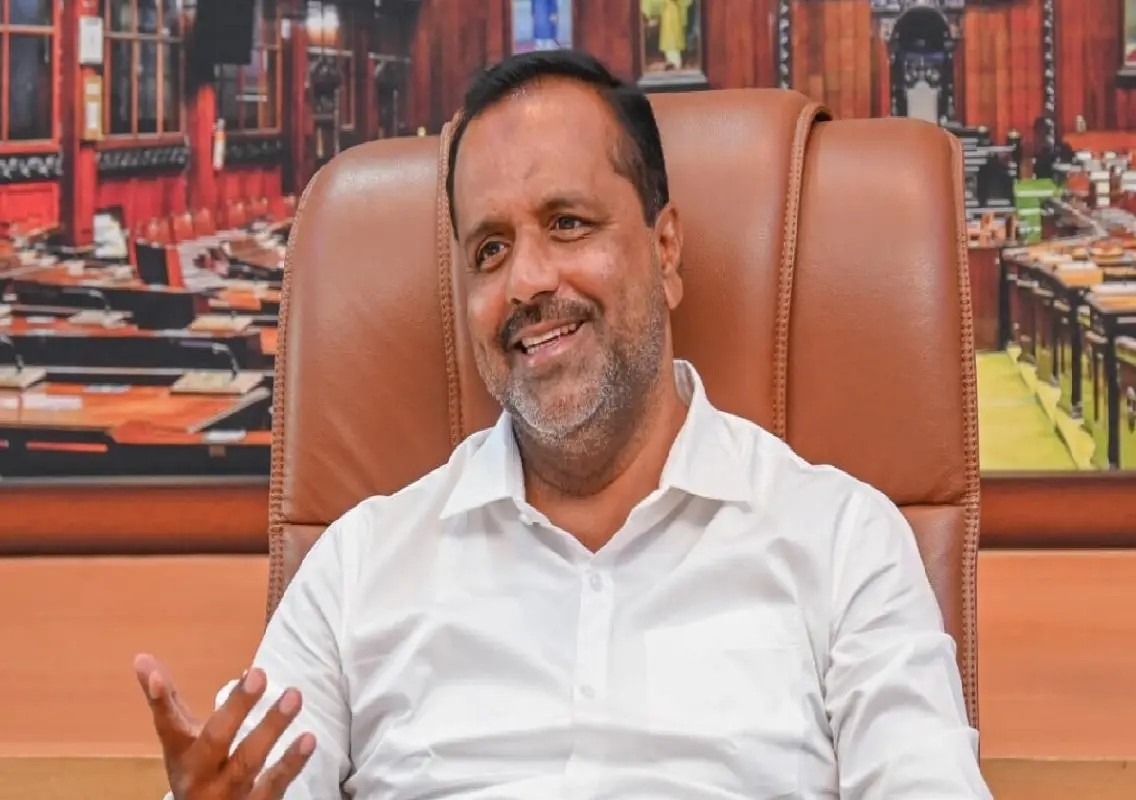
Health and Family Welfare, Minority Welfare, Haj and Wakf Minister U T Khader has been appointed chairman of the cabinet sub-committee.
The other members are Higher Education Minister Basavaraj Rayareddy, Home and IT-BT Minister Priyank Kharge, Medical Education and Skill Development Minister Sharan Prakash Patil, and School Education Minister Madhu Bangarappa.
The composition of the panel brings together ministers overseeing different areas of education and related sectors.
The committee is expected to examine concerns affecting students from school education through higher education and suggest measures that can be implemented by the state government.
Focus on examination and recruitment transparency
One of the major areas before the committee will be improving transparency in examination and recruitment processes.
The panel will examine measures to prevent question paper leaks and other irregularities that can undermine the credibility of examinations and recruitment.
It will also look into the possibility of establishing a fixed timetable for examinations and recruitment processes.
A predictable schedule could help students prepare more effectively and reduce uncertainty surrounding competitive examinations and government recruitment.
The committee will recommend measures to strengthen existing systems and address shortcomings identified during its review.
Private education fees under scrutiny
The rising financial burden of education is another issue the cabinet sub-committee will examine.
The panel will recommend measures to regulate fees charged by private educational institutions and explore ways to make education more affordable for students and their families.
It will also examine the functioning of private coaching centres.
Coaching institutions have become an important part of preparation for several examinations, but concerns have been raised over the financial burden placed on families and the need for appropriate monitoring.
The committee is expected to consider measures that balance access to private educational services with affordability and transparency.
Government institutions to receive attention
The sub-committee will also study the condition of government schools, pre-university colleges and universities.
The government intends to improve basic infrastructure and the overall quality of education in these institutions.
The panel will assess the availability of essential facilities and recommend measures to address gaps.
Laboratories, libraries and student hostels are among the facilities that will receive attention.
Adequate infrastructure is considered essential for providing students with opportunities for practical learning, access to educational resources and suitable accommodation, particularly for those travelling from rural and distant areas.
Teacher shortage among key concerns
The shortage of teachers is another major issue that the cabinet panel will address.
Vacancies and inadequate staffing can affect the quality of classroom instruction and increase the workload on existing teaching staff.
The committee will examine the issue and recommend measures to improve the availability of teachers across government educational institutions.
The panel’s work is expected to cover both immediate concerns and longer-term reforms needed to strengthen the education system.
One-month deadline for comprehensive report
The cabinet sub-committee has been given a deadline of one month to complete its assessment and submit its report.
During this period, it will examine the various issues affecting students and formulate recommendations for the government.
The short timeframe indicates the government’s intention to obtain recommendations quickly and potentially initiate reforms based on the findings.
The committee’s recommendations could cover multiple aspects of education, including examination administration, recruitment, fee regulation, coaching centres, infrastructure and staffing.
Aim to reduce burden on students
The government’s decision to bring together ministers from different departments reflects the broad nature of the challenges confronting students.
Issues such as examination schedules, recruitment uncertainty, private education fees, coaching expenses and inadequate infrastructure can collectively place considerable pressure on students and their families.
The proposed reforms are therefore expected to focus not only on academic quality but also on making the education system more transparent, accessible and affordable.
Improving facilities in government institutions could also encourage more students to continue their education without having to depend heavily on expensive private alternatives.
The panel will now study these concerns and submit its recommendations within the stipulated period.