









Bengaluru: The Karnataka government has constituted a high-level committee headed by Chief Secretary Shalini Rajneesh to review the bids received for the proposed tunnel road project in Bengaluru, amid mounting criticism and political pushback over the ambitious infrastructure plan.
The announcement comes at a time when the project has drawn scrutiny, particularly after the Adani Group emerged as the lowest bidder for both packages of the 17-km tunnel corridor connecting Hebbal and Central Silk Board.
High-level scrutiny of bids
Bengaluru is set to witness one of its most ambitious road infrastructure projects under the proposed tunnel plan, which forms part of a larger Rs 1.5 lakh crore mobility and infrastructure push. The broader vision includes elevated corridors, double-decker road-cum-metro flyovers and multiple grade separators aimed at easing the city’s chronic congestion.
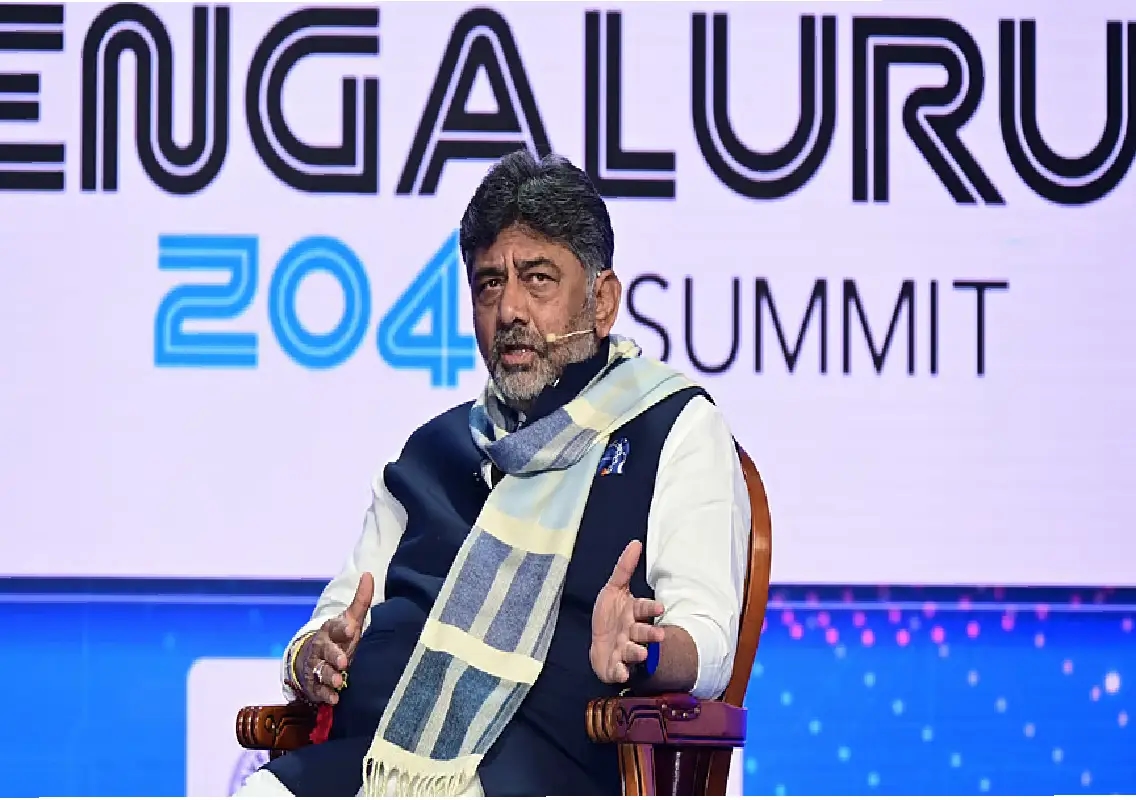
Deputy Chief Minister D. K. Shivakumar, speaking at the DH Bengaluru 2040 Summit, confirmed that as many as 20 firms had shown interest during the bidding process. However, he underlined that only companies with substantial technical and financial capacity could handle a project of this magnitude.
“Small companies cannot execute a project of this scale,” he said, adding that the government would not increase the viable gap funding under the BOOT (Build-Own-Operate-Transfer) model to accommodate bidders.
The newly formed committee will examine the financial and technical aspects of the bids before taking a final call, signalling the government’s attempt to address transparency concerns while moving ahead with the project.
Defence amid criticism
The tunnel road proposal has faced criticism from sections of the opposition and civil society groups over its cost, feasibility and environmental implications. Defending the project, Shivakumar argued that the scale of Bengaluru’s traffic crisis necessitates bold and unconventional solutions.
“Time is money. Reaching office itself has become a problem,” he said, stressing that urban productivity is being severely impacted by congestion.
Drawing comparisons with other metropolitan cities, he noted that Mumbai operates seven tunnels and that Delhi has sought a copy of Bengaluru’s project report. “Those opposing it lack administrative experience,” he remarked.
He pointed out that land acquisition in prime localities such as Sadashivnagar, where property prices reportedly touch Rs 50,000 per sq ft, makes conventional road widening financially and practically unviable.
“We neither have the resources nor the feasibility to demolish such properties. That is why tunnel roads and double-decker corridors have been conceptualised,” he explained.
Rising vehicles, daily influx
Bengaluru’s rapid growth has intensified mobility challenges. According to Shivakumar, the city’s population and the number of private vehicles are almost at par, with nearly three lakh vehicles being registered every month.
In addition, an estimated 40–50 lakh people enter the city daily for work. Nearly 60% of families in surrounding regions such as Kanakapura, Magadi and Kolar depend on Bengaluru for employment.
“Once people come to Bengaluru, they do not want to return to their hometowns,” he observed, describing the city as India’s global face and a magnet for investment.
Despite metro connectivity along key stretches such as MG Road, traffic congestion has not significantly reduced, he said, emphasising that both public transport expansion and road infrastructure are required to address the crisis.
Broader infrastructure and civic reforms
The tunnel road is a component of the government’s larger urban transformation agenda. The state is also developing a 136-km Bengaluru Business Corridor to strengthen economic connectivity and support industrial growth.
On civic governance, the Deputy Chief Minister said solid waste management tenders had been reorganised into 33 packages to improve transparency and efficiency. He claimed that the so-called “garbage mafia” had been dismantled through structural reforms.
He also stated that commercial hoardings have been reintroduced in a regulated manner to generate revenue for civic bodies.
Addressing concerns over water supply, Shivakumar assured residents that the city would not face a summer crisis this year. He recalled that last year, nearly half of the 14,000 borewells had dried up and private tanker operations had turned into a “mafia”. The government, he said, now operates its own tanker services at nearly half the previous cost.
He further reiterated that long-pending civic polls would be held by June-end.
Conclusion
The formation of a high-level review committee reflects the government’s attempt to balance urgency with scrutiny in pushing forward one of Bengaluru’s most expensive mobility projects. As debates continue over cost, feasibility and environmental impact, the final decision on the tunnel bids will likely shape the city’s infrastructure trajectory for decades to come.