







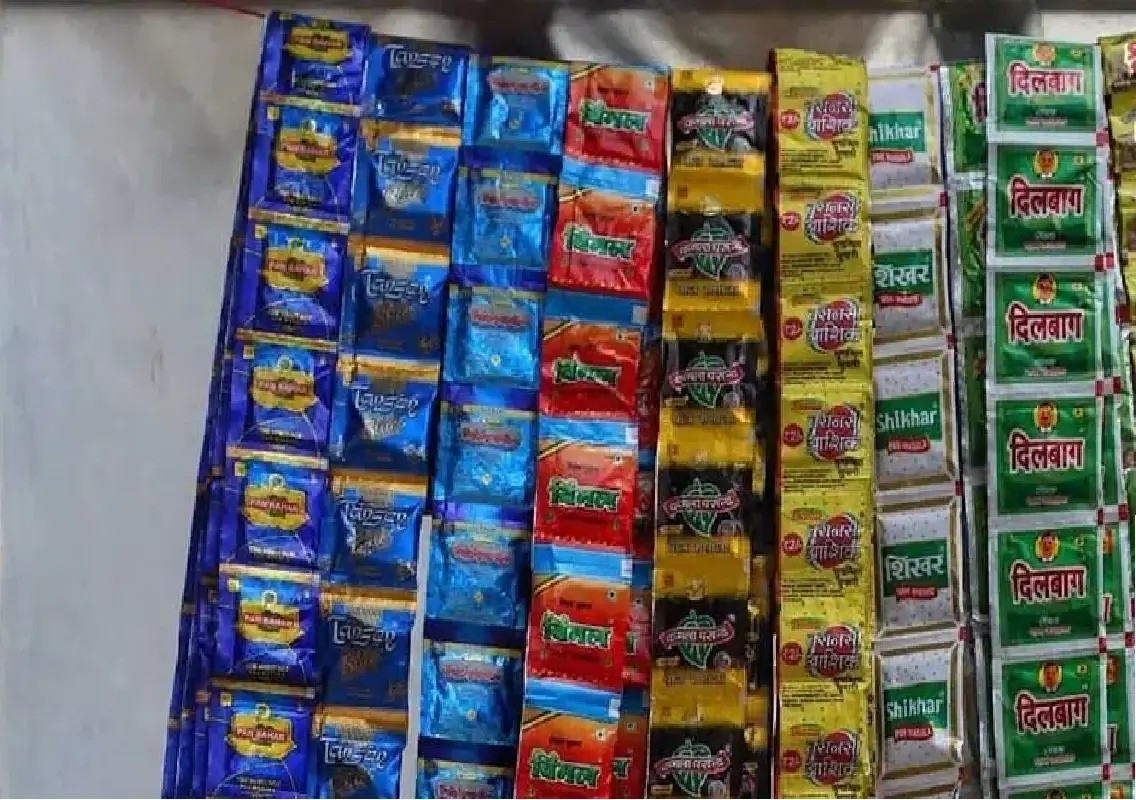


Bengaluru: The Karnataka government has withdrawn its recent order imposing a one-year ban on the manufacture, storage and sale of gutka and pan masala products containing tobacco and nicotine in the state. The decision comes just two days after the ban notification was issued under the Food Safety and Standards Act.
The withdrawal follows strong opposition from areca nut growers and political leaders, particularly from the Malnad and coastal regions, where areca nut cultivation is a major source of livelihood.
Government withdraws ban order
The state government had recently issued a notification prohibiting the manufacture, storage, distribution, transportation and sale of gutka and pan masala products containing tobacco and nicotine for one year.
The measure was introduced citing public health concerns associated with tobacco and nicotine products. However, the decision soon triggered opposition from sections representing the areca nut-growing community.
With the government now withdrawing the notification, the proposed one-year prohibition has been put on hold. The sudden reversal, within two days of the original order, has drawn attention to the competing concerns surrounding public health, tobacco control and the economic interests of areca nut growers.
Areca nut growers raise concerns
The strongest opposition to the ban came from areca nut-growing regions of Karnataka. Areca nut is used as an important raw material in the production of several pan masala products, and growers feared that a ban could negatively affect demand and market prices.
Farmers and their representatives expressed concern that restrictions on products using areca nut could eventually affect the value of their produce.
Political leaders, former ministers and sitting legislators from major areca nut-growing areas reportedly urged the government to reconsider the decision. They argued that any move affecting the pan masala and gutka industry could have wider consequences for farmers dependent on areca nut cultivation.
The pressure from these regions is understood to have contributed to the government’s reconsideration of the notification.
Karnataka a major areca nut producer
Karnataka is one of India’s leading areca nut-producing states, with cultivation spread across large parts of the Malnad, coastal and plains regions.
The crop is cultivated commercially across more than 5 lakh hectares in the state, supporting a large number of farming families. Dakshina Kannada, Udupi, Shivamogga, Uttara Kannada, Chikkamagaluru, Davangere and other districts have significant areas under areca nut cultivation.
For many farming households, areca nut provides an important source of agricultural income. Any major disruption in demand or prices can therefore have a direct impact on their livelihoods.
The issue is particularly significant in areas where areca nut plantations form a major part of the local agricultural economy.
Shivamogga among major growing districts
Shivamogga is among Karnataka’s prominent areca nut-growing districts. Areas including Tirthahalli, Sagar, Hosanagar, Soraba and Shikaripura have extensive areca nut cultivation.
The crop is also an important commercial activity in Channagiri in Davangere district, which is widely recognised for its areca nut production.
In Uttara Kannada, areas such as Sirsi, Siddapur and Yellapur are well known for areca nut cultivation. Sirsi areca nut has also received geographical indication recognition, adding to the crop’s importance to the region.
Coastal districts such as Dakshina Kannada and Udupi also have substantial areca nut plantations, while cultivation has expanded in parts of Chikkamagaluru, Tumakuru and Chitradurga.
Coastal and Malnad regions react
The proposed ban generated considerable concern in the Malnad and coastal belts, where areca nut cultivation is closely linked to the rural economy.
Growers feared that restrictions on gutka and pan masala could reduce demand from industries that use areca nut as an ingredient. Although the ban specifically targeted tobacco and nicotine-containing products rather than areca nut cultivation itself, farmers were concerned about the possible indirect impact on the areca nut market.
The issue consequently became a significant political concern in several areca nut-growing constituencies.
Panic buying reported after ban announcement
The announcement of the proposed ban also reportedly led to panic among consumers and traders of gutka and pan masala products in several districts.
Fearing that the products would become unavailable, some consumers reportedly rushed to shops to stock up. The sudden increase in demand also created opportunities for some traders to sell products at significantly higher prices.
Reports of gutka being sold at several times its usual price surfaced amid uncertainty over the availability of the products.
The developments highlighted the challenges involved in implementing restrictions on widely available tobacco products, particularly when consumers and traders anticipate shortages.
Public health versus livelihood concerns
The government’s initial decision was based on public health considerations, as tobacco and nicotine products are associated with serious health risks. Measures restricting their manufacture and sale are generally aimed at reducing tobacco consumption and protecting public health.
At the same time, the political response to the Karnataka notification underlined the economic importance of areca nut cultivation.
The withdrawal of the order demonstrates the difficult balance the government faces between tobacco-control objectives and concerns raised by agricultural communities whose livelihoods may be indirectly affected by regulatory measures.
The latest development does not remove the broader debate surrounding tobacco consumption and its health consequences. It instead postpones the immediate implementation of the proposed one-year prohibition.
Farmers welcome withdrawal
The withdrawal of the notification is likely to provide temporary relief to areca nut growers who feared that the ban could negatively affect market demand.
Farmers in the coastal and Malnad regions had been closely monitoring the developments following the government’s announcement. The reversal is expected to ease concerns over a possible disruption to the areca nut market.
However, the long-term relationship between areca nut prices, industrial demand and government regulations remains an important issue for growers.
Ban controversy likely to continue
The government’s withdrawal of the notification may bring temporary relief to farmers and traders, but the debate over tobacco control and public health is likely to continue.
The state has to balance the need to discourage harmful tobacco consumption with the economic concerns of agricultural communities. Any future regulatory decision involving tobacco or products containing areca nut could therefore face close scrutiny from farmers, industry representatives and political leaders.
For now, the proposed one-year ban on gutka and pan masala products containing tobacco and nicotine has been withdrawn, bringing an abrupt end to a notification that lasted only two days.