


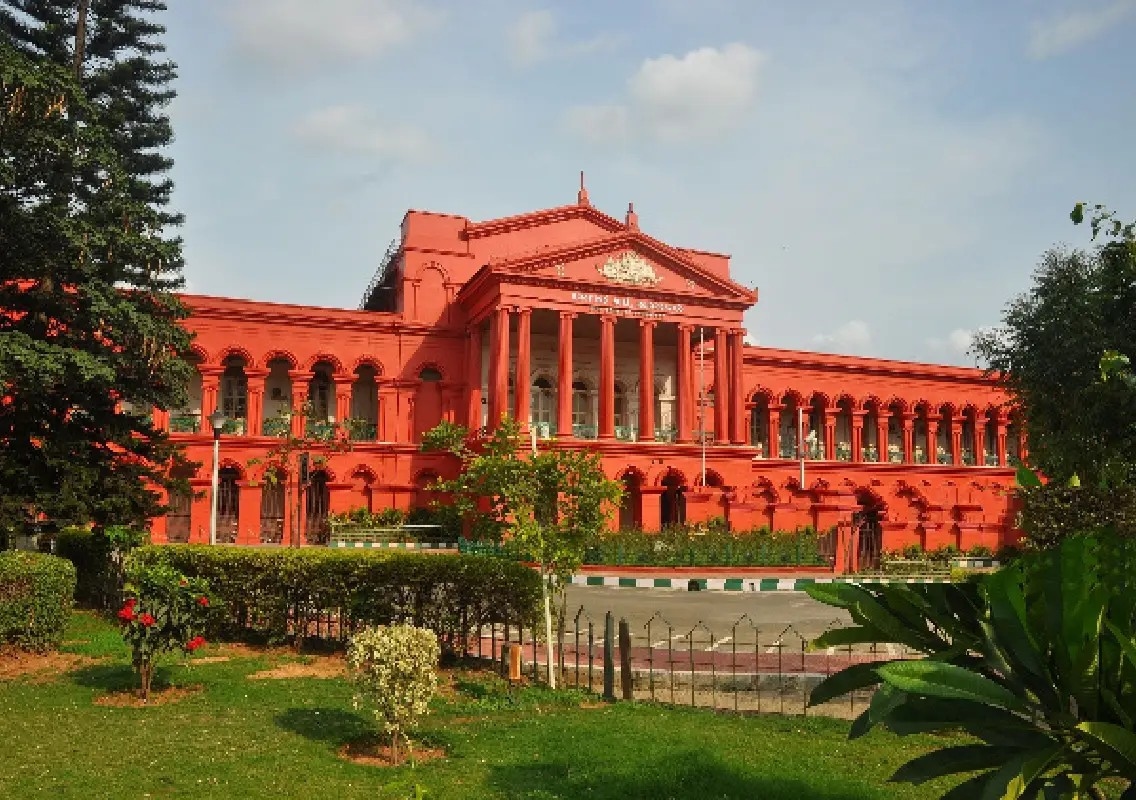


Bengaluru: The Chief Justice of the Karnataka High Court has constituted a three-judge committee to examine the feasibility of establishing a circuit bench or permanent bench of the High Court in the coastal region.
The committee comprises Justices Anu Sivaraman, S G Pandit and Muhammad Nawaz. The panel has been tasked with reviewing the proposal, which has been a long-standing demand among residents and legal communities in several districts of Karnataka.
The proposed bench is expected to benefit people from Dakshina Kannada, Udupi, Shivamogga, Chikkamagaluru, Kodagu, Hassan and Uttara Kannada by potentially reducing the need to travel to Bengaluru for High Court-related proceedings.
Three-judge committee constituted
The constitution of the committee follows an assurance given by the Chief Justice during a recent visit to Mangaluru that the demand for a High Court bench in the coastal region would be examined.
Acting on the assurance, the Chief Justice has now constituted the three-member panel and issued an official order regarding the review.
The committee will examine the feasibility of establishing either a circuit bench or a permanent bench in the region. The precise location and other administrative aspects would form part of the broader assessment before any decision is taken.
The move has renewed attention on a demand that has been raised for several years by various sections, particularly in districts located far from Bengaluru.
Seven districts to benefit
The proposed judicial facility has been sought primarily for the benefit of people from Dakshina Kannada and Udupi, along with Shivamogga, Chikkamagaluru, Kodagu, Hassan and Uttara Kannada.
At present, litigants from these districts requiring matters to be heard by the Karnataka High Court may have to travel to Bengaluru. A circuit or permanent bench in the coastal region has therefore been sought as a way of improving geographical access to the High Court.
The demand covers a large geographical area, extending from the coastal districts into parts of the Malnad and surrounding regions. Supporters of the proposal have argued that a regional judicial facility could make access to High Court proceedings more convenient for litigants, lawyers and other stakeholders.
However, the present development relates to a feasibility review. The constitution of the committee does not itself amount to a decision to establish a circuit or permanent bench.
Chief Justice had given assurance in Mangaluru
The latest development follows the Chief Justice’s recent visit to Mangaluru, during which the issue of a High Court bench in the coastal region was raised.
During the visit, an assurance was reportedly given that the demand would be examined. The formation of the committee represents the formal follow-up to that assurance.
The three judges will now review the feasibility of the proposal and submit their assessment through the appropriate process. Further decisions regarding the establishment, location and functioning of a bench would depend on the outcome of the review and subsequent administrative and legal procedures.
The committee’s composition brings together three sitting judges of the Karnataka High Court for the assessment.
Long-standing demand from legal fraternity
The demand for a High Court bench in the coastal region has been raised over a considerable period. Lawyers and litigants from the region have pointed to the distance involved in travelling to Bengaluru for High Court matters as one of the key issues behind the demand.
Dakshina Kannada and Udupi, in particular, have a substantial legal community and serve as judicial centres for the coastal districts. Mangaluru is also a major administrative and commercial centre in the region.
A circuit bench would potentially allow specified categories of High Court matters to be heard closer to the litigants, while a permanent bench would involve a more established judicial arrangement. The committee’s mandate to examine both possibilities leaves the question of the eventual model open.
The review will therefore be an important stage in determining whether the proposal can be implemented and, if so, what form the regional High Court presence could take.
Committee to assess feasibility
The formation of the three-judge committee marks the beginning of a formal assessment rather than the final approval of the proposed bench.
The panel will have to consider the practical and administrative requirements associated with establishing a circuit or permanent bench, including the needs of litigants and the legal community in the districts concerned.
The proposal’s eventual progress will depend on the committee’s findings and the decisions that follow the review.
For the people of the coastal and adjoining districts, the committee’s examination provides a formal mechanism for evaluating a long-standing demand for greater geographical access to the Karnataka High Court.