







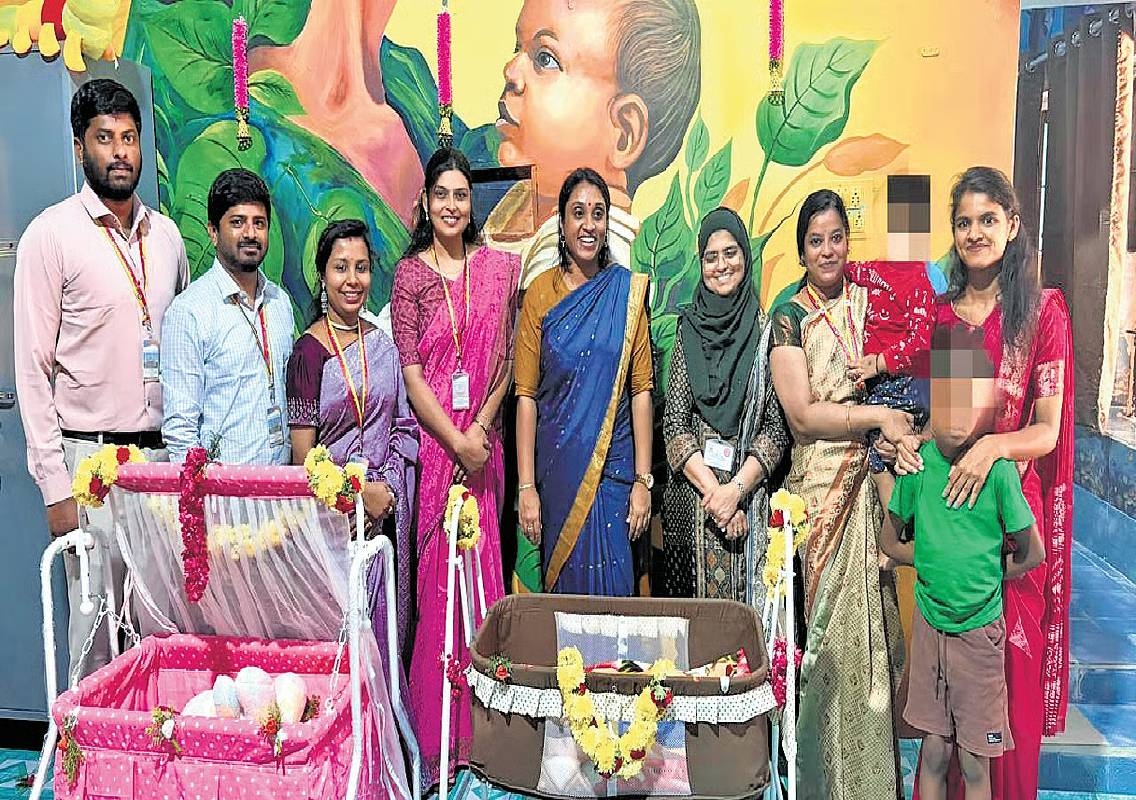


Bengaluru: In a first-of-its-kind initiative in the country, Karnataka has established India’s first Government Special Child Care Institution (GSCCI) inside the women’s wing of Parappana Agrahara Central Jail to support children living with incarcerated mothers.
The initiative, launched by the Directorate of Child Protection (DCP), aims to provide a safe, nurturing, and educational environment for children below the age of six who are staying inside prison premises with their mothers.
Officials said the specialised unit has been designed to ensure that children are not deprived of their basic rights, education, emotional development, and social exposure despite being born into difficult circumstances.
Currently, nine children are being cared for at the facility, including three children of foreign nationals who are lodged in prison in connection with narcotics-related offences.
Children receive education and emotional support
According to CV Sneha, the GSCCI has appointed two teachers dedicated to the education and development of the children.
The curriculum focuses on early childhood learning activities such as alphabets, numbers, rhymes, storytelling, drawing, and creative arts. The children are also taught social and behavioural skills, including greeting elders, table manners, and personal hygiene.
Officials said awareness sessions on safe and unsafe touch are also conducted to ensure children develop basic personal safety awareness from an early age.
The facility has been established with support from the Early Childhood Care and Education (ECCE) programme for children of incarcerated mothers.
Facility designed as a child-friendly space
The prison child care unit has been transformed into a child-friendly learning environment with colourful wall paintings, artistic murals, improved sanitation facilities, and integrated play-and-learning spaces.
Officials from the Directorate of Child Protection, along with artists and support staff, redesigned the classrooms and surrounding areas to create a more welcoming atmosphere for children growing up within prison walls.
The institution now includes child-friendly toilets, handwashing stations, and upgraded hygiene facilities funded through allocations made by the DCP.
Authorities stated that the objective is to reduce the psychological impact of prison surroundings on children and provide them with an atmosphere similar to a regular early learning centre.
Support provided under legal and child rights framework
Asha HK explained that prison manuals and Supreme Court guidelines permit children below six years of age to stay with their mothers in jail.
She said the department’s role is to ensure the children’s protection, development, nutrition, and school readiness during their stay inside the prison facility.
“Once the child completes six years, we approach family members to take responsibility for their care. If there is no support from relatives, we coordinate with registered NGOs functioning under the Juvenile Justice Act for further care and education,” she said.
The initiative has been developed in alignment with the Centre’s Mission Vatsalya child protection scheme and provisions under the Juvenile Justice (Care and Protection of Children) Act and the United Nations Convention on the Rights of the Child (UNCRC).
Focus on health and nutrition
Along with educational support, the children at the facility are undergoing regular health check-ups and medical monitoring.
Officials said future plans include providing enhanced nutritional support, health supplements, and additional developmental programmes to improve the overall wellbeing of children living in custodial environments.
Authorities believe the initiative can also positively influence women inmates by helping them maintain emotional bonds with their children and encouraging behavioural transformation.
Senior prison officials stated that many incarcerated women face severe emotional stress and isolation, especially when caring for young children without family assistance. The GSCCI model seeks to address these concerns while prioritising the best interests of the child.
Karnataka initiative may become national model
Child rights activists and prison reform experts have welcomed the Karnataka government’s initiative, calling it a progressive step towards safeguarding the rights and dignity of children living inside prisons.
Experts noted that while children staying in prisons with mothers is permitted under law, very few facilities in India offer structured education, emotional care, and developmental support tailored to their needs.
The Bengaluru facility is now expected to serve as a model for similar child care institutions in prisons across the country.
Officials said the initiative reflects a broader understanding that children living in prisons are innocent individuals who deserve access to education, safety, healthcare, and opportunities for healthy growth irrespective of their circumstances.