







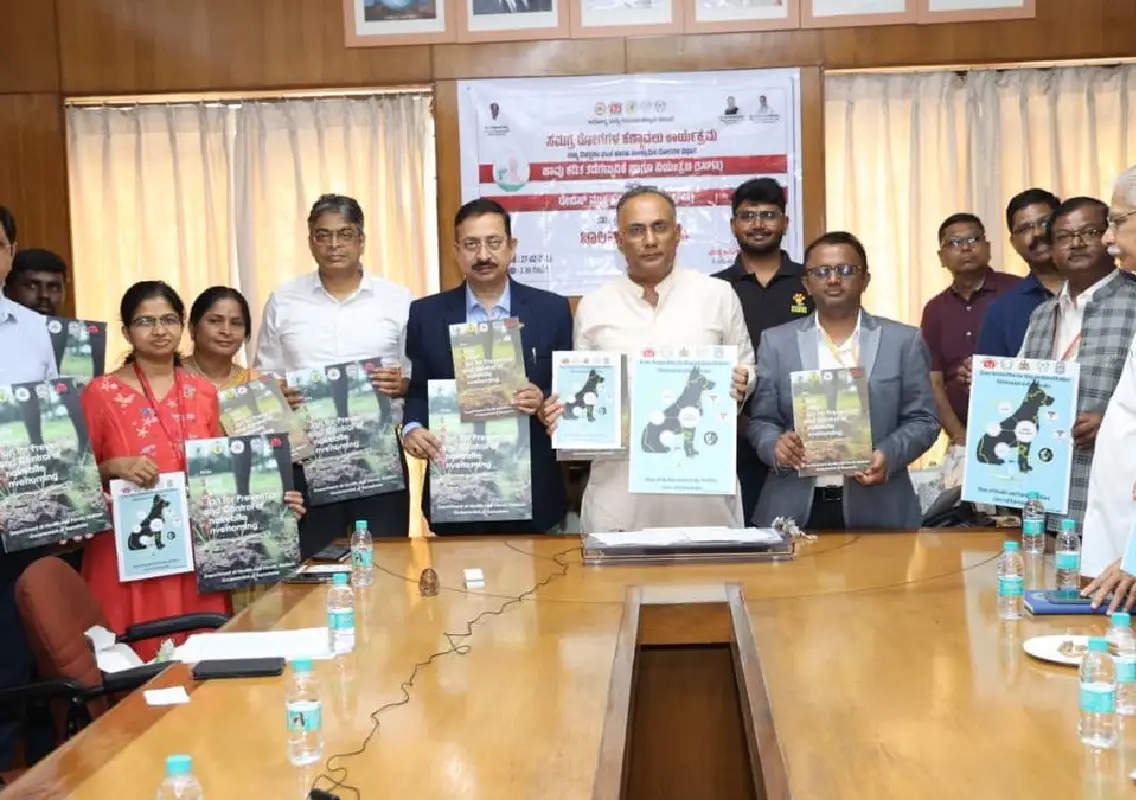


Karnataka on Friday became the first state in India to launch a comprehensive State Action Plan for Prevention and Control of Snakebite Envenoming (SAPSE), expanding its strategy beyond the traditionally recognised “big four” snakes.
Moving beyond the ‘big four’
The ‘big four’ — Indian cobra, Common krait, Russell’s viper and Saw-scaled viper — have historically been the focus of antivenom production. However, the new plan recognises that at least three additional medically significant species are contributing to snakebite-related deaths and disabilities in the state.
The government has highlighted major knowledge gaps in epidemiology, geographic venom variation and species identification. It has called for venom characterisation studies across regions, including laboratory assessments to evaluate how effectively existing antivenoms neutralise different species.
Rising cases prompt urgent response
According to Health Department data, Karnataka recorded 20,634 snakebite cases and 157 deaths in 2025 — the highest in recent years. In 2026, up to February 22, 1,785 cases and 17 deaths have already been reported.
The state declared snakebite a notifiable disease in 2024 and introduced cashless treatment under the Ayushman Bharat-Arogya Karnataka (ABArK) scheme. The new plan proposes a dedicated surveillance and research cell to strengthen real-time data collection and policy response.
Rabies elimination roadmap also unveiled
Alongside SAPSE, Karnataka also released its State Action Plan for Rabies Elimination (SAPRE), aligned with the National Rabies Control Programme. The state reaffirmed its commitment to the One Health approach, aiming to eliminate dog-mediated human rabies by 2030.
Officials emphasised that community awareness, improved surveillance and scientific research will be key pillars in reducing preventable deaths and strengthening public health resilience across Karnataka.