







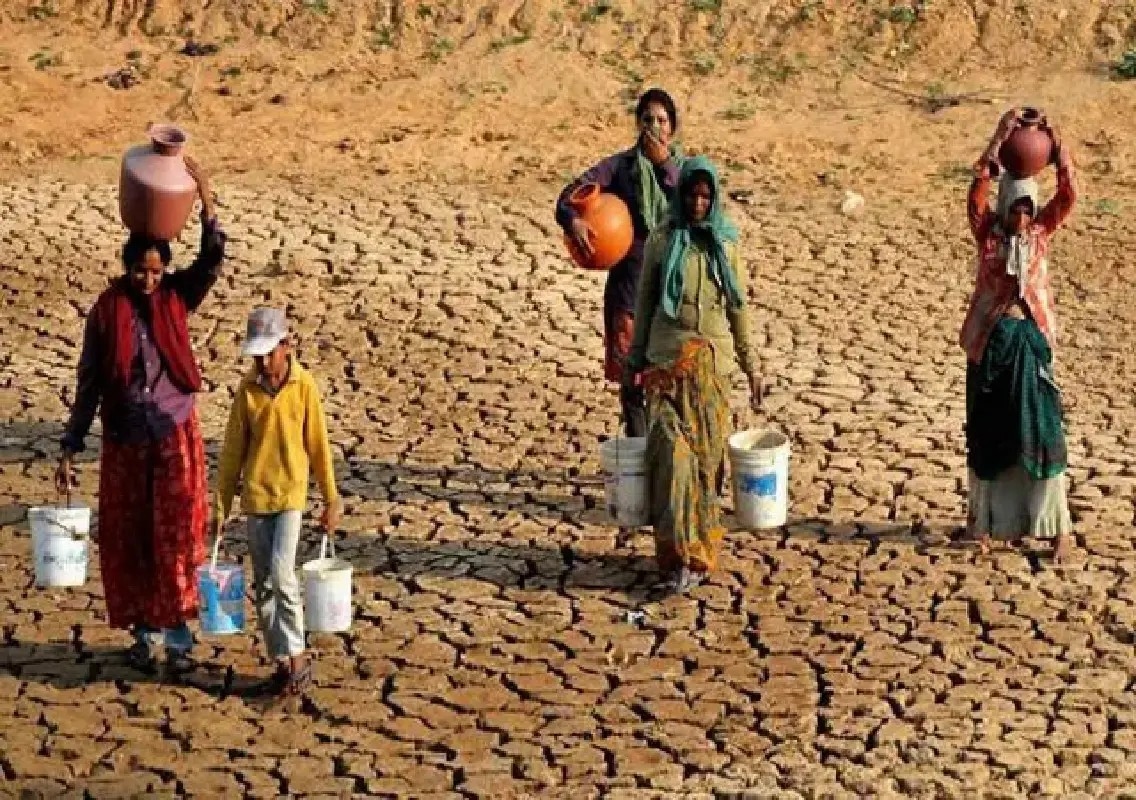


Bengaluru: Karnataka has launched a village-level water budgeting initiative to scientifically assess available water resources against present and future demand, as rainfall deficits and drought conditions raise concerns over water security across the state.
The initiative is being described as a first-of-its-kind exercise in India, with the government seeking to move from crisis-driven responses to advance planning and conservation. The Rural Development and Panchayat Raj (RDPR) department has completed the water-budgeting exercise in 4,565 villages, even as the state’s overall drought assessment is yet to be completed.
The exercise seeks to provide local administrations with a clearer picture of water availability and consumption requirements before shortages become critical.
Water availability assessed against future demand
The village-level water budget involves a scientific assessment of water available within a particular geographical area and its comparison with current and projected demand.
The assessment covers water requirements for domestic use, agriculture, industries and other sectors. By studying both supply and demand, authorities aim to identify areas that could face shortages and take preventive measures well in advance.
RDPR Minister Eshwar Khandre said the initiative had received appreciation at a recently concluded two-day national summit on Sustainable Water Resources in New Delhi.
He said the exercise was particularly important as Karnataka faces increasing water stress and cannot afford to wait until wells and other sources run dry before taking action.
According to the minister, water availability needs to be assessed scientifically and consumption planned accordingly rather than responding only after a drought has already affected communities.
Karnataka among most drought-prone states
Karnataka has the second-largest extent of drought-prone land in India after Rajasthan, making reliable access to drinking water a significant challenge, particularly in rural regions.
The state has 26,589 villages and 57,879 habitations, with around 44.5 million people living in rural areas.
The scale of the rural population makes long-term water planning important, particularly as changing rainfall patterns and increasing demand place additional pressure on existing water sources.
The government is seeking to use village-level data to help local administrations understand their water position and prepare for potential shortages rather than waiting for an emergency.
Shift from crisis response to advance planning
The water-budgeting initiative is intended to change the way villages approach water management.
Khandre said the exercise was designed to move villages from crisis response towards advance planning. While many areas may not currently experience severe shortages, changing climatic conditions could make access to fresh water increasingly difficult in the coming years.
The minister stressed that the absence of an immediate shortage should not lead communities to underestimate the importance of conserving water.
The planning process can help authorities identify areas where water demand could exceed available resources and introduce conservation or consumption-management measures before a crisis develops.
Multiple agencies to support planning
The state plans to involve experts and officials from different fields in the water-planning process.
Meteorologists, geologists, hydrologists and revenue officials can contribute different forms of information required to understand local water availability and future risks.
Meteorological data can help assess rainfall patterns, while geological and hydrological studies can provide information about groundwater conditions and recharge potential. Revenue officials and local administrations can contribute information relating to settlements, land use and water requirements.
Such collaboration could help villages identify potential shortages, regulate consumption and plan conservation measures according to their specific geographical conditions.
Geology adding to groundwater stress
Karnataka’s geological characteristics are also contributing to water stress in several parts of the state.
Khandre pointed out that hard rock and laterite formations in many areas restrict the percolation of rainwater into the ground. This limits natural groundwater recharge, particularly when rainfall is irregular or occurs in short, intense spells.
At the same time, excessive groundwater extraction has placed additional pressure on underground reserves. The drying up of lakhs of borewells during summer in different parts of the state has highlighted the vulnerability of groundwater-dependent communities.
The minister also linked degradation of natural resources and erratic rainfall to increased surface runoff. When rainwater flows away rapidly without adequate infiltration, the resulting groundwater recharge can remain insufficient.
Protecting surface-water sources crucial
With groundwater reserves under pressure, surface-water sources could become increasingly important in the coming years.
Khandre cautioned that lakes, ponds, reservoirs and rivers need to be protected if Karnataka is to avoid worsening water scarcity.
Water bodies play an important role in storing rainwater, supporting groundwater recharge and meeting domestic and agricultural requirements. Their degradation can reduce the state’s ability to cope with periods of inadequate rainfall.
The village-level budgeting exercise is therefore expected to work alongside conservation and water-management measures aimed at protecting available resources.
24×7 water supply linked to conservation
Karnataka is also connecting water budgeting with improvements in water-delivery systems.
A 24×7 drinking water supply scheme has been introduced in 268 villages. According to the government, the initiative has resulted in around 7% savings in water use and a 12% reduction in electricity consumption required for pumping.
The figures indicate that better management of distribution can reduce wastage while also lowering the energy required to deliver water.
Volumetric billing introduced in these villages has enabled authorities to monitor actual water consumption. Such data can help officials understand usage patterns and improve future supply planning.
Women trained to test drinking water
The state has also taken steps to strengthen monitoring of drinking-water quality.
Around 1.5 lakh women have been trained to test water samples, and field-testing kits have been provided to them.
The initiative aims to improve the ability of local communities to monitor the quality of drinking water and identify potential problems closer to the point of consumption.
Combining water availability planning with quality monitoring gives local administrations a broader framework for managing drinking-water resources.
Focus on preventing future shortages
The completion of water budgeting in 4,565 villages represents an important step towards building a more data-driven approach to water management in Karnataka.
As the state continues to deal with irregular rainfall, groundwater depletion and increasing demand, village-level planning could help authorities identify vulnerabilities before they turn into severe shortages.
The initiative’s larger objective is to ensure that water management does not begin only after drought conditions emerge. By assessing available resources, anticipating future demand and linking planning with conservation and efficient distribution, Karnataka is seeking to prepare its villages for increasingly uncertain water conditions.