







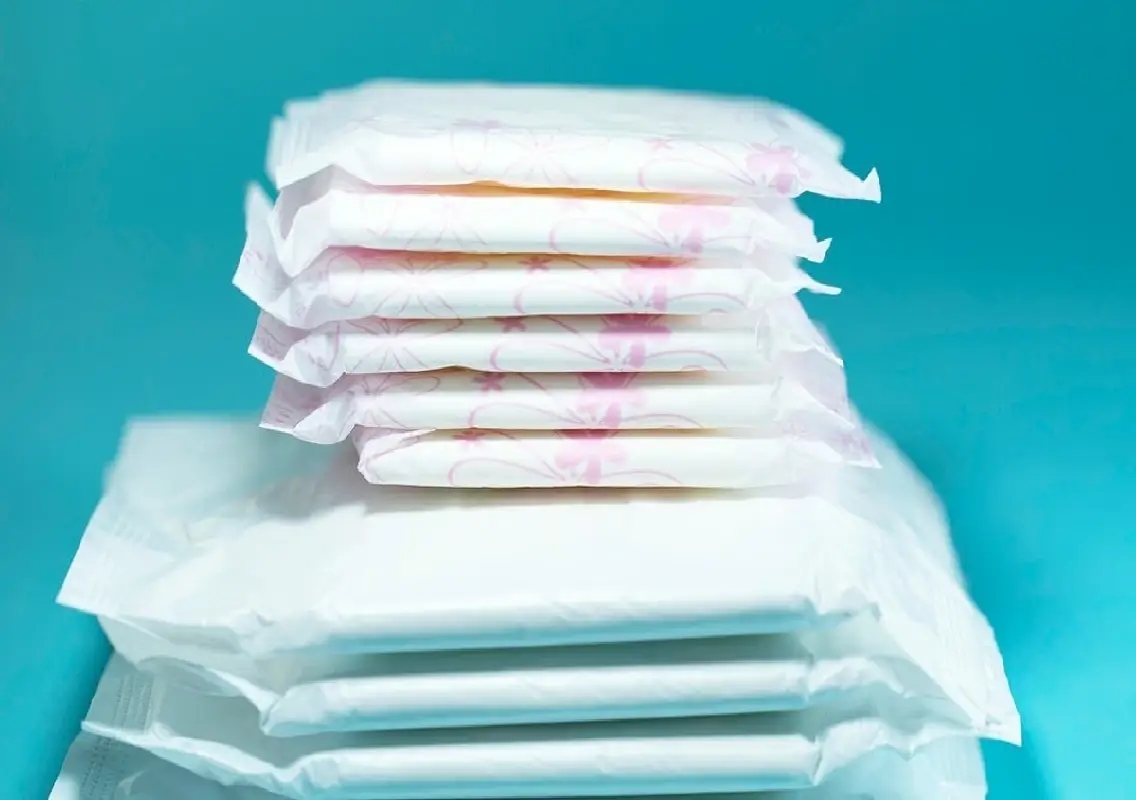


Bengaluru: The Karnataka government has made the provision of free sanitary napkins and menstrual hygiene facilities compulsory in all government, aided and private schools across the state for girls studying in Classes 6 to 12. The directive also covers pre-university (PU) colleges, with institutions warned of disciplinary action for non-compliance.
The School Education Department has issued a circular directing educational institutions to provide free biodegradable sanitary napkins that meet prescribed quality standards. The initiative aims to safeguard menstrual health, hygiene and dignity among girl students and follows Supreme Court directions recognising menstrual hygiene as an integral part of the fundamental right to life under Article 21 of the Constitution.
Sanitary napkins to be made easily accessible
According to the circular, schools must ensure that sanitary napkins are readily accessible to students. Institutions have been advised to install vending machines inside girls’ toilets wherever possible.
Where vending machines cannot be installed immediately, schools must make alternative arrangements by keeping sanitary napkins at designated locations or assigning authorised staff members to distribute them.
The department has directed institutions to implement the instructions promptly and without lapses. Failure to comply will invite disciplinary action under applicable rules against head teachers of government schools and managements of private schools.
Menstrual hygiene corners within three months
All schools have been instructed to establish dedicated Menstrual Hygiene Management (MHM) corners within three months. These facilities must be equipped with essential items such as spare undergarments, additional school uniforms, disposable bags and other materials to help girls manage unexpected menstruation and related emergencies during school hours.
The circular also makes it mandatory for schools to maintain separate and functional toilets for boys and girls. These facilities must have adequate water connections, proper handwashing arrangements, and soap and water available at all times.
Toilets must ensure privacy and accessibility for students with disabilities.
Every toilet unit must also have a covered waste bin for collecting used sanitary napkins. Schools are responsible for ensuring that the bins are cleaned regularly and that sanitary waste is disposed of safely and in an environmentally responsible manner in accordance with applicable Solid Waste Management Rules.
Annual inspections and anonymous student feedback
District education officers have been directed to inspect schools once a year to assess compliance with the guidelines. The inspections will cover infrastructure, toilet facilities, availability of sanitary napkins, cleanliness, waste disposal arrangements and menstrual health awareness programmes.
Officials must also collect anonymous feedback from students to determine whether the facilities are adequately available and functioning effectively.
Responsibility for implementation will rest with school heads and managements, depending on the type of institution. In government schools, head teachers will be responsible for ensuring the availability of toilets, washing facilities and sanitary napkins.
For aided and unaided private schools, compliance will be linked to Section 18 of the Right to Education Act and Rule 16 of the RTE Rules. Inspection findings and consolidated student feedback must be attached to notices issued under the relevant provisions.
The department has also directed the appointment of nodal officers, preferably women, at district and block levels to coordinate implementation. WhatsApp groups will be formed to facilitate communication and monitoring.
Teachers to receive menstrual health sensitisation
The circular calls for both male and female teachers to be sensitised about menstrual health so that they can understand and appropriately address the concerns of girl students.
The State Council of Educational Research and Training (SCERT) and the National Council of Educational Research and Training (NCERT) have been asked to develop educational materials covering menstruation, puberty, adolescence and related health conditions, including polycystic ovary syndrome (PCOS) and polycystic ovarian disease (PCOD).
The educational initiatives are intended to improve awareness, address misconceptions and reduce the stigma and taboos associated with menstruation.
Supreme Court directions behind the circular
The Karnataka government’s directive follows the Supreme Court judgment delivered on January 30, 2026, in the case of Dr Jaya Thakur v. Union of India.
A bench comprising Justices J B Pardiwala and R Mahadevan held that menstrual health and hygiene form an integral part of the right to life guaranteed under Article 21 of the Constitution.
The court directed all states and Union Territories to ensure that government and privately managed schools in both urban and rural areas provide free sanitary napkins, separate functional toilets for boys and girls, adequate water and handwashing facilities, menstrual hygiene management corners and safe sanitary waste disposal mechanisms.
The judgment also underscored the importance of menstrual health education and appropriate training for teachers. It emphasised that girls should be able to attend school without embarrassment, discrimination or health-related difficulties arising from inadequate menstrual hygiene facilities.
The Karnataka government’s latest circular seeks to implement these directions through mandatory provisions across educational institutions in the state, with monitoring and accountability measures to ensure compliance.