


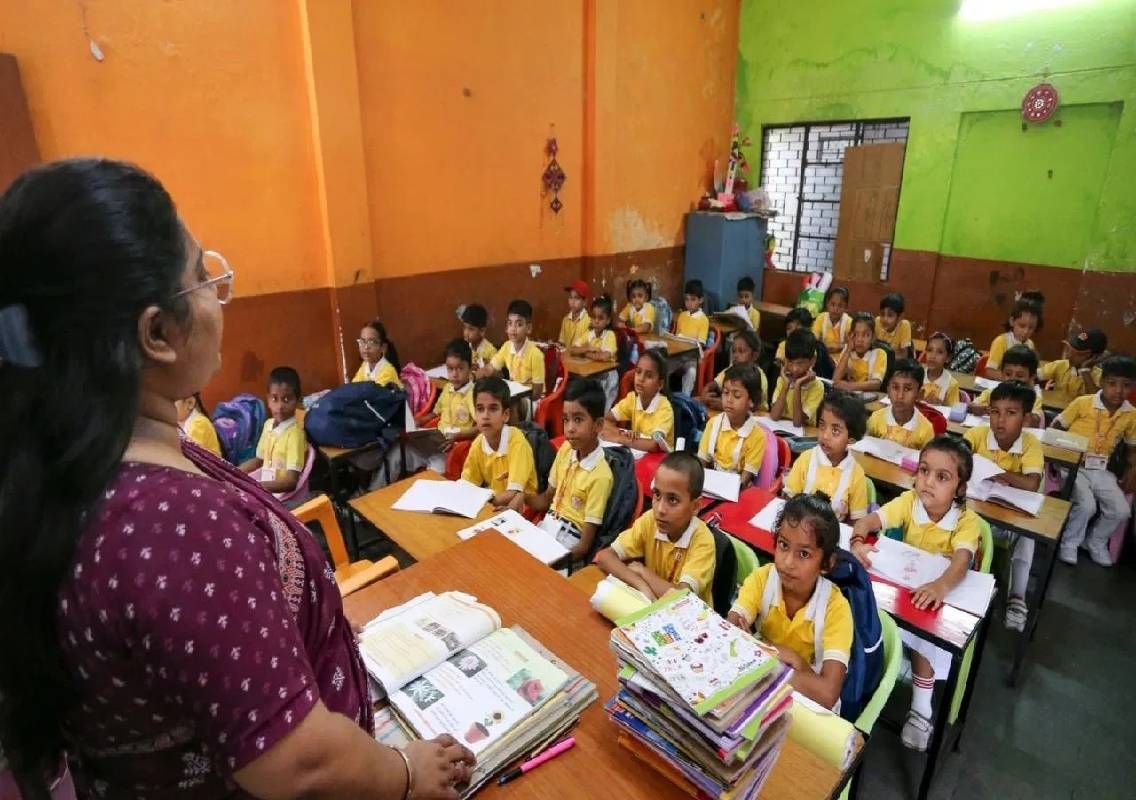


Bengaluru: The Karnataka government is considering introducing Lower Kindergarten (LKG) and Upper Kindergarten (UKG) classes in more government schools across the state, amid growing demand for affordable pre-primary education.
With private school fees continuing to put pressure on household budgets, an increasing number of parents are showing interest in government schools. The proposed expansion aims to make early childhood education more accessible and strengthen enrolment in the public education system.
At present, around 6,000 to 7,000 government schools in Karnataka offer pre-primary classes. The School Education Department is planning to conduct a survey to identify schools where LKG and UKG sections can be introduced. Institutions witnessing greater demand from parents are likely to be prioritised during the initial phase.
Survey to identify schools for expansion
The proposed survey will help the department assess the need for pre-primary education in government schools across different regions. Student enrolment, requests from parents and demands raised by School Development and Monitoring Committees (SDMCs) are expected to be among the factors considered while selecting institutions.
The department intends to identify schools where introducing LKG and UKG facilities would attract more children and address the growing demand for affordable early education.
The expansion is expected to take place in phases, with schools showing a greater need for pre-primary sections receiving priority. The survey will also help the government understand the availability of facilities and resources required to run these classes.
Schools already running pre-primary classes
Interestingly, several government schools have already started LKG and UKG classes without formal government approval. In these institutions, SDMCs and teachers have taken the initiative to provide pre-primary education using locally arranged resources.
These efforts reflect the demand for early learning facilities within the government school system. The department is now considering such initiatives and the requests received from SDMCs while planning the expansion.
The proposed move could also encourage greater community participation in government schools. By recognising local demand and the initiatives taken by teachers and SDMCs, the department hopes to identify institutions where pre-primary education can be introduced effectively.
Kalyana Karnataka model records encouraging enrolment
The initiative has received an encouraging response in the Kalyana Karnataka region, where pre-primary classes introduced using the Kalyana Karnataka Development Fund have reportedly enrolled around 48,000 children within just 42 days.
The enrolment figures have strengthened the case for expanding the programme to other parts of the state. The response indicates the demand for accessible pre-primary education and has encouraged the government to consider extending the model across Karnataka.
The department hopes that providing LKG and UKG facilities in more government schools will help attract additional students and improve enrolment. It is also expected to strengthen the transition between early childhood education and formal schooling.
Focus on anganwadi-school coordination
Another objective of the proposed expansion is to improve coordination between anganwadis and government schools. Better coordination could help children move more smoothly from early childhood care and learning into the formal school system.
The availability of pre-primary classes within government schools may also make it easier for parents to continue their children’s education in the same institution as they progress to primary classes.
The proposed expansion is expected to bring greater attention to early learning and help government schools build stronger connections with families in their surrounding communities.
Relief for families facing rising education costs
If implemented across Karnataka, the initiative could provide financial relief to parents from economically weaker and middle-income families who are finding it increasingly difficult to afford private school fees.
For many families, the cost of private schooling begins even before children enter Class 1, with fees for nursery, LKG and UKG adding to household expenses. Expanding pre-primary facilities in government schools could provide parents with a more affordable option without compromising access to early education.
The government is now looking at the demand for these facilities and the results achieved in regions where the programme has already been introduced. The proposed survey is expected to help determine the next steps in expanding LKG and UKG classes across the state.