







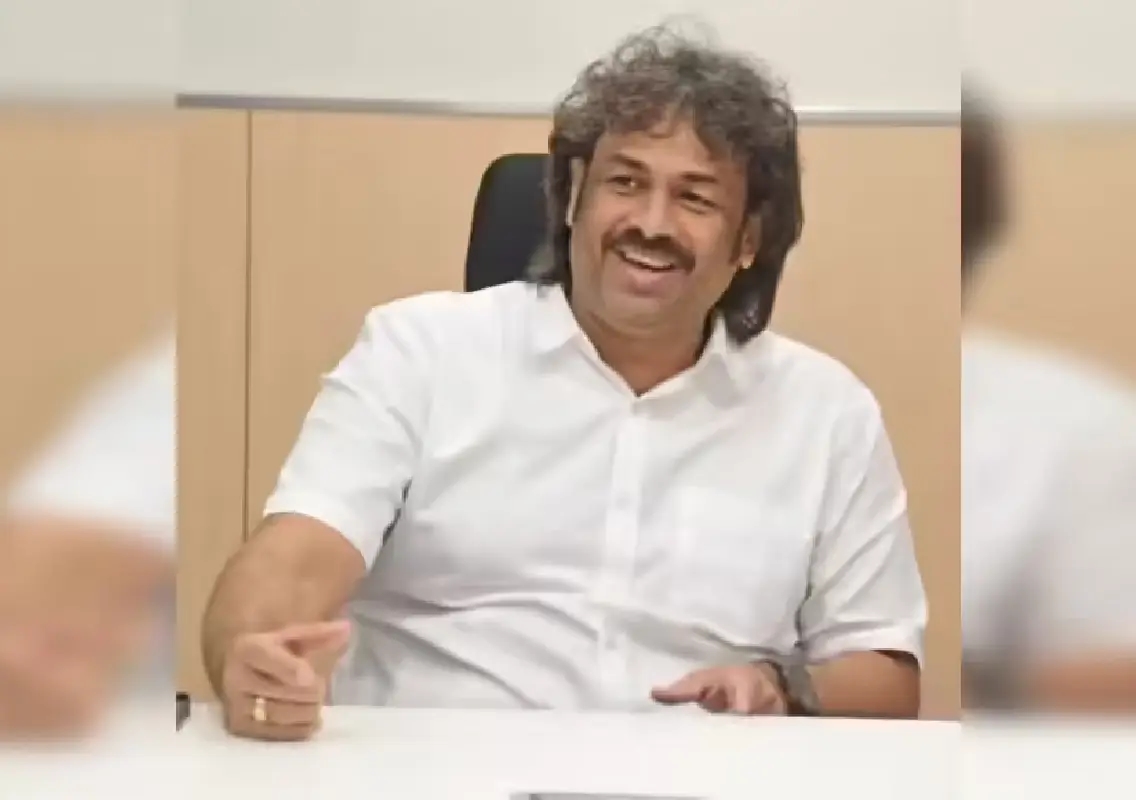


The Karnataka government is set to introduce a new Corporate Social Responsibility (CSR) policy that will require companies operating in the state to spend their CSR funds within Karnataka. The proposal will be taken up in the next cabinet meeting, according to School Education and Literacy Minister Madhu Bangarappa.
‘What they earn in Karnataka should benefit Karnataka’
Speaking to The Times of India on Wednesday, Bangarappa said the move aims to ensure that CSR contributions directly benefit communities and institutions in the state.
“Any CSR fund generated in our state must be spent here. What they earn in Karnataka should benefit Karnataka. Currently, these funds can be spent anywhere. We plan to put a cap on that,” he said.
The minister noted that earlier efforts to channel CSR money toward Karnataka Public Schools (KPS) did not succeed since the funds were not under government control. To strengthen school infrastructure, the state is now seeking financial assistance from the Asian Development Bank (ADB) and the Kalyana Karnataka Regional Development Board (KKRDB).
Additionally, the Minority Welfare Department will upgrade 100 Urdu schools into bilingual KPS institutions, offering instruction in both English and Urdu. The long-term plan envisions 6,000 KPS schools — one in every gram panchayat.
Massive teacher recruitment drive announced
Bangarappa also announced a major teacher recruitment initiative, revealing that 18,000 new teachers will soon be appointed across government and aided schools. The Teacher Eligibility Test (TET) is scheduled for December 7.
He added that the Supreme Court has mandated in-service teachers to also take the exam, and the government is currently seeking legal advice on its implementation.
“Initially, there was a shortage of 60,000 teachers, and schools relied heavily on guest lecturers who were neither appointed on time nor paid regularly,” he explained. “Last year alone, we appointed 51,000 teachers before the academic year began. The previous government appointed only 4,700 teachers in 3.5 years, but we recruited 13,000 in just 11 months. Another 18,000 — 11,000 for government schools and 7,000 for aided ones — will be appointed before the next academic year.”
Minister defends lowering of pass marks
Responding to criticism over the decision to reduce the minimum pass mark from 35% to 33%, Bangarappa described it as a “brave and historic step” intended to improve student progression.
He acknowledged opposition from Higher Education Minister M.C. Sudhakar and Legislative Council Chairman Basavaraj Horatti, but claimed that Horatti had earlier supported the idea.
“Horatti himself advocated lowering the pass mark in 2024. Some people opposing the move now are driven by vested interests—they don’t understand its purpose,” he said.
When asked about Sudhakar’s remarks that he was not consulted on the decision, Bangarappa responded firmly: “I will not discuss it with him. This is my department.”
State Education Policy under review
On the proposed State Education Policy (SEP), the minister said that a sub-committee is currently reviewing the recommendations made by an expert panel.
“Some of the suggestions are vindictive, and I won’t go into details. The cabinet will decide which recommendations to accept,” Bangarappa said.