







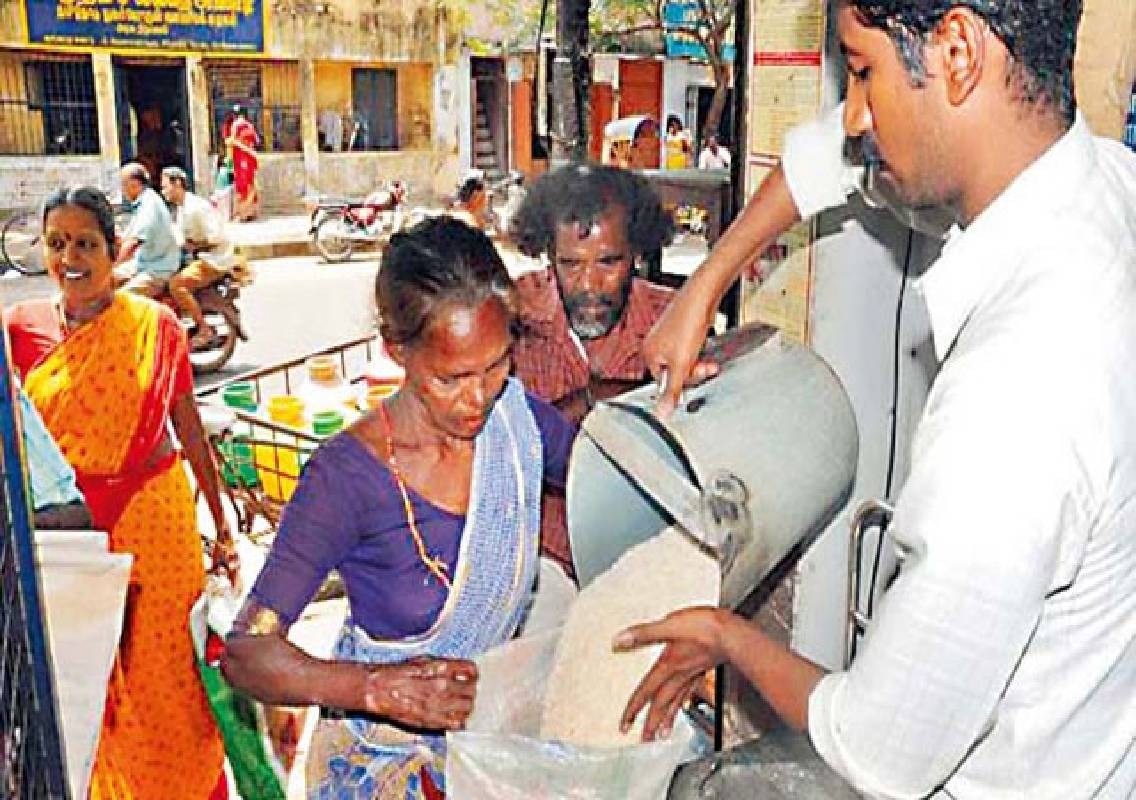


The new two-shift system will come into effect from October 1, 2026, allowing beneficiaries to visit ration shops either before or after their regular working hours.
According to an order reported by Daijiworld, fair price shops will operate from 7 am to 12 noon in the morning and from 4 pm to 8 pm in the evening. The decision comes amid large crowds at ration shops following the Government’s directions to complete e-KYC for ration cards.
Two-shift system from October 1
Under the revised schedule, ration shops will remain open for a total of eight hours a day, divided into two shifts.
The morning shift will run from 7 am to 12 noon, while the evening shift will operate from 4 pm to 8 pm.
The revised timings are intended to give beneficiaries greater flexibility when visiting fair price shops. Daily wage workers, construction workers, auto-rickshaw drivers and others who cannot afford to spend several hours waiting during the daytime are expected to benefit from the extended operating window.
The Government has instructed fair price shop owners and distributors to strictly follow the new schedule.
Decision follows e-KYC rush
The change comes after large numbers of ration-card holders began visiting fair price shops to complete their e-KYC process.
The Government had earlier directed APL and BPL ration-card holders to complete e-KYC. The requirement resulted in crowds at several fair price shops, with beneficiaries reportedly spending long periods waiting for their turn.
Server-related problems and congestion further added to the difficulties faced by cardholders.
The Government subsequently extended the deadline for completing ration-card e-KYC to October 20, according to Daijiworld’s report.
Despite the extension, concerns continued among workers who feared losing a day’s wages while standing in queues.
The new two-shift arrangement is intended to address this practical difficulty by allowing people to visit ration shops outside their main working hours.
Workers can visit before or after work
For people who work during the day, the new timings provide two alternatives.
A beneficiary can visit a ration shop between 7 am and 12 noon before starting work, or between 4 pm and 8 pm after completing the day’s work.
The arrangement is particularly relevant for people whose income depends on daily attendance at construction sites, shops, transport services and other workplaces.
Previously, fixed operating hours could require beneficiaries to spend a substantial portion of their working day completing ration-related formalities.
The revised schedule is aimed at reducing that burden.
Strict instructions to fair price shops
The Government has also directed fair price shop owners to follow the revised timings without deviation.
Food and Civil Supplies Minister Rizwan Arshad warned that disciplinary action would be taken against distributors who fail to open their shops according to the prescribed schedule or cause unnecessary inconvenience to beneficiaries.
The instruction places responsibility on fair price shop operators to ensure that the additional operating window is actually available to the public.
The Government’s move is expected to be particularly important during the remaining e-KYC period, when a large number of beneficiaries may continue visiting ration shops.
e-KYC deadline extended to October 20
The revised timings come after the State Government extended the deadline for ration-card e-KYC to October 20, 2026.
The extension was aimed at giving beneficiaries additional time to complete the mandatory process amid reports of overcrowding and technical difficulties.
The two-shift arrangement now provides an additional mechanism to spread the rush across a longer period of the day.
Instead of concentrating beneficiaries within a single daytime window, the Government hopes that morning and evening operations will distribute the workload more evenly.
Relief for daily wage earners
The decision could provide particular relief to beneficiaries whose earnings are directly linked to the number of days they work.
For a daily wage labourer, spending several hours at a ration shop can mean losing part or all of a day’s income. Similar difficulties can arise for construction workers and auto-rickshaw drivers who need to remain available during peak working hours.
The evening shift until 8 pm gives such beneficiaries another opportunity to complete their ration-related requirements after work.
The arrangement also provides greater flexibility for other cardholders who may find it difficult to visit during conventional daytime hours.
Digital systems still face practical challenges
The revised shop timings address the problem of access, but beneficiaries may continue to face technical issues if e-KYC systems experience server outages or connectivity problems.
Earlier congestion at ration shops was reportedly compounded by server downtime, meaning that even people who reached the shops had to wait for the system to become operational.
The extended timings could help distribute crowds, but the effectiveness of the measure will also depend on the availability and reliability of the digital systems used for e-KYC.
New schedule to remain important beyond e-KYC
While the immediate reason for the revised timings is the e-KYC rush, the longer operating window could also make ration services more accessible to working beneficiaries.
If the system operates smoothly, the morning and evening shifts could reduce the need for workers to take time away from their jobs for essential public distribution services.
The Government has therefore linked the change to reducing inconvenience for citizens while ensuring that fair price shops remain accessible during a wider range of hours.
With the e-KYC deadline set for October 20, the revised schedule will be particularly significant over the coming weeks.