







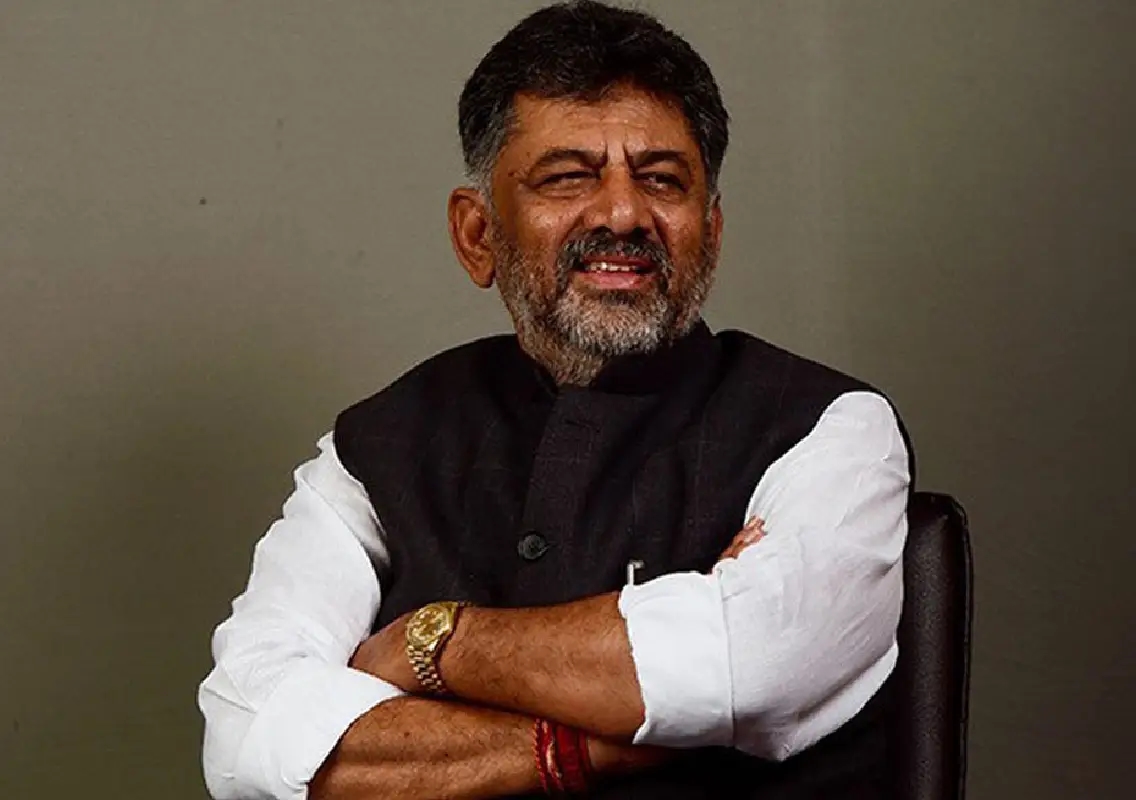


Bengaluru: Karnataka is set to launch the Greater Bengaluru Integrated Township (GBIT) at Bidadi, billed as India’s first and largest artificial intelligence-powered city. Deputy Chief Minister D K Shivakumar announced on Thursday that the ambitious project, spread across 9,000 acres and located just 30 km from Bengaluru, will be developed as the state’s next central business hub under the work-live-play model.
A new central business hub
Designed as Bengaluru’s second central business district, the “AI city” will dedicate over 2,000 acres to AI-based industries and ancillary units. A 300-metre-wide business corridor will link the township to major highways including the STRR, NH-209, NH-275 and NICE Road, ensuring seamless connectivity. Officials said the township will ease the pressure on Bengaluru’s traffic while offering walk-to-work planning and smart infrastructure.
Employment opportunities and investment
The township is expected to attract global investors, multinational corporations and startups, while generating lakhs of jobs in information technology, AI and services. Shivakumar emphasised that a “local-first” policy will prioritise opportunities for Karnataka’s youth. The project has financial backing of over ₹20,000 crore — ₹2,950 crore from Bengaluru Metropolitan Region Development Authority (BMRDA) funds and ₹17,500 crore from financial institutions with state guarantees.
Farmers’ concerns and transparency
Addressing farmers at the deputy commissioner’s office in Ramanagara, Shivakumar said the government would proceed legally and transparently. “I am not ready to go to jail like former CM Yediyurappa by denotifying lands. This project will go ahead, but with complete transparency and fair compensation,” he said. He added that over 70% of landowners, including members of H D Kumaraswamy’s family, had already applied for compensation.
The project covers 8,493 acres across nine villages, including 6,731 acres of private land, 750 acres of government land and 1,012 acres of waterbodies. The deputy CM assured protesting farmers that no extra land would be acquired beyond the notified area.
Compensation and rehabilitation
The township will follow the 2013 Land Acquisition Act. Farmers will receive annuities of ₹30,000–₹50,000 per acre annually until full compensation is settled. Landless families will be given ₹25,000 a year, along with housing sites, employment support and special education and job certificates. Monetary payouts will be completed within 30 days of land acquisition, while developed sites will be handed over within a year.
Green and sustainable planning
Over 1,100 acres will be reserved for parks and open spaces, making GBIT one of the country’s greenest urban projects. The plan includes rejuvenation of the Byramangala lake, with ₹750–1,000 crore earmarked for treatment works, wetlands and parks. The Bangalore Water Supply and Sewerage Board will set up a 100 MLD sewage treatment plant to support the township.
Timeline for implementation
The joint measurement certification process will begin on September 11, with 15 trained teams using a mobile app for transparency. The process is expected to conclude within 90 days, and the final land acquisition notification is due in December 2025. The government has set a three-year target for completing the township.
A project two decades in the making
First proposed in 2006 during H D Kumaraswamy’s tenure, the township project has faced several delays, including the withdrawal of developer DLF and policy changes. It gained momentum in 2023 when the Greater Bengaluru Bidadi Smart City Planning Authority was upgraded to the Greater Bengaluru Development Authority. With cabinet approval secured in February 2025, the project is now closer to reality.
Conclusion
The Greater Bengaluru Integrated Township at Bidadi represents a landmark urban development initiative, combining artificial intelligence, sustainability and global investment potential. With strong financial backing and a commitment to fair compensation, the project aims not only to ease Bengaluru’s urban challenges but also to position Karnataka at the forefront of next-generation city planning.