







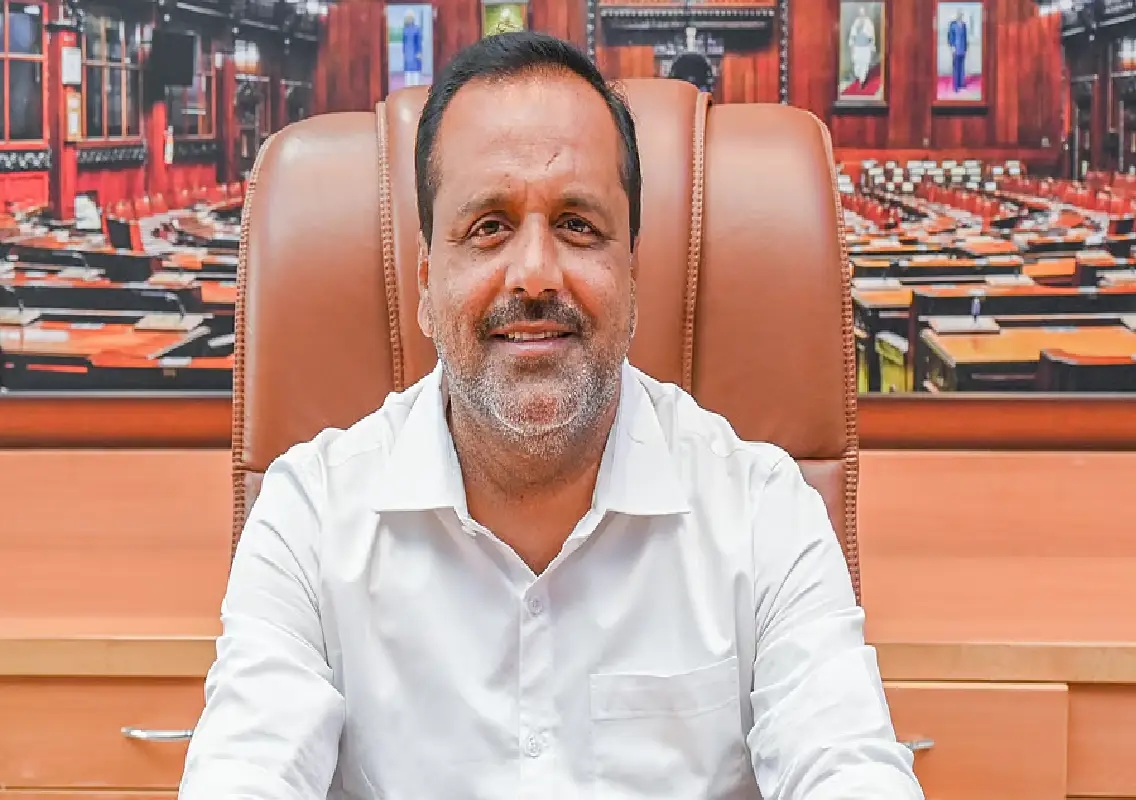


Bengaluru: Health and Family Welfare Minister U T Khader on Friday, November 27, said the Karnataka government would introduce a stringent law to curb medical quackery and take tough action against people practising medicine without the required qualifications.
Speaking to media persons in Bengaluru, Khader said the existing legal provisions were inadequate to tackle the growing problem of unqualified individuals offering medical services, particularly in rural areas.
“The existing laws are not strong enough to tackle the menace of quacks. Many unqualified people from northern states are practising medicine in the state. They should be restrained from rendering medical services and hoodwinking poor people in rural areas. I ask them to leave Karnataka and return to their states,” he said.
The minister said the government would soon formulate stronger legal provisions to prevent unauthorised medical practice and protect people from being misled by individuals without recognised medical qualifications.
He expressed concern over vulnerable rural communities being exposed to treatment by unqualified practitioners, stressing the need for effective enforcement and stricter action against those violating medical regulations.
Ayurvedic practitioners must follow prescribed limits
Khader also clarified that Ayurvedic practitioners must prescribe only medicines permitted under the applicable regulations and remain within their legally authorised scope of practice.
He said practitioners could not go beyond their permitted domain by administering injections or adopting other treatment methods for which they were not authorised.
The minister’s clarification comes amid concerns over the distinction between recognised systems of medicine and unauthorised medical practices. He stressed that practitioners must adhere to the regulations governing their respective systems and qualifications.
Khader seeks Rs 1,500 incentive for ASHA workers
On the ongoing strike by ASHA workers, Khader said he had written to Union Health Minister J P Nadda seeking the release of the previously announced monthly incentive of Rs 1,500 for the workers.
The minister said he had also enclosed a copy of a resolution passed in Parliament while communicating the request to the Union government.
ASHA workers play an important role in connecting communities with public healthcare services, particularly in rural and underserved areas. Their demands over incentives and working conditions have been a recurring issue in discussions concerning the public health system.
Khader said the state government had taken up the matter with the Centre and was seeking action on the promised incentive.
Government hospitals face medicine shortage
The minister acknowledged that several government hospitals were experiencing shortages of certain medicines due to delays in the tender process for procurement.
He explained that the delay was linked to the time required for manufacturing, supply and quality verification of medicines. These stages had affected the availability of some essential drugs at government healthcare facilities.
Khader said instructions had been issued to procure and supply essential medicines under the Ayushman Bharat-Aarogya Karnataka scheme to ensure that patients did not face hardship.
The government was taking steps to address the supply gaps and ensure that essential medicines reached hospitals, he added.
Minimum anti-snake venom stock mandated at hospitals
Addressing concerns over the availability of medicines for snakebite cases, Khader said healthcare facilities had been instructed to maintain minimum stocks of anti-snake venom.
According to the minister, primary health centres (PHCs) must maintain at least 10 vials, while taluk hospitals must have a minimum of 30 vials.
District-level medical stores must maintain adequate quantities to meet requirements. In the event of a shortage at any healthcare facility, arrangements must be made to ensure immediate replenishment from the medical stores.
The instructions are aimed at ensuring that patients receive timely treatment in snakebite emergencies, particularly in rural areas where access to larger hospitals may involve considerable travel.
Private hospitals told to display treatment charges
Khader also reiterated that private hospitals must prominently display charts detailing their treatment rates on their notice boards.
He said hospitals must comply with the requirement so that patients and their families are aware of the charges for medical services.
The minister stressed the importance of transparency in healthcare costs and said private hospitals should ensure that the prescribed rate information is clearly accessible to the public.
The minister’s remarks covered several issues concerning Karnataka’s healthcare system, including action against unqualified medical practitioners, the demands of ASHA workers, medicine procurement delays, anti-snake venom availability and transparency in private hospital charges.