







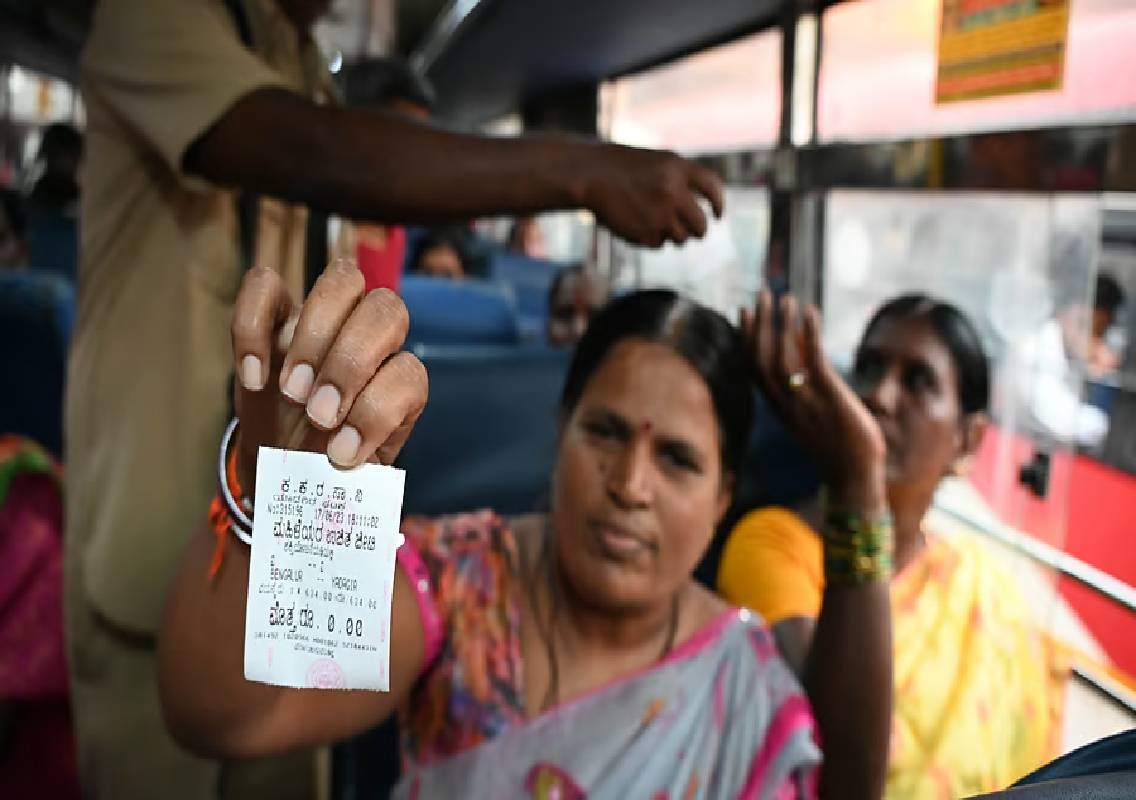


Bengaluru: The Karnataka government is set to distribute free smart cards to around 1 crore women under the Shakti scheme, which provides free travel on eligible government-run buses across the State. The first phase of the smart-card rollout is expected to cost around Rs 250 crore, Transport Minister Byrathi Suresh has said.
The proposed cards are intended to make passenger verification easier and help prevent misuse of the free travel scheme. The government is also considering expanding the smart-card system in phases to cover more beneficiaries.
The Shakti scheme was launched on June 11, 2023, as one of the Congress government’s five guarantee schemes. Under the scheme, eligible women who are domiciled in Karnataka can travel free on specified non-air-conditioned government buses within the State.
First phase to cover 1 crore women
Transport Minister Byrathi Suresh said the first phase of the smart-card distribution will cover approximately 1 crore women.
The estimated cost of the first phase is around Rs 250 crore. Of this, the State government is expected to contribute approximately Rs 150 crore, while the remaining amount will be borne by Karnataka’s four State-run transport corporations.
The four transport corporations are Karnataka State Road Transport Corporation (KSRTC), Bengaluru Metropolitan Transport Corporation (BMTC), North Western Karnataka Road Transport Corporation (NWKRTC) and Kalyana Karnataka Road Transport Corporation (KKRTC).
The distribution process is expected to begin soon, although the government is planning the rollout in phases.
Earlier in June, the Transport Department had indicated that more than 3 crore women beneficiaries could eventually receive smart cards. The latest announcement focuses on the first phase involving around 1 crore beneficiaries.
Smart cards to improve verification
At present, women beneficiaries can use eligible government buses by producing valid photo identification. The Karnataka government’s official Shakti scheme information states that Aadhaar, voter ID, driving licence, passport or another government-issued photo ID can be used, while the Shakti Smart Card is also listed as an accepted document.
The proposed personalised cards are expected to provide a more streamlined method of identifying beneficiaries.
Officials have said the system is aimed at strengthening passenger authentication and preventing misuse of the free travel facility. The smart-card system could also provide better information about ridership and help transport corporations maintain more accurate records.
The move comes nearly three years after the launch of the Shakti scheme, which has significantly increased demand for government bus services.
Shakti scheme continues to drive bus demand
The Shakti scheme allows eligible women to travel without paying fares on specified government bus services within Karnataka. However, the benefit does not apply to luxury and certain premium services.
According to the Karnataka government’s official scheme guidelines, the facility is available to women who are residents of Karnataka and also covers eligible girls and gender minorities. There is no travel-distance limit within the State for eligible services.
The increase in passenger numbers following the launch of the scheme has placed additional pressure on State transport corporations.
In June, the Transport Department announced plans to procure 5,000 new buses in phases to strengthen public transport services and address the increased demand. The buses are to be distributed among the four State-run transport corporations.
Smart cards may eventually connect with public transport
The smart-card initiative is also linked to Karnataka’s broader plan to modernise ticketing across its public transport network.
The State has been working towards an NCMC-based smart ticketing system, which is intended to create a common platform across the four transport corporations. The system could support cashless payments, passenger authentication and better ridership tracking.
The proposed Shakti cards are expected to use modern technology for verification. Reports indicate that officials are considering NFC-enabled cards, which could potentially be integrated with other public transport systems in the future.
This could eventually make the cards more useful beyond simply establishing eligibility for free bus travel.
Free travel facility remains unchanged
The introduction of smart cards does not mean that the Shakti scheme itself is being withdrawn or changed.
Eligible women can continue to use the free travel facility on applicable State-run buses by producing an accepted photo identity document. The official Karnataka government scheme page, updated on September 2, continues to list the Shakti scheme and its eligibility conditions.
The smart card is instead expected to provide a dedicated and more convenient method of verifying beneficiaries.
The government hopes that stronger authentication will reduce the possibility of ineligible passengers using the facility while ensuring that genuine beneficiaries can continue to access the scheme without unnecessary difficulties.
Government plans wider transport upgrades
The smart-card initiative is being announced alongside broader plans to improve Karnataka’s public transport infrastructure.
Transport Minister Byrathi Suresh has said the State is also planning to seek a Rs 2,000-crore loan from the Centre for the construction of new bus depots and upgrading existing bus stands. The government has separately approved the induction of 4,500 electric buses into the BMTC fleet under the Centre’s PM E-DRIVE programme.
These measures are intended to address the growing demand for public transport while modernising the State’s bus infrastructure.
The government is also examining a possible revision of bus fares. A committee headed by retired senior IAS officer Atul Tiwari is examining the issue and is expected to submit its recommendations to the government.
What women need to know
Until the smart-card distribution is completed, eligible beneficiaries can continue to use the existing identification system for free travel.
The Karnataka government’s current guidelines say passengers can use the Shakti Smart Card, Aadhaar, voter ID, driving licence, passport or another government-issued photo identity document. The free travel facility applies to eligible government bus services operating within Karnataka.
The planned smart cards are therefore expected to complement the existing system rather than immediately replace the benefit.
As the first phase targets around 1 crore women, the State will have to establish an efficient registration, verification and distribution mechanism before expanding the programme to the remaining beneficiaries.
Conclusion
Karnataka’s decision to issue free Shakti smart cards to around 1 crore women marks another step towards digitising the State’s free bus travel scheme. With an estimated first-phase expenditure of Rs 250 crore, the initiative is expected to make beneficiary verification easier and improve monitoring of the programme.
The rollout also forms part of a larger effort to modernise Karnataka’s public transport system through smart ticketing, additional buses, electric vehicles and upgraded infrastructure. For millions of women who depend on government buses, the key question will now be how smoothly the new cards are distributed and integrated into everyday travel.