









Bengaluru : The Karnataka government has decided to revisit the controversial Karnataka Government Parks (Preservation) (Amendment) Bill, 2026, amid growing opposition from environmentalists, residents’ groups and political parties over provisions allowing limited use of parkland for public infrastructure.
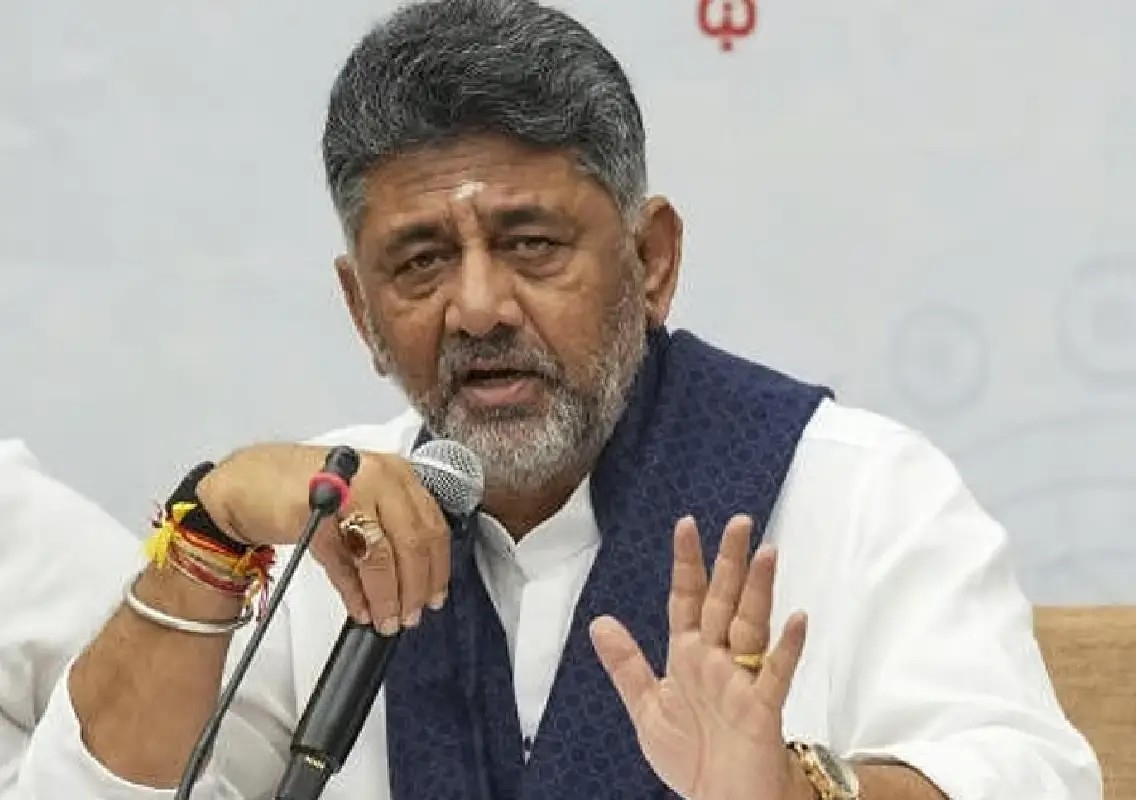
Chief Minister D K Shivakumar said on Tuesday that there was a “misunderstanding” surrounding the legislation and indicated that the government was prepared to bring the matter back for discussion in the Assembly. He also said his government would examine how parkland had been used or diverted by previous governments.
The announcement comes after protests over the amendment, particularly in Bengaluru, where residents and environmental groups have raised concerns about the future of the city’s already limited green spaces.
Why has the Bill become controversial?
The amendment to the Karnataka Government Parks (Preservation) Act, 1975 allows up to 5% of the total area of a government park or garden to be used or alienated for specified public infrastructure and utility projects.
The provision has triggered concern because the original law offered strong protection against alienation of parkland.
Under the amended framework, such use can be considered following recommendations from a High-Level Committee when it is deemed to be in the public interest.
The government has maintained that the provision is intended only for public projects and does not open parkland to private commercial development.
Critics, however, fear that the provision could gradually weaken protection for green spaces.
Shivakumar says there is a misunderstanding
Responding to the growing criticism, Shivakumar said the government would examine the proposal again.
He said he would call for the relevant files and study why the 5% provision was introduced, what previous governments had done with parkland and which plots had been allotted to whom.
He also said the issue could be discussed again in the Assembly.
The Chief Minister said he was open to suggestions from the Opposition and members of the public, stressing that his intention was not to create confusion but to take decisions in the larger public interest.
He also assured citizens that there was no reason to be apprehensive about the future of Bengaluru’s parks.
The government wants to examine earlier diversions
Shivakumar has also turned the spotlight on parkland decisions taken during earlier BJP governments.
He said complete details would be obtained about parkland that was diverted or allotted in the past.
Among the examples he mentioned was the use of land in Lalbagh for the Metro project and other park-related allocations in Bengaluru.
The Chief Minister said these decisions should also be examined when discussing the present controversy.
This has added a political dimension to an already heated debate, with the Congress and BJP accusing each other over the use and protection of public land.
Why Lalbagh is at the centre of the debate
Bengaluru’s iconic Lalbagh Botanical Garden has emerged as one of the main flashpoints in the controversy.
The proposed Hebbal–Silk Board twin tunnel road has been linked to the debate because the project is expected to require access or land within or around Lalbagh during construction.
Opposition leaders and environmental activists have argued that the Parks Bill could provide a legal route for such infrastructure projects.
The government has rejected the suggestion that the amendment was designed specifically to facilitate the tunnel road.
Shivakumar has said the tunnel would pass beneath Lalbagh and that the garden itself would not be adversely affected. He has also argued that any temporary use would be limited to a small portion needed for construction-related purposes.
BJP and activists remain strongly opposed
The BJP has criticised the amendment as a potential opening for the commercialisation of public green spaces.
Opposition leaders have questioned why the legislation was passed without substantive debate during the recent Assembly session.
BJP leaders have also urged Governor Thaawarchand Gehlot to withhold assent to the amendment and send it back to the legislature for reconsideration.
Environmental groups and residents’ organisations have raised similar concerns.
More than 200 citizens, resident groups and environmental organisations had gathered at Lalbagh on August 27 to protest against the amendment and demand its withdrawal.
Experts fear a gradual loss of green cover
The controversy is not limited to the legal wording of the Bill.
Environmental experts have warned that even if only 5% of parkland is used at a time, repeated diversion across multiple parks could have a cumulative impact on Bengaluru’s environment.
The city already faces serious challenges involving air pollution, traffic congestion, rising temperatures and shrinking green cover.
Experts argue that parks perform important environmental functions beyond recreation. They contribute to urban cooling, improve air quality, support biodiversity and provide open spaces for residents.
The concern is therefore that a legal mechanism allowing portions of parks to be diverted could gradually reduce these benefits.
Government says public projects need flexibility
The Karnataka government’s argument is that some public infrastructure projects require access to government land.
Shivakumar has previously said the provision could help with works such as road widening and other development projects that benefit the public.
He has also argued that acquiring private land for such projects can involve substantial compensation or Transferable Development Rights.
The government has insisted that private parties will not be permitted to use parkland for private purposes.
The central disagreement, therefore, is not simply whether infrastructure is necessary.
It is about whether public infrastructure should be allowed to use protected green spaces and what safeguards should apply before that happens.
Government promises more green spaces
As criticism has grown, Shivakumar has also pointed to the government’s plans to expand Bengaluru’s green cover.
He has said the government has identified more than 5,000 acres in areas including Turahalli, Thottikallu, BM Kaval, Basavantha, Mandur and Jyothipura for developing new green spaces.
The government has also discussed creating several new large green spaces on the lines of Lalbagh.
The argument is that new parks can help compensate for the pressures created by infrastructure expansion.
Critics, however, say newly created green spaces cannot necessarily replace established ecosystems that have developed over decades or centuries.
What happens next?
The Chief Minister’s announcement means the controversy may now return to the legislative and public discussion stage.
The government is expected to examine the relevant files, review previous parkland decisions and consider suggestions from the Opposition and the public.
Whether the amendment itself will be changed remains to be seen.
For Bengaluru residents, the debate is about more than one Bill.
It is about what kind of city Bengaluru wants to become as it struggles with growing traffic, infrastructure demands and environmental pressure.
The bigger question is about Bengaluru’s future
Bengaluru has long been associated with its parks, tree-lined streets and reputation as India’s Garden City.
At the same time, the city urgently needs better transport infrastructure and solutions to its growing traffic problems.
Finding a balance between those two needs will not be easy.
The government’s decision to revisit the Parks Bill could therefore provide an opportunity to address the concerns raised by citizens while also examining the genuine infrastructure requirements of a rapidly growing city.
The crucial issue will be whether the review produces stronger safeguards or simply clarifies the existing provision.
For now, Shivakumar’s message is that citizens should not fear for Bengaluru’s parks and that the government is willing to reconsider the issue.
But with environmental groups and opposition parties continuing to demand stronger protection, the debate is unlikely to disappear soon.
The question Bengaluru now faces is simple but important: how can the city build for tomorrow without sacrificing the green spaces that make it liveable today?