







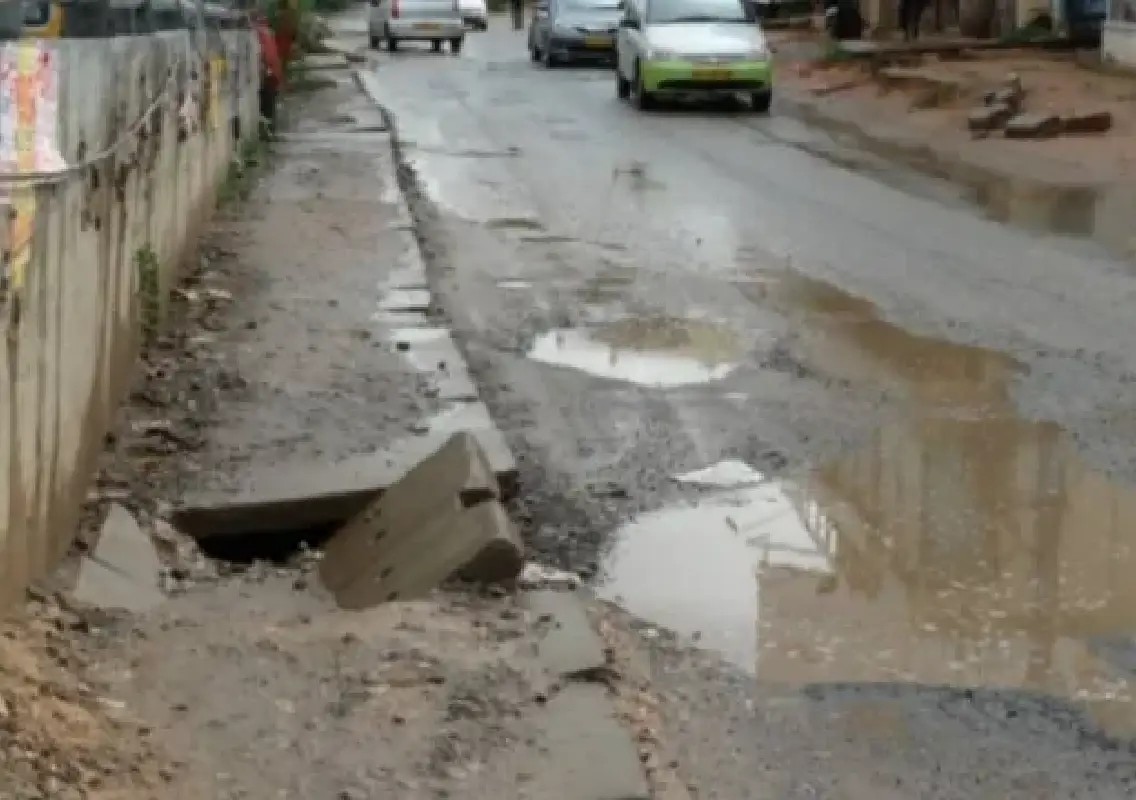


Even as the Supreme Court recently affirmed that safe walking is part of the fundamental rights guaranteed under Articles 21 and 19(1)(d) of the Constitution, Karnataka‘s proposed legislation aimed at protecting pedestrians and cyclists remains pending nearly five years after it was first drafted.
Prepared by the Directorate of Urban Land Transport (DULT) in December 2021, the draft Active Mobility Bill seeks to make safe walking and cycling a legal right in urban areas while placing clear responsibilities on civic authorities.
Right to walk and cycle
The proposed legislation states that every individual should have access to complete and connected streets and the right to reach any destination in an urban area by walking or cycling.
Spread across 17 chapters and 55 sections, the Bill mandates urban local bodies to prepare comprehensive mobility plans within two years and conduct annual infrastructure audits to identify barriers faced by women, children, senior citizens and persons with disabilities.
Strong provisions for accountability
One of the Bill’s most significant proposals is granting pedestrian and cycling infrastructure priority in municipal budgets.
It also calls for grievance-redressal mechanisms and empowers authorities to impose fines of up to ₹1 lakh for violations, increasing to ₹2 lakh for repeat offences. Government departments could also be held accountable under its provisions.
The draft further mandates continuous and obstruction-free footpaths, accessible crossings, traffic-calming measures, safe construction detours and restrictions on parking vehicles on footpaths.
Experts seek urgent action
Urban planning experts argue that Karnataka already possesses a legislative blueprint and now requires political will for implementation.
Experts have suggested creating walkable neighbourhood clusters across Bengaluru using models such as TenderSURE, arguing that pedestrian-friendly infrastructure can be developed at a fraction of the cost of major road expansion projects.
Focus on walkability
Urban planners note that Bengaluru’s challenge is often not the absence of footpaths but poor maintenance and usability. Recent efforts by civic authorities to map roads, footpaths, bus stops and other infrastructure are expected to improve long-term planning and maintenance.
With the Supreme Court now providing constitutional backing to pedestrian rights, experts say the proposed Active Mobility Bill could become a crucial step towards making Bengaluru and other Karnataka cities safer and more accessible for all residents.