







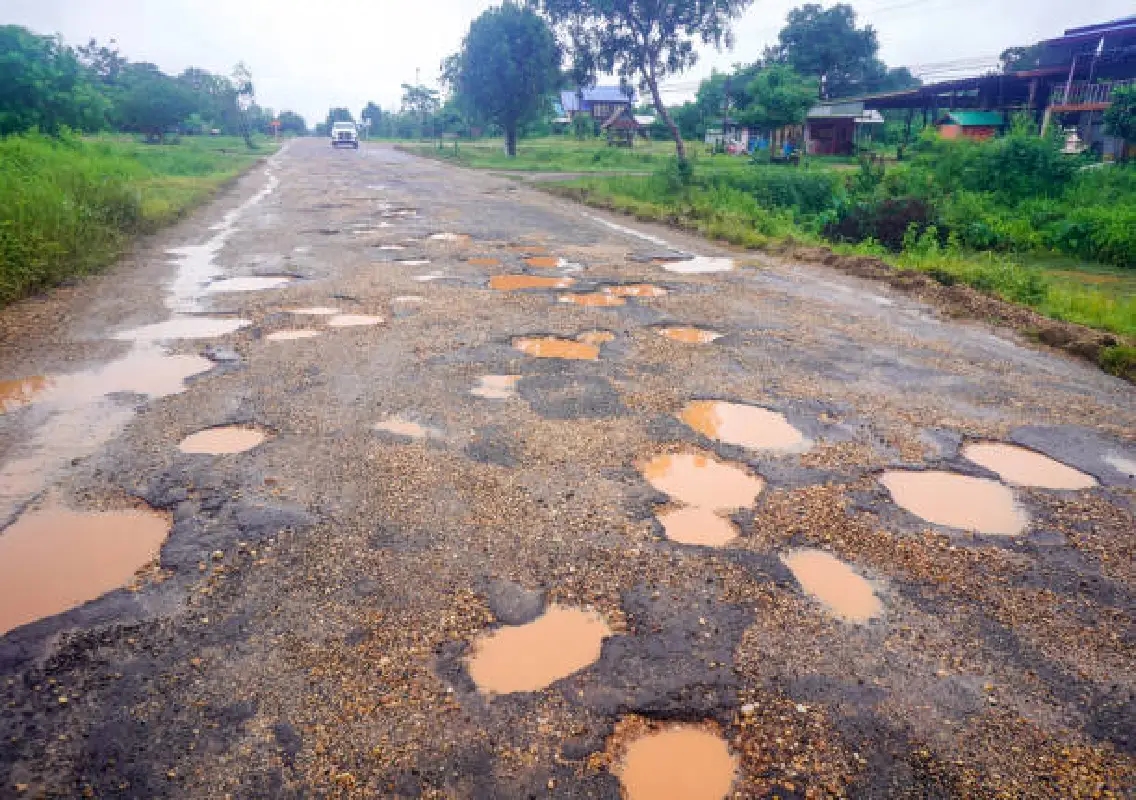


Bengaluru: Nearly six months of relentless rainfall have left Karnataka’s roads in ruins, exposing the state’s weak infrastructure and the poor quality of road construction. From Bengaluru’s pothole-ridden streets to washed-out highways in Kalyana Karnataka and landslide-hit roads in Malnad, the destruction has been described by officials as one of the worst in recent years.
State reels under extensive infrastructure damage
Officials from the Public Works Department (PWD) admit that the situation has spiralled into a full-blown crisis. The early pre-monsoon showers in May, followed by heavy downpours between June and September, battered the state’s transport network, crippling connectivity across multiple districts.
“It is not just a Bengaluru problem,” said a senior PWD official. “Travel to any part of the state, and you will find stretches of broken roads and crumbling bridges. We are staring at a repair bill that could cross ₹10,000 crore.”
The destruction has hit city roads, national and state highways, and major district roads, many of which are now unsafe for travel.
Kalyana Karnataka bears the brunt
The Kalyana Karnataka region has suffered some of the worst damage, with overflowing rivers like Bhima and Krishna cutting off major routes and flooding entire stretches of highways.
In Kalaburagi district, more than 100 kilometres of state and district roads have been damaged, while in Raichur, nearly 67 kilometres of roads and at least 29 bridges and culverts have become unusable. The September flooding of the Bhima River submerged portions of National Highway 50, severing connectivity to several towns for days.
Chief minister Siddaramaiah, who conducted an aerial survey of the affected areas alongside revenue minister Krishna Byre Gowda, assured that repairs will be prioritised. “Repair work cannot wait. Roads are our lifeline,” the CM said, directing officials to expedite surveys for roads, bridges, and other damaged structures.
Coastal and Malnad districts face similar devastation
The situation is equally grim in coastal Karnataka and the Malnad region, where persistent rainfall and landslides have wreaked havoc.
In Dakshina Kannada, Udupi, and Uttara Kannada, several roads have caved in, disrupting vehicular movement. Hill districts such as Kodagu, Chikkamagaluru, and Shivamogga have witnessed multiple landslides, blocking highways and rendering rural roads impassable.
“Every year, the state spends crores on repairs, but roads never last even one season,” said Naveen Somaiah, a coffee grower from Kodagu. “The quality of work is so poor that one monsoon is enough to destroy everything.”
Fiscal strain and long-term challenges
Experts warn that Karnataka’s current fiscal constraints, worsened by expenditures on guarantee schemes, could delay comprehensive restoration. “Given the state’s financial position, rebuilding and repair could take two to three years,” said a retired PWD engineer.
While the state government is expected to release funds in phases for immediate restoration, experts emphasise that temporary fixes will not prevent future collapses.
“If Karnataka continues with patchwork repairs and substandard materials, this cycle will repeat every monsoon,” cautioned Sharan Patil, an urban planner from Hubballi. “The government must now adopt long-term engineering solutions — durable road materials, improved drainage systems, and strict quality checks — to ensure that roads withstand heavy rainfall.”
Government’s next steps
According to PWD sources, survey teams are currently assessing damage across hundreds of kilometres of highways, bridges, and culverts. The revenue department is also preparing a consolidated report to seek additional funds from the Centre for post-monsoon infrastructure rehabilitation.
Officials said the first phase of emergency restoration is expected to begin later this month, focusing on Bengaluru, Kalaburagi, Raichur, Kodagu, and Shivamogga, where damage has been most severe.
However, public dissatisfaction remains high, particularly in Bengaluru, where potholes and waterlogging continue to disrupt daily commutes.
Conclusion
The prolonged monsoon has once again exposed Karnataka’s fragile infrastructure and the urgent need for systemic reform in road construction and maintenance. As the state grapples with a repair bill exceeding ₹10,000 crore, the challenge before the government is not just rebuilding — but building better and stronger roads that can endure the fury of future monsoons.