







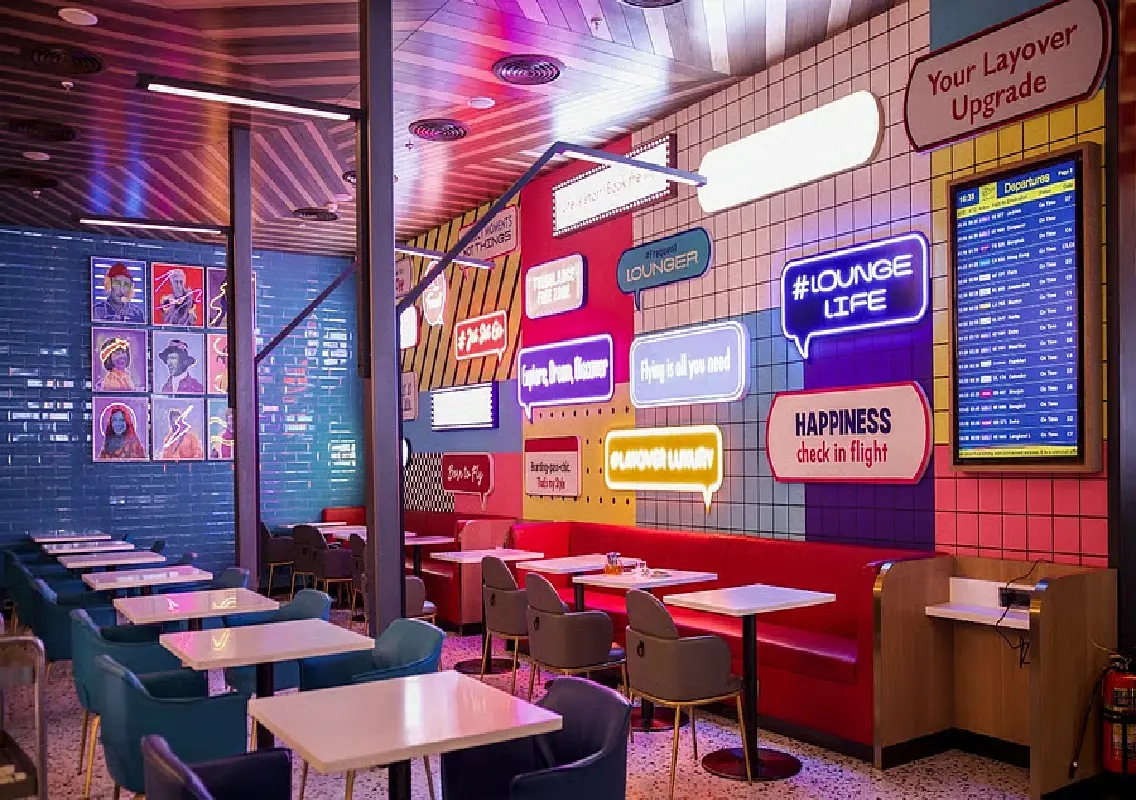


Bengaluru: Kempegowda International Airport (KIA) has unveiled Gate Z, a new Gen Z–inspired social lounge at Terminal 2, signalling a shift in how airport spaces are designed and experienced. Positioned next to the 080 International Lounge, Gate Z departs from the conventional, premium-only lounge model and instead introduces a shared, social-first environment shaped by sustainability, technology and contemporary urban culture. The concept has been developed and launched by Bangalore Airport Services Limited (BASL), which operates several hospitality and passenger service offerings at the airport.
Rethinking the traditional airport lounge
Unlike traditional airport lounges that prioritise exclusivity and quiet isolation, Gate Z has been conceptualised as an open, interactive space reflecting the preferences of younger travellers. BASL said the lounge is designed to cater to evolving expectations, particularly among Gen Z passengers who value flexibility, social connection and experiential spaces over formality.
The design language draws inspiration from urban high streets rather than closed lounges. Fluid layouts, curved seating arrangements and ambient lighting aim to create a relaxed yet dynamic atmosphere. The space encourages travellers to work, rest, socialise or simply spend time without the rigid boundaries typically associated with airport lounges.
Focus on sustainability and technology
Sustainability and seamless technology form the backbone of Gate Z’s design philosophy. According to BASL, the lounge integrates environmentally conscious materials and energy-efficient systems as part of KIA’s broader commitment to sustainable airport development.
Technology plays a central role in enhancing the passenger experience. AI-enabled features have been incorporated to support intuitive navigation and personalised interactions. These smart systems are designed to help passengers move through the space effortlessly, identify zones suited to their needs and access services with minimal friction.
Airport officials noted that the integration of artificial intelligence is aimed not just at convenience, but also at creating a more responsive environment that adapts to passenger behaviour and preferences in real time.
Four distinct experiential zones
Gate Z has been divided into four uniquely themed zones, each offering a different experience while maintaining a cohesive design identity.
The first zone, Bubble & Brew, functions as a café-bar hybrid, catering to passengers looking for quick refreshments as well as those who want to unwind with a beverage before their flight. The space is designed for casual interaction, blending coffee culture with a relaxed bar setting.
The Sipping Lounge offers a calmer environment with comfortable seating, ideal for travellers who want to relax, read or have informal conversations. This zone balances the social nature of Gate Z with the need for quieter moments amid the bustle of the terminal.
The Subway Diner introduces a retro dining experience, drawing inspiration from classic urban diners. With its nostalgic aesthetic, this zone adds a playful contrast to the otherwise modern design and appeals to travellers seeking a distinctive food experience within the airport.
The fourth zone, Amphizone, is designed as an amphitheatre-style space that can host screenings, pop-up events and other interactive activities. This area underscores Gate Z’s positioning as more than just a waiting lounge, transforming it into a cultural and social hub within the terminal.
Designed for social interaction and flexibility
Officials involved in the project said the zoning approach allows passengers to choose how they want to spend their time, whether working, socialising or simply observing the airport environment. The absence of rigid partitions encourages movement and interaction, aligning with Gen Z’s preference for flexible and multi-functional spaces.
The lounge also supports remote work and digital engagement, with layouts that accommodate laptops, mobile devices and small group discussions. This reflects the growing trend of travellers using airport time productively rather than treating it solely as downtime.
Naming through public participation
Adding to its youth-centric identity, the name “Gate Z” was selected through a nationwide contest that invited young Indians to participate in the naming process. BASL said the initiative was intended to involve the target audience directly and give them a sense of ownership over the space.
The winning name reflects both the aviation context and the generational focus of the lounge, reinforcing its positioning as a forward-looking, inclusive concept.
Part of a broader passenger experience strategy
The launch of Gate Z is part of KIA’s wider effort to reimagine airport infrastructure as experiential spaces rather than purely functional transit points. Terminal 2, in particular, has been positioned as a design-led terminal that blends architecture, sustainability and passenger comfort.
Airport authorities believe that such initiatives will enhance Bengaluru’s reputation as a global aviation hub and align the airport experience with the city’s image as a centre for innovation and youth culture.
Conclusion
With the opening of Gate Z at Terminal 2, Kempegowda International Airport has taken a significant step towards redefining airport lounges for a new generation of travellers. By prioritising social interaction, sustainability and technology-driven personalisation, the Gen Z–inspired space reflects changing passenger expectations and sets a new benchmark for shared airport environments in India.