







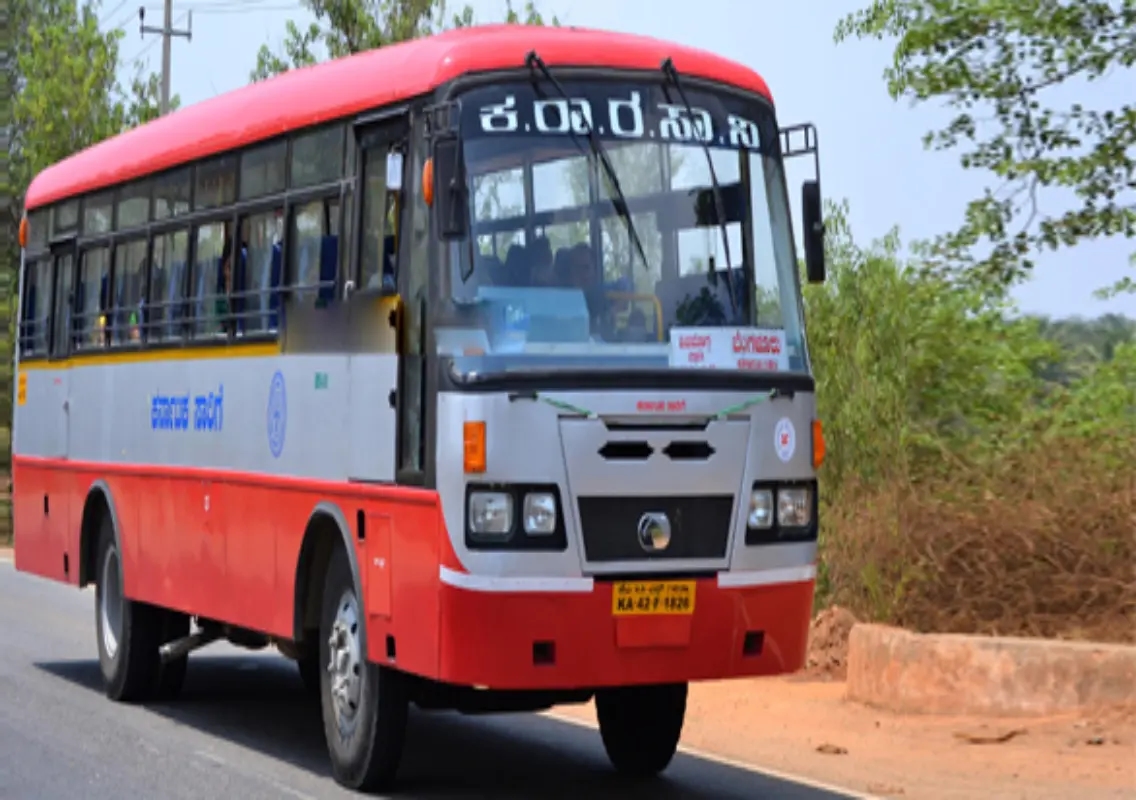


Bengaluru: To streamline operations and reduce expenses, the Karnataka State Road Transport Corporation (KSRTC) has implemented a conductor-less model in over 850 buses, primarily on routes where there are fewer stops. This innovative approach assigns the responsibility of ticket issuance to drivers, eliminating the need for conductors and thereby significantly cutting costs. Currently, the single-crew model is in operation on several point-to-point routes, such as Bengaluru-Mysuru, Bengaluru-Hassan, Bengaluru-Davanagere, Bengaluru-Shivamogga, Bengaluru-Madikeri, and Bengaluru-Kolar, which are popular intercity routes with limited boarding and alighting points.
KSRTC Managing Director Anbu Kumar shared insights into the new model, stating that tickets are issued by the driver both at the initial boarding point and as new passengers board at designated stops along the way. This setup, he explained, works effectively on these routes because the travel time is typically around five hours, a manageable duration for drivers to handle both driving and ticketing duties. “We’re carefully choosing routes where the driver can realistically manage passenger inflow without compromising on safety or customer service,” he added.
The conductor-less model reflects KSRTC’s focus on cost-efficiency amid rising operational expenses. With more than 8,000 buses operating daily, KSRTC covers an extensive 28 lakh kilometres across Karnataka. Each bus incurs a cost per kilometre (CPKM) of roughly ₹50, which includes expenses for capital investments, maintenance, diesel, administrative overheads, and both driver and conductor wages. However, the corporation has found that around 5,000 of its buses are unable to achieve the necessary earnings per kilometre (EPKM) to meet or exceed the ₹50 threshold, a shortfall attributed to lower passenger volumes and other operational challenges on certain routes.
“This is a strategic move to help balance our finances,” said Kumar. “While we are a public service organisation and profit isn’t our sole objective, it’s essential to keep costs down to maintain affordable fares and sustainable operations. The conductor-less model allows us to save ₹10 per kilometre in wages, making a noticeable difference in our daily operations.”
Kumar further explained that despite the challenges, KSRTC remains committed to maintaining accessible public transportation for the people of Karnataka. The conductor-less model, for instance, aims to cut expenses without transferring the financial burden onto passengers. However, Kumar emphasised that this setup is suitable only for routes with journey times around five hours. “On routes with longer travel times, it would be challenging for the driver to manage ticketing and passenger assistance without compromising their primary responsibility of safe driving,” he noted.
The KSRTC’s approach aligns with similar practices adopted by other transport corporations globally, where conductor-less operations are increasingly popular on specific routes to ensure operational efficiency. By focusing on these high-frequency intercity routes, KSRTC aims to maximise resource use while adapting to modern cost-cutting practices without sacrificing service quality.
As the corporation observes the results of this initiative, it remains open to adjustments based on passenger feedback and operational demands.
Source: The News Indian Express