







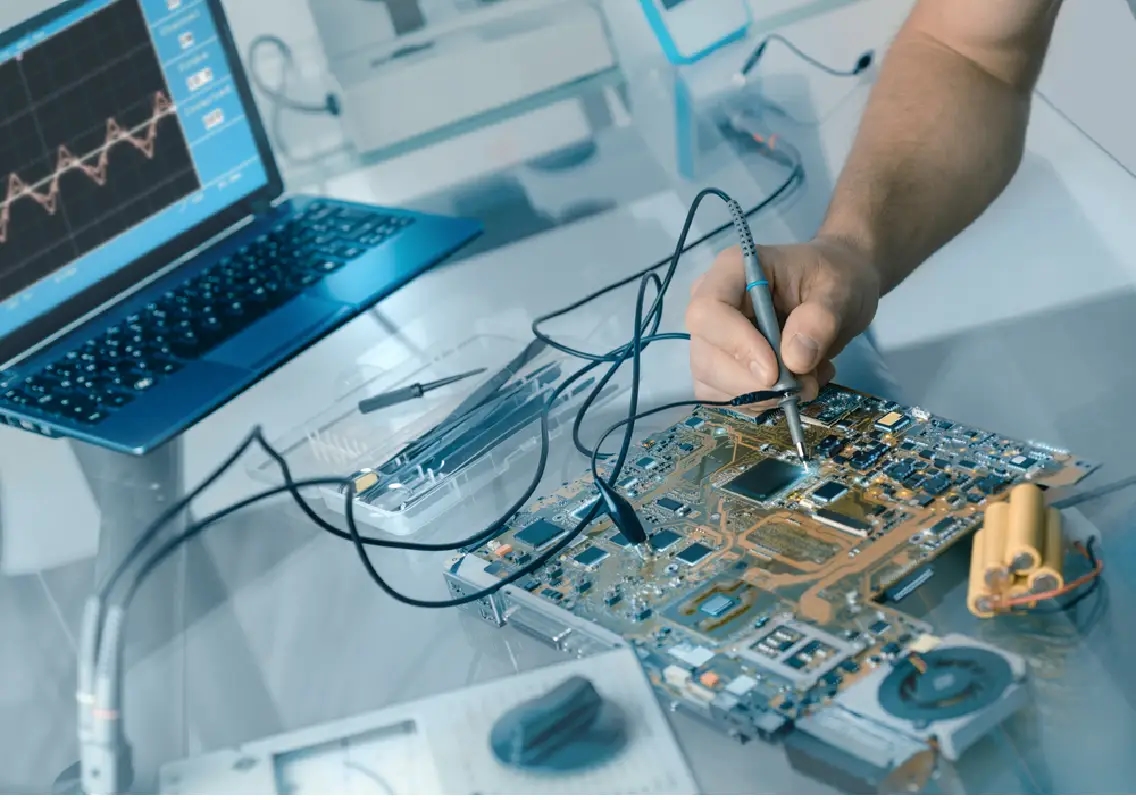


Bengaluru: Experts at the 17th International Conference and Workshop on Electromagnetic Interference (EMI) and Electromagnetic Compatibility (EMC) have raised serious concerns over the limited academic focus on these critical subjects in Indian engineering institutions, including several Indian Institutes of Technology (IITs). The event, organised by the Society of EMC Engineers (India) in association with the IEEE EMC Society, began on Wednesday at Grand Mercure, Gopalan Mall, Old Madras Road, and will run until November 14.
Educational gaps highlighted at major conference
EMI and EMC form the backbone of testing standards for electric and electronic devices across defence, civilian and commercial sectors. However, despite their increasing relevance, these subjects remain largely absent from mainstream engineering curricula in India. This gap is creating a nationwide shortage of skilled electric designers capable of developing sophisticated testing systems—an issue repeatedly emphasised at INCEMIC 2025.
D. C. Pande, General Co-Chair of INCEMIC 2025, pointed out that most institutions either do not offer EMI/EMC courses or provide them only as electives. “Unfortunately, this subject is not taught in colleges. There is a very large demand for these engineers, but most institutions are offering them as elective papers or not at all,” he said. He added that while VTU recently included select portions of the subject as an elective and Andhra University and IIT Kharagpur have introduced dedicated courses, the progress remains insufficient to meet industry needs. According to him, seven universities began offering EMI/EMC courses this year, signalling gradual but slow improvement.
Growing demand for EMI/EMC professionals
The expanding ecosystem of EMI and EMC laboratories highlights the urgent need for trained professionals. India currently has more than 200 public and private testing laboratories specialising in EMI and EMC, underscoring the rapid growth of the sector. Industries such as aerospace, defence, telecommunication, healthcare and consumer electronics rely heavily on EMI/EMC standards to ensure safety, reliability and performance.
Experts at the conference stressed that as India scales up indigenous manufacturing under initiatives like Make in India and expands into global supply chains, the demand for engineers trained in EMI and EMC will witness exponential growth. Without sufficient educational focus, the country risks facing a widening skill gap.
AI and ML transforming EMI/EMC technologies
A significant highlight of INCEMIC 2025 was the emphasis on integrating Artificial Intelligence (AI) and Machine Learning (ML) into EMI and EMC systems. Emerging technologies are enabling predictive modelling, advanced diagnostics and automated testing processes, helping laboratories achieve higher accuracy and efficiency.
Speakers noted that AI-driven tools can simulate complex electromagnetic environments, assess risks and provide early warnings for potential interference, significantly reducing testing time. Such advancements are expected to reshape defence, telecommunications and critical infrastructure sectors.
Addressing intentional EMI and defence challenges
nother key concern discussed at the conference was the rise of intentional EMI, particularly the proliferation of directed energy weapons capable of disrupting or destroying electronic systems. With global military forces increasingly investing in electromagnetic warfare capabilities, India’s preparedness in both offensive and defensive domains is becoming crucial.
Experts emphasised the need for robust strategies, indigenous research and greater collaboration between defence establishments, academia and private industry to strengthen national security.
Knowledge sharing and collaboration key goals
The organisers highlighted that the primary objectives of INCEMIC 2025 include accelerating knowledge exchange, disseminating international standards, and fostering collaboration among defence, civilian and industrial stakeholders. Pande stressed that bridging the skill gap will require joint efforts from universities, research bodies, government agencies and industry partners.
The conference is expected to set the tone for future academic reforms and expanded training programmes, pushing EMI and EMC to the forefront of India’s engineering education landscape.