







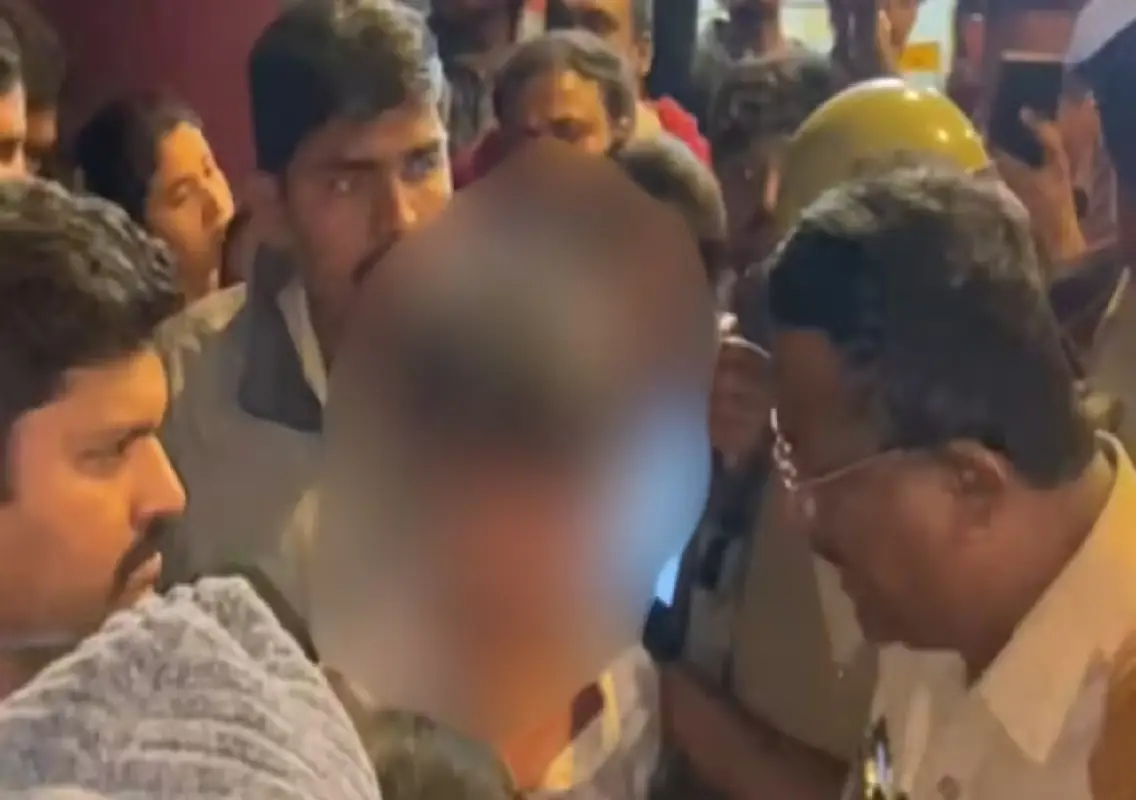


Bengaluru: A 16-year-old boy was detained by Madiwala police on Sunday night for allegedly filming women inside the washroom of a cinema hall in south Bengaluru, triggering outrage among moviegoers and raising serious concerns over safety and monitoring inside public entertainment spaces. The incident took place around 8.45 pm at Sandhya Theatre near the Silk Board junction in BTM Layout during the screening of the 2001 Telugu film Nuvvu Naaku Nachchav.
Incident comes to light during interval
According to police officials, the incident came to light during the interval when a woman noticed a mobile phone placed above an open toilet cubicle while she was using the washroom. Realising that she was being filmed, the woman immediately raised an alarm and informed the theatre management.
Her husband and several other audience members rushed to the washroom area and began searching for the person responsible. The boy was reportedly found hiding inside one of the cubicles. Members of the public seized his mobile phone before he could delete the videos allegedly recorded inside the washroom.
Crowd gathers, police alerted
As word of the incident spread inside the theatre premises, anger grew among the audience, leading to a tense situation. The theatre management alerted the police through the ‘Namma 112’ emergency helpline at around 9.30 pm.
Hoysala patrol personnel reached the spot and found a large crowd of over 300 people gathered at the theatre. Police officials said the juvenile was rescued from the crowd to prevent any physical harm. Another individual was also taken into custody for questioning in connection with the case.
Videos of multiple women recovered
During preliminary investigation, the South-East Cyber Crime police team recovered videos of at least six women from the seized mobile phone. Inspector Eshwari P N, who is leading the investigation, said the juvenile confessed to entering a toilet cubicle before the interval, climbing onto the commode and recording videos of women using adjacent stalls through gaps in the structure.
The phone has been sent for forensic analysis to determine whether more videos were recorded or shared. Police are also examining whether any of the content was uploaded or circulated online.
Background of the juvenile
Police said the boy had arrived in Bengaluru from Nepal around two weeks ago along with his parents. His cousin, identified as Kamal, works as a housekeeping staff member at the theatre. Investigators said the cousin had brought the boy to the theatre, allegedly to assist with cleaning-related work.
The police are now probing how the minor was allowed to be inside the theatre premises and gain access to sensitive areas such as washrooms without proper authorisation or verification.
Case registered under BNS and IT Act
A case has been registered under Section 77 (voyeurism) of the Bharatiya Nyaya Sanhita, 2023, along with relevant provisions of the Information Technology Act. Police confirmed that the juvenile will be produced before the Juvenile Justice Board for further proceedings, as mandated under the law.
As the accused is a minor, his identity has been withheld in compliance with legal norms.
Theatre management under scrutiny
Police are also questioning theatre staff members, including Thimmaraju and Nagaraju, to ascertain how the boy was allowed to be present and assist in housekeeping work without formal recruitment or background checks. The staff reportedly claimed that the juvenile was not directly employed by the theatre.
A senior police officer said the Labour Department has been alerted to examine possible violations of child labour laws and other regulatory norms by the theatre management. Action may be initiated depending on the findings of the inquiry.
Safety concerns in public spaces
The incident has sparked serious concerns over the safety of women in public spaces, particularly in cinemas and entertainment venues where large crowds gather. Women’s rights activists have called for stricter surveillance, better washroom design and more accountability on the part of theatre owners and staff.
Police officials said public places must ensure adequate monitoring and access control, especially in areas meant exclusively for women, to prevent such incidents.
Conclusion
While swift action by alert audience members and the police helped prevent the situation from escalating further, the case has highlighted lapses in supervision and security inside public venues. Authorities have assured that a thorough investigation will be conducted and appropriate action taken against all those found responsible, including individuals and institutions that failed to follow the law.