







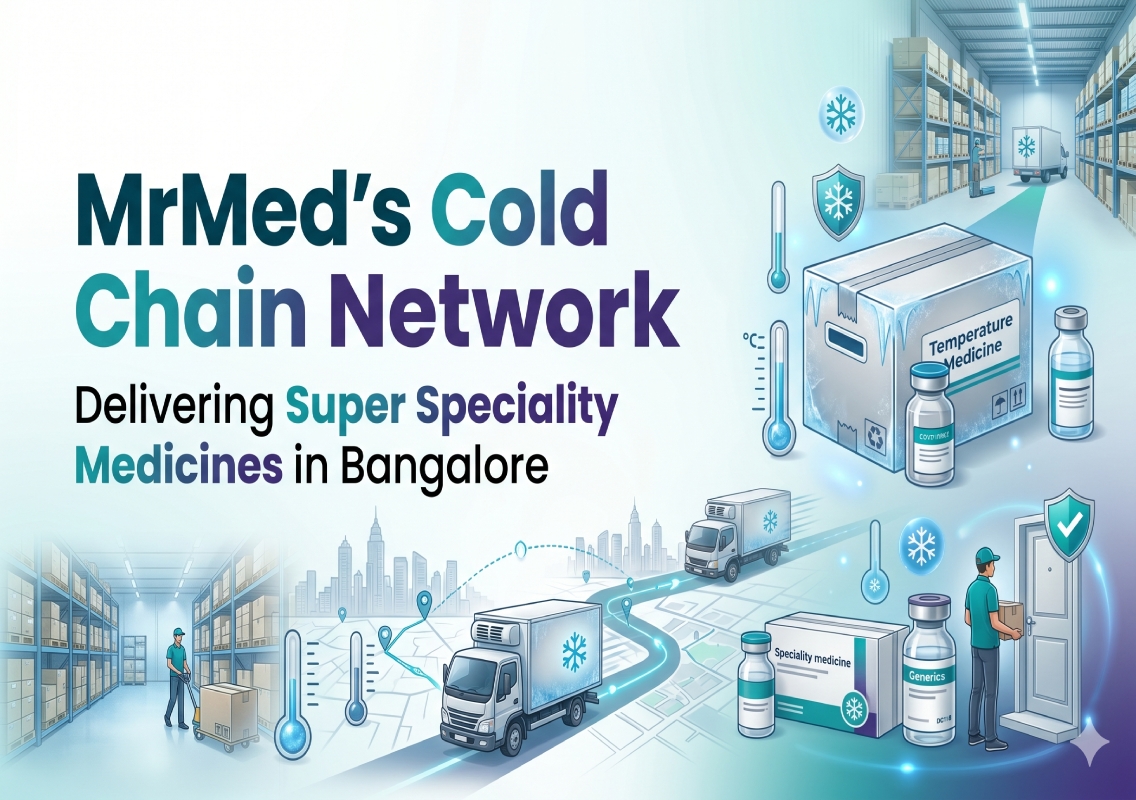


MrMed‘s cold chain delivery system will improve patient safety by delivering temperature-sensitive super speciality medicines directly to patients’ homes through temperature-controlled distribution. These include Semaglutide, Tirzepatide, oncology therapies, immunology medications, and GLP-1 medications that require strict temperature control to maintain their integrity and effectiveness.
All of MrMed’s Cold Chain temperature-sensitive medicines are stored in temperature-controlled warehouses, shipped in insulated shipping packaging with gel ice packs, delivered by trained personnel, and monitored in real time during transit.
MrMed provides a live tracking system that lets patients monitor the status of their medication delivery, ensuring they receive it at the right time. Through these cold chain processes, the risk of temperature damage during transportation will be minimised, providing safer, more reliable access to critical speciality medicines throughout Bangalore.
Key Takeaways
| Cold chain delivery is essential for temperature-sensitive super speciality medicines.MrMed uses controlled storage, insulated packaging, and live tracking systems for safer medicine delivery.Medicines such as Semaglutide, Tirzepatide, oncology medicines, immunology therapies, and GLP-1 medications require strict temperature management.Proper cold chain handling helps maintain the quality, safety, and effectiveness of medicines during transport. |
Modern health care is no longer restricted only to hospitals and pharmacies; it has expanded to include patients’ needs for super-speciality, life-saving medications delivered to their homes safely, quickly, and certainly without compromising on quality. To deliver these medications properly, we must use cold chain systems from the warehouse through to the time the patient receives them at home.
MrMed is changing the way we deliver super-specialist medications in Bangalore by developing a cold-chain network that maintains their integrity throughout delivery.
What Is a Cold Chain in Medicine Delivery?
A cold chain is a temperature-controlled supply system used to store and transport medicines safely.
Many speciality medicines lose their effectiveness if exposed to temperatures outside the recommended range.
Cold chain systems help maintain:
- Medicine stability,
- Product effectiveness,
- Patient safety,
- Regulatory compliance.
This is especially important for biologics, injections, insulin therapies, and speciality oncology medicines.
Why Cold Chain Matters for Super Speciality Medicines
Advanced therapies often have strict storage requirements and will suffer loss of potency, be unsafe and will not provide adequate treatment efficacy if the temperatures fluctuate too much during their shipment.
Examples of therapies that fall into this category are:
- Semaglutide injections,
- Tirzepatide therapies,
- GLP-1 medications,
- Many of the oncology biologics,
- Immunology injections,
- Hormonal therapies.
Most of these medications need to be kept at temperatures somewhere between 2°C and 8°C. Cold chain logistics are therefore very important to the delivery of speciality healthcare.
How MrMed’s Cold Chain Network Works in Bangalore
To maintain the integrity and safety of medicines, MrMed has implemented a structured delivery system that protects against temperature fluctuations, provides real-time monitoring of shipped medicines, and enhances patient convenience.
This delivery system begins at the point of storage and continues until it reaches its intended destination.
Step 1: Temperature-Controlled Warehouse Storage
Temperature regulation of medicine starts at the warehouse level with the use of:
- Medical Grade Refrigeration Units.
- Continuous Temperature Monitoring Systems.
- Backup Power Systems.
- Automated alerts for temperature variation.
Warehouse Teams will be responsible for completing regular temperature monitoring and documenting the results in order to maintain the quality of the medicines.
This is especially important for high-value medicines used to treat cancer or immune system diseases.
Step 2: Quality Checks Before Dispatch
Before a medicine is shipped, it undergoes a series of quality checks to ensure the patient receives the correct product in a legitimate manner. Examples of quality checks performed prior to shipment are:
- Batch verification,
- Expiry verification,
- Packaging inspection,
- Prescription verification.
The main goal of performing these quality checks prior to shipment is to ensure that patients receive the proper medicines, that those medicines are in good condition, and that proper storage conditions have been met.
Step 3: Specialised Cold Chain Packaging
Packaging is a key element in the successful transportation of medical products.
MrMed uses a variety of insulated packaging systems that maintain a stable internal temperature during transportation.
Cold chain packaging can include, but is not limited to:
- Thermally insulated boxes,
- Gel pack cooling,
- Refrigerated container shipments,
- Tamper-evident packaging.
These types of packaging have been developed to minimise temperature fluctuations caused by excessive traffic congestion in the city of Bangalore and lengthy transportation distances.
Step 4: Live Tracking for Patients
Live tracking technology has been one of the greatest improvements in the delivery of speciality medications. Patients, or their caregivers, can be anxious waiting for medicine that is costly or could save a life.
- Real-time delivery updates.
- An estimated time of arrival.
- Visibility of order in transit.
- An alert of successful delivery.
With improved access to this type of information, caregivers and patients can have greater confidence that they will have medicines available to them as soon as possible upon arrival.
Step 5: Trained Delivery Personnel
Cold chain delivery requires trained personnel to handle the product.
Delivery personnel are trained to:
- Handle fragile medicines safely
- Avoid unnecessary exposure to heat
- Minimise transit delays
- Follow temperature-sensitive handling protocols
Proper training reduces the risk of damage during transportation.
Step 6: Fast Last-Mile Delivery
The final delivery stage is often the most critical.
Bangalore traffic and weather conditions can affect the timelines for transporting medicine.
To minimise delays, cold chain deliveries focus on:
- Route optimisation,
- Faster dispatch systems,
- Priority handling for refrigerated medicines,
- Reduced transit exposure.
Fast last-mile delivery helps preserve the effectiveness.
Importance of Cold Chain for GLP-1 Medications
The rising demand for GLP-1 medications for diabetes and weight management has increased the importance of reliable refrigerated logistics.
Medicines containing Semaglutide and Tirzepatide require careful temperature management throughout storage and delivery.
Improper handling may reduce medicine stability and treatment effectiveness.
Reliable cold chain systems help ensure these medicines reach patients safely and in usable condition.
Patient Safety and Compliance
Cold chain systems are not only about convenience.
They are directly connected to:
- Patient safety,
- Medicine effectiveness,
- Regulatory standards,
- Treatment outcomes.
Patients should also follow safe storage instructions after receiving medicines.
For example:
- Refrigerate medicines immediately if required.
- Avoid freezing medicines unless instructed.
- Keep medicines away from direct sunlight.
- Follow the manufacturer’s storage guidelines carefully.
What’s Worth Remembering?
Cold chain delivery plays a critical role in protecting temperature-sensitive medicines. MrMed’s cold chain network in Bangalore focuses on safe storage, insulated packaging, live tracking, real-time temperature monitoring, trained handling, and faster doorstep delivery. These systems help ensure patients receive speciality medicines safely, effectively, and without compromising quality during transit.
Disclaimer
This article is for general informational purposes only and should not be considered medical or pharmaceutical advice. Medicine storage and transportation requirements vary depending on the product. Always follow the storage instructions provided by your healthcare professional or the medicine manufacturer.