







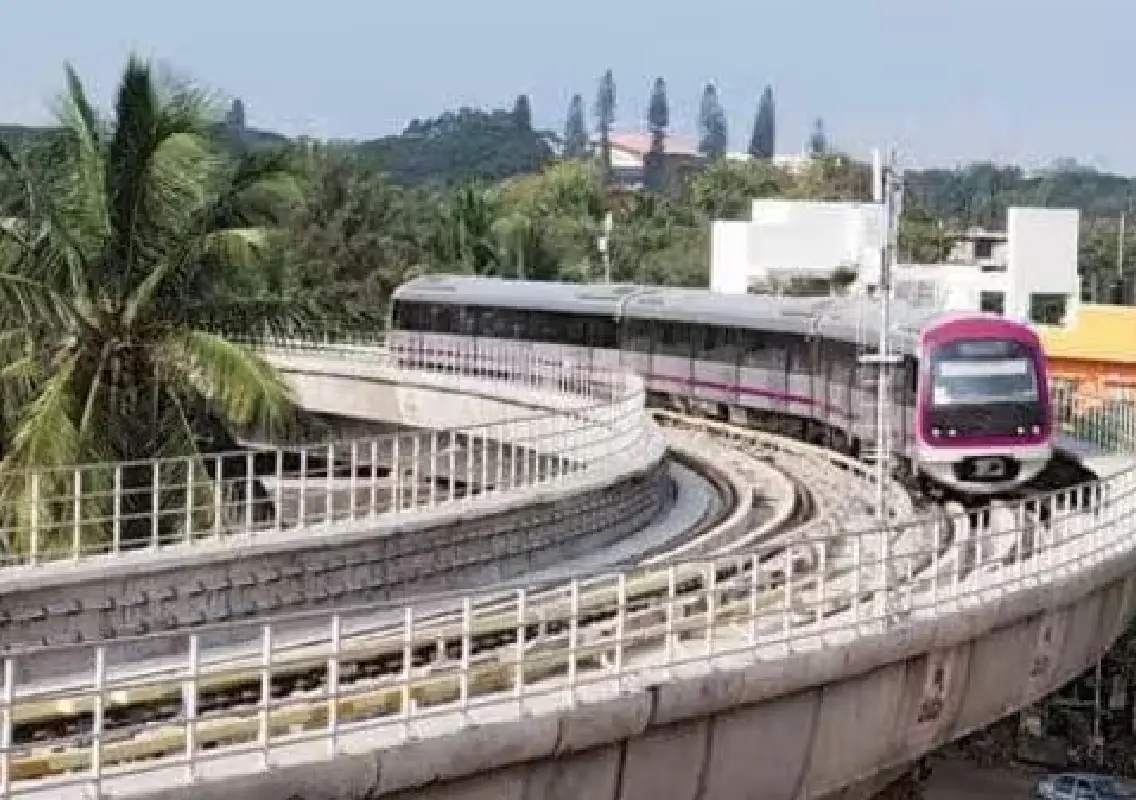


Bengaluru’s Namma Metro has slipped to the third position in India in terms of operational network length, after Mumbai Metro surged ahead with new corridor additions.
According to recent reports, Mumbai’s metro network has crossed the 100-km mark following the commissioning of key stretches, including the Dahisar–Kashigaon corridor and a segment of Line 2B. These additions have significantly improved connectivity to Thane and strengthened links across eastern suburbs.
Mumbai’s rapid growth reshapes rankings
With the latest expansion of nearly 10 km, Mumbai has overtaken Bengaluru in a relatively shorter timeframe. Meanwhile, Delhi Metro continues to dominate as India’s largest network, spanning over 416 km with 303 stations.
In comparison, Namma Metro currently operates around 96 km with 83 stations, including about 19 km added over the past year under the Yellow Line.
Delays impact Bengaluru’s momentum
Despite steady growth since its launch in 2011, Bengaluru’s metro expansion has faced repeated delays. The project began with a 7-km stretch between Byappanahalli and MG Road and has since grown gradually, averaging around 6 km of additions annually.
However, construction delays and a shortage of coaches have slowed progress, particularly on the Yellow Line. At present, trains on this corridor operate at nine-minute intervals during peak hours, with full-scale operations still pending.
Rising traffic adds urgency
The slowdown comes at a time when Bengaluru is witnessing a sharp rise in vehicle numbers. The city’s vehicle count has crossed 1.25 crore, with nearly 2,100 new vehicles being added daily—intensifying the need for efficient public transport solutions.
Expansion plans offer hope
The Bangalore Metro Rail Corporation Limited is now focusing on upcoming projects to regain momentum. A 7-km stretch of the Pink Line from Kalena Agrahara to Tavarekere is expected to be launched by mid-2026, with train sets already received.
Additionally, the Blue Line from Silk Board to KR Pura is targeted for completion in 2026, while its extension to Kempegowda International Airport has been pushed to 2027.
Future outlook remains strong
Once these projects are completed, Bengaluru’s metro network is expected to expand to nearly 175 km, potentially restoring its position among India’s leading metro systems.
For now, however, Mumbai’s rapid expansion has reshaped the rankings, highlighting both the urgency and opportunity for Bengaluru to accelerate its urban mobility plans.