


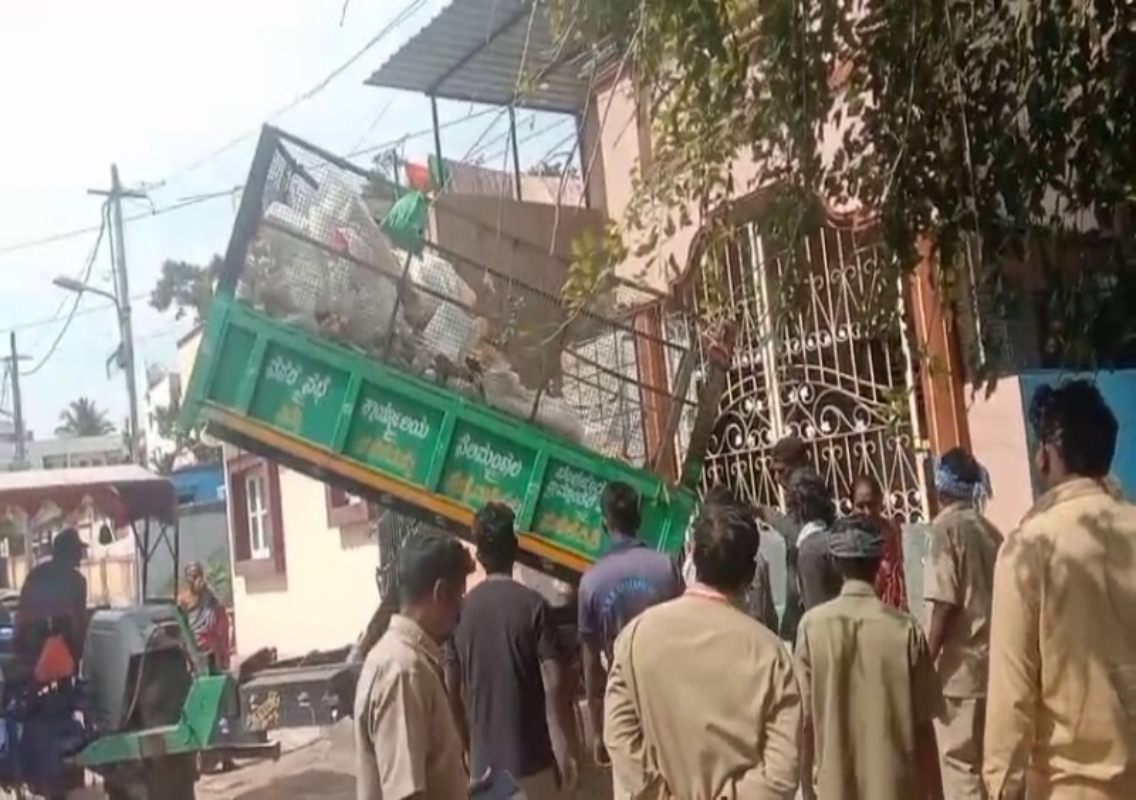


Nelamangala: A dispute over garbage clearance in Weaver’s Colony, Nelamangala, reportedly escalated into a public confrontation after sanitation workers allegedly dumped a tractor-load of waste outside a woman’s house following an argument during a cleaning drive.
The incident involved Puttamma, a resident of Ward 14, and sanitation worker Ashok Kumar. According to reports, the disagreement began when sanitation workers were carrying out cleaning activities near a stormwater drain in the locality.
Dispute begins during cleaning drive
The sanitation workers were reportedly clearing waste and carrying out cleaning work near a stormwater drain when Puttamma allegedly asked them to remove the garbage accumulated in front of her residence first.
Her demand is said to have led to a heated exchange with Ashok Kumar. During the argument, the woman allegedly used abusive language against the sanitation worker, according to the available report.
The disagreement subsequently escalated, with the sanitation workers reportedly bringing a tractor-load of garbage and unloading it outside the woman’s house in response to the confrontation.
The incident has drawn attention in the locality because of the unusual manner in which the dispute was handled. What began as a disagreement over the order of garbage clearance reportedly ended with waste being dumped outside a resident’s home.
The precise sequence of events, including the circumstances surrounding the alleged verbal abuse and the decision to unload the waste, would need to be established through an official inquiry.
Incident puts civic workers and residents in focus
The episode has highlighted the challenges sanitation workers can face while carrying out routine civic duties. Garbage collection, drain cleaning and waste removal are essential services, particularly in residential areas where accumulated waste can affect cleanliness and public health.
Residents, meanwhile, expect waste near their homes to be cleared promptly. When cleaning operations cover several streets or locations, disagreements can arise over which area should be attended to first.
Such concerns are best addressed through communication between residents, sanitation workers and the relevant civic authorities. A clear schedule for garbage collection and a designated grievance mechanism can help prevent minor disagreements from escalating into public confrontations.
Verbal abuse or obstruction, if established, should be addressed through appropriate procedures. Sanitation workers should be able to perform their assigned responsibilities without intimidation, while residents should have a fair channel to raise complaints about delayed or inadequate waste clearance.
Dumping garbage outside a home raises sanitation concerns
The reported decision to unload a tractor-load of garbage outside the residence has also raised questions about the appropriate response to disputes during civic operations.
Dumping waste outside a house can create additional cleanliness problems, potentially attracting stray animals and pests, producing unpleasant odours and obstructing access. Depending on the nature of the waste and local conditions, it may also create public-health concerns.
A disagreement over garbage clearance should therefore be resolved through the relevant municipal or local-body officials rather than through actions that could worsen sanitation conditions.
Authorities can investigate the circumstances, establish whether any rules or service procedures were violated and determine what corrective measures are necessary. If the waste was left outside the residence, its removal would also be important to restore cleanliness in the area.
Official response and further details awaited
The available report did not establish whether Puttamma or the sanitation workers lodged formal complaints with the authorities. It also did not specify whether local civic officials intervened, whether an inquiry was initiated or whether any action was taken following the incident.
Further information from the concerned authorities would be needed to establish the full circumstances and any subsequent developments.
The incident serves as a reminder that effective waste management depends on cooperation between residents and civic workers. Timely garbage clearance, respectful communication and transparent grievance redressal can help prevent routine service-related disagreements from escalating.
Any action taken in the Nelamangala case will need to be assessed on the basis of verified facts and the findings of the concerned authorities.