







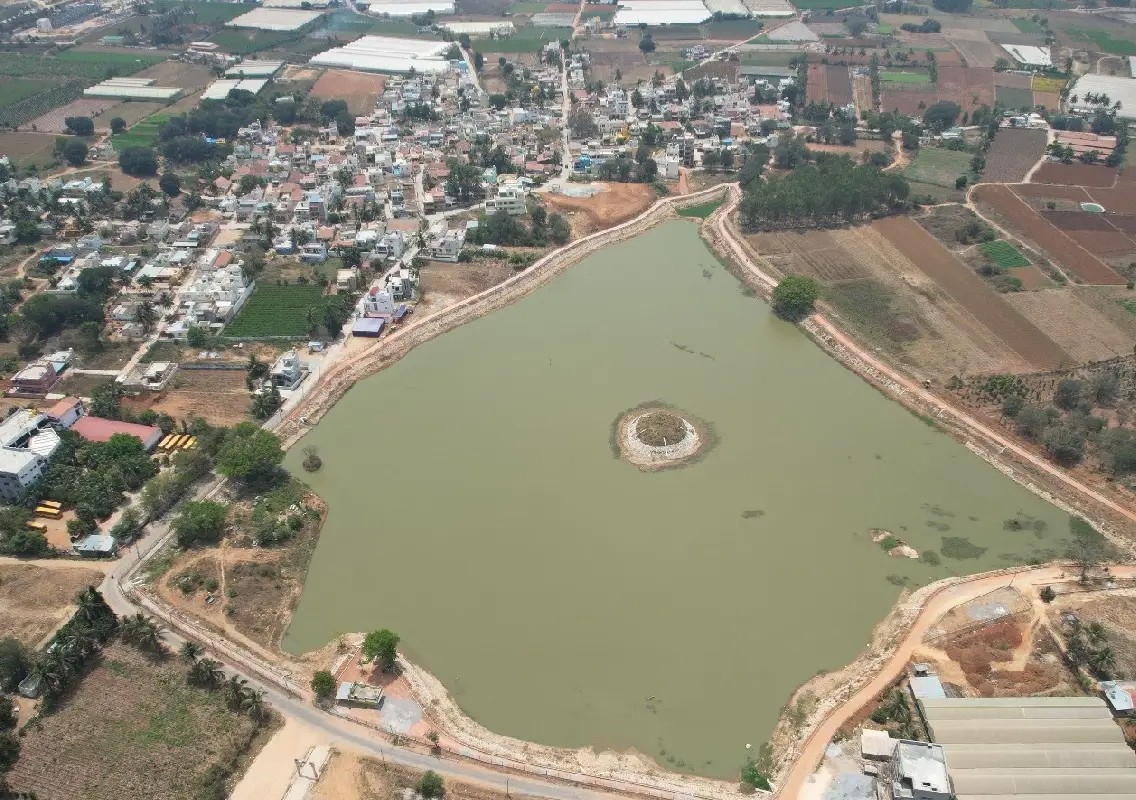


A startling weather analysis has revealed the sheer intensity of Bengaluru’s recent downpour, with 11 cm of rain recorded in just one hour—an amount that could fill nearly two-thirds of the city’s lakes.
Intensity of rainfall shocks experts
According to a report by The Times of India, the volume of rain that fell during the short span was equivalent to filling around 30,000 swimming pools.
Experts noted that such intense rainfall within a brief period puts immense pressure on urban drainage systems, often leading to immediate flooding.
Impact on city infrastructure
The sudden deluge overwhelmed stormwater drains, leading to widespread waterlogging across several parts of the city. Roads were submerged, traffic movement was severely affected, and commuters were stranded during peak hours.
The incident highlighted the limitations of existing infrastructure in handling extreme weather events.
Bengaluru’s lakes under context
The comparison to nearly two-thirds of the city’s lakes underscores the magnitude of the rainfall. With many lakes already under stress due to urbanisation, such heavy inflow within a short time can disrupt natural water management systems.
Climate patterns and urban challenges
Experts point out that changing climate patterns are leading to more intense and unpredictable rainfall events. Cities like Bengaluru, with rapid urban expansion and reduced natural drainage, are particularly vulnerable.
Need for resilient planning
The incident has strengthened calls for improved stormwater management, lake rejuvenation, and climate-resilient urban planning. Authorities are being urged to adopt long-term strategies to better handle such extreme weather events in the futur