







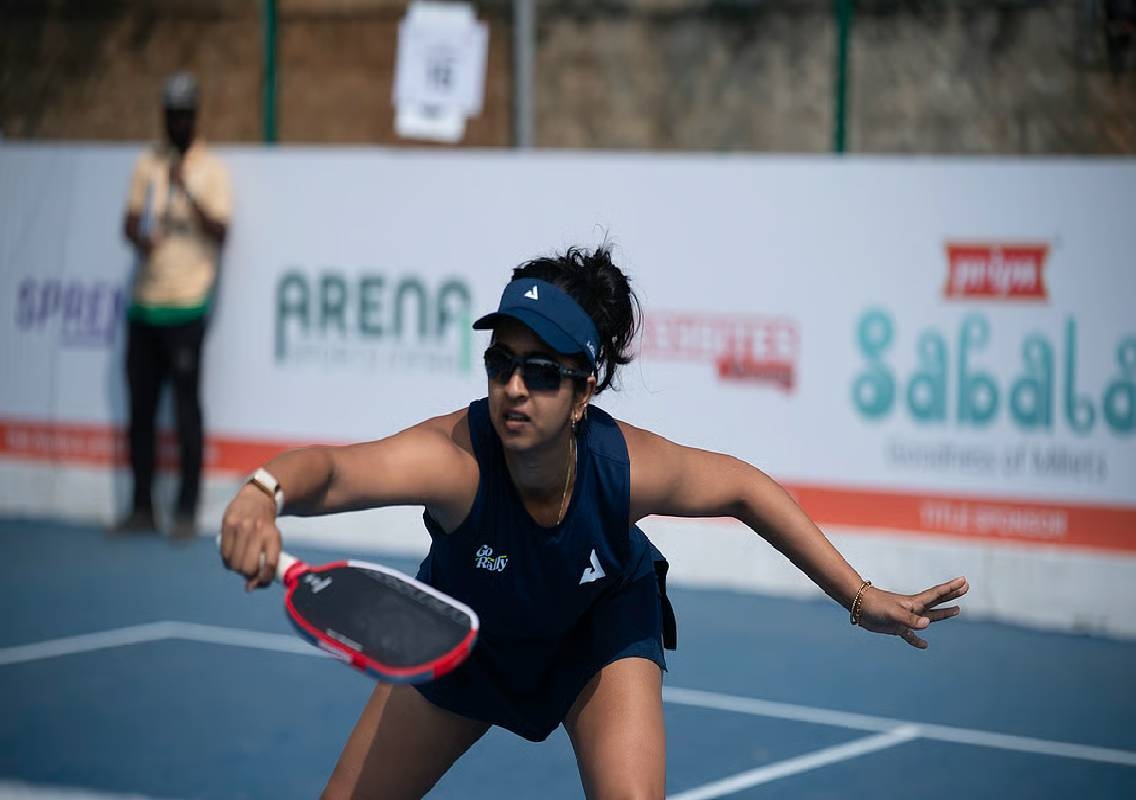


Bengaluru: As pickleball rapidly gains popularity across India, professional players Sharmada Balu and Anup Basti say the sport is evolving from a recreational activity into a serious professional career option.
Speaking during the ongoing Centre Court Pickleball League in Bengaluru, both players reflected on their journeys into the sport, the rise of competitive pickleball in India and the opportunities now opening up for athletes through franchise-based leagues.
The Centre Court Pickleball League, described as Bengaluru’s first franchise-style pickleball competition, has brought together former racquet sport professionals, amateur enthusiasts and emerging players, highlighting the growing ecosystem around the sport.
From tennis courts to pickleball arenas
Former South Asian Games gold medallist Sharmada Balu admitted that she was initially sceptical when she first encountered pickleball. Having spent years competing professionally in tennis, she did not expect the sport to become a major part of her career.
However, things changed quickly after she participated in a neighbourhood tournament.
“I won the first time I played and I loved competing so much,” Balu said.
At the time, the former tennis player had decided to step away from competitive tennis and was exploring opportunities to remain connected to sports professionally.
“Pickleball fell into my lap at the perfect time,” she said.
Balu explained that athletes transitioning from professional tennis naturally gain certain advantages in pickleball due to fitness, movement and stroke-making abilities. However, she noted that higher-level pickleball demands a completely different strategic mindset.
“The transition is smooth because you’re fitter, quicker and your strokes are cleaner. But when you start competing at higher levels, it gets tougher because many players come from professional racquet sport backgrounds,” she said.
According to Balu, one of the biggest adjustments involved changing her natural tennis instincts.
“You’ve been trained your whole life to hit the ball hard, but in pickleball, you need to slow things down, stay calm and attack only at certain moments. I struggled with that initially,” she added.
Bengaluru’s pickleball community growing rapidly
Balu is currently captaining the Rally Renegades team in the Centre Court Pickleball League and said the response from Bengaluru audiences has been encouraging.
The team won four of its six matches on the opening day across singles and mixed doubles categories.
“We have a highly motivated group and everyone is in sync,” she said.
She also praised the support from spectators, revealing that around 1,200 people attended the opening day matches.
“The community around pickleball in Bengaluru is lovely, and this league has definitely elevated the sport’s presence in the city,” Balu remarked.
The rise of organised leagues and professional setups has significantly boosted the visibility of pickleball in urban centres such as Bengaluru, Mumbai, Chennai and Hyderabad over the past two years.
International exposure changing Indian players
Meanwhile, English Pickleball Open gold medallist Anup Basti described his international tournament experience as “life-changing”.
Basti, who comes from a state-level table tennis background, participated in the English Pickleball Open after encouragement from a friend and eventually won gold in the singles category.
Recalling the scale of the event, he said the competition featured around 2,500 participants and nearly 60 courts operating simultaneously.
“Playing an international tournament is not easy, especially when you are not formally trained. Most of my learning came through practice, videos and my table tennis background,” Basti said.
He believes Indian players have become highly competitive internationally because of the country’s strong racquet sports culture.
“The quality of Indian players is very good because we already grow up with racquet sports,” he explained.
At the same time, Basti noted that international competitions often require adapting to unusual playing styles and intense mental battles.
“There are unorthodox players from different sports backgrounds. Some players are aggressive or loud, so you need to adapt quickly. Pickleball is a mental game too,” he said.
According to him, Indian players often carry an underdog mentality that pushes them to compete harder.
“Indian players don’t quit easily. We always want to prove a point,” he added.
Franchise leagues creating professional opportunities
Basti also highlighted how franchise-based pickleball leagues are changing the sport professionally in India.
Unlike many amateur tournaments where only winners receive prize money, the new franchise model ensures players are paid for participation.
“It’s a huge commitment to train every week, especially when many players also work full-time jobs,” Basti said.
He added that some players are now earning between ₹10,000 and ₹1.5 lakh through league auctions and contracts.
“Earlier, many competitions were unpaid. Now players are getting proper opportunities, along with access to trainers and physiotherapists,” he said.
The growing financial structure around pickleball is encouraging more athletes to pursue the sport seriously, while also attracting former professionals from tennis, badminton and table tennis.
With leagues such as Centre Court Pickleball drawing crowds and sponsorship attention, players believe the sport is entering a new phase in India’s sporting landscape.
As interest continues to rise among younger audiences and recreational players, both Balu and Basti feel pickleball could soon become one of the country’s fastest-growing competitive sports.