









Bengaluru: Decks have finally been cleared for key train trials on the Pink Line of Namma Metro after the Railway Board granted approval for conducting tests by the Research Designs and Standards Organisation.
The clearance was received by Bangalore Metro Rail Corporation Limited on Friday, marking a crucial milestone for the long-awaited metro corridor. A team from RDSO is expected to arrive in Bengaluru on April 24, with trials likely to commence shortly thereafter.
Crucial trials to determine operational readiness
The upcoming trials are expected to last at least 10 days and will include a comprehensive set of tests such as oscillation, braking performance, speed validation, and track as well as system integration checks.
These trials are mandatory before any new metro train can be cleared for passenger operations. Without certification from RDSO, the trains cannot be deployed on the network.
The Pink Line trains have been manufactured by BEML, a Bengaluru-based rolling stock manufacturer. So far, five rakes comprising six coaches each have been delivered. The first prototype train was supplied in December.
Delay due to technical approvals
Sources indicated that RDSO trials were delayed earlier due to queries raised by the Railway Board regarding certain technical aspects of the train design. These issues needed clarification and approval before testing could proceed.
With the clearance now in place, the trial phase is set to move forward, bringing the project closer to completion.
Multi-stage approval process ahead
Following successful trials, RDSO will issue a detailed report along with a speed certificate. This certification will then be submitted to the Commissioner of Metro Rail Safety for inspection and approval.
Subsequently, the CMRS will conduct a statutory inspection of the metro line before granting permission for passenger operations. Additionally, Independent Safety Assessment (ISA) certification will be required for signalling and train control systems.
Officials estimate that the entire process—from RDSO trials to final CMRS approval—will take at least two months.
May deadline unlikely for Pink Line section
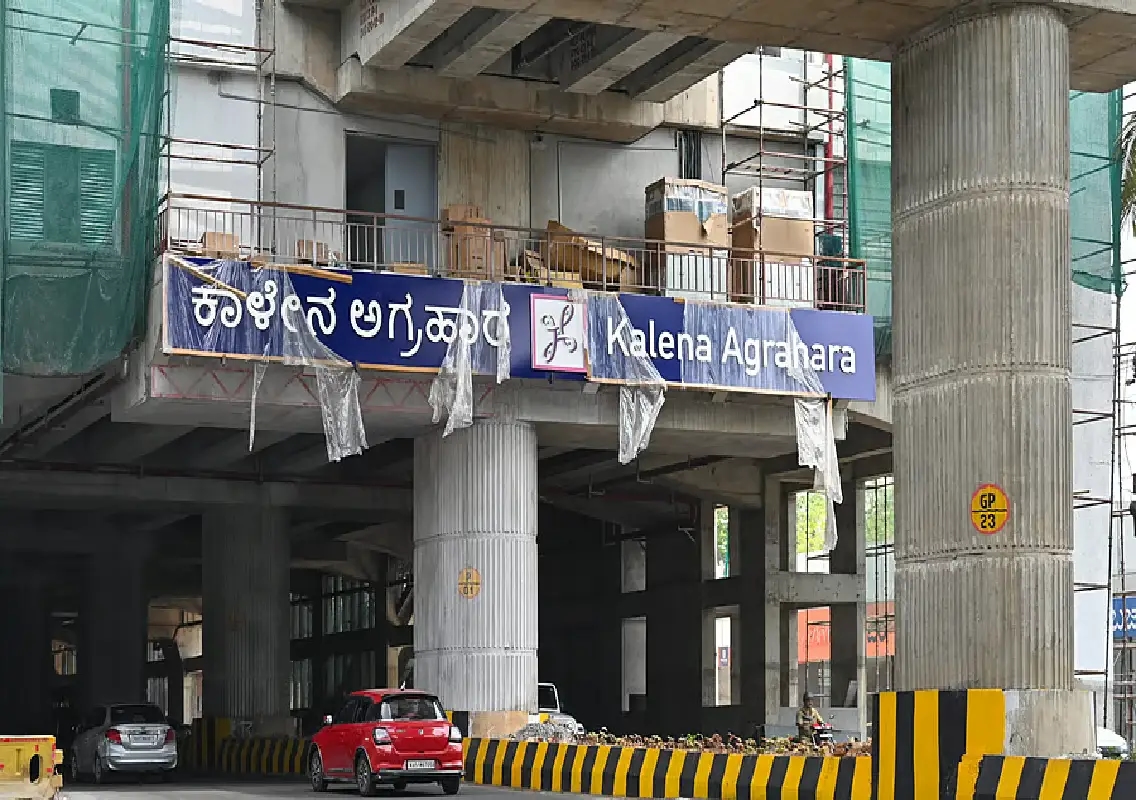
Given the timeline, the previously expected May-end launch of the 7.5-km elevated stretch between Kalena Agrahara and Taverekere is unlikely to be met.
The stretch is strategically important as it will improve connectivity along Bannerghatta Road and create Bengaluru’s third metro interchange at Jayadeva Hospital.
With five trains expected to operate on the route initially, peak-hour frequency is projected to be around five minutes, significantly easing traffic congestion in the area.
Network expansion and future plans
The opening of this elevated section will expand the operational length of the Namma Metro network to 103.6 km, allowing Bengaluru to reclaim its position as the second-largest metro network in India, ahead of Mumbai.
Meanwhile, architectural finishing works at six elevated stations are nearing completion. The larger 13.75-km underground stretch of the Pink Line, running between Dairy Circle and Nagawara, is currently targeted for opening in December.
Conclusion
The approval for RDSO trials marks a significant step forward for Bengaluru’s Pink Line metro project. While delays may push back the initial launch timeline, the progress indicates steady movement towards enhanced urban mobility. Once operational, the Pink Line is expected to play a crucial role in improving connectivity and reducing congestion in one of the city’s busiest corridors.