







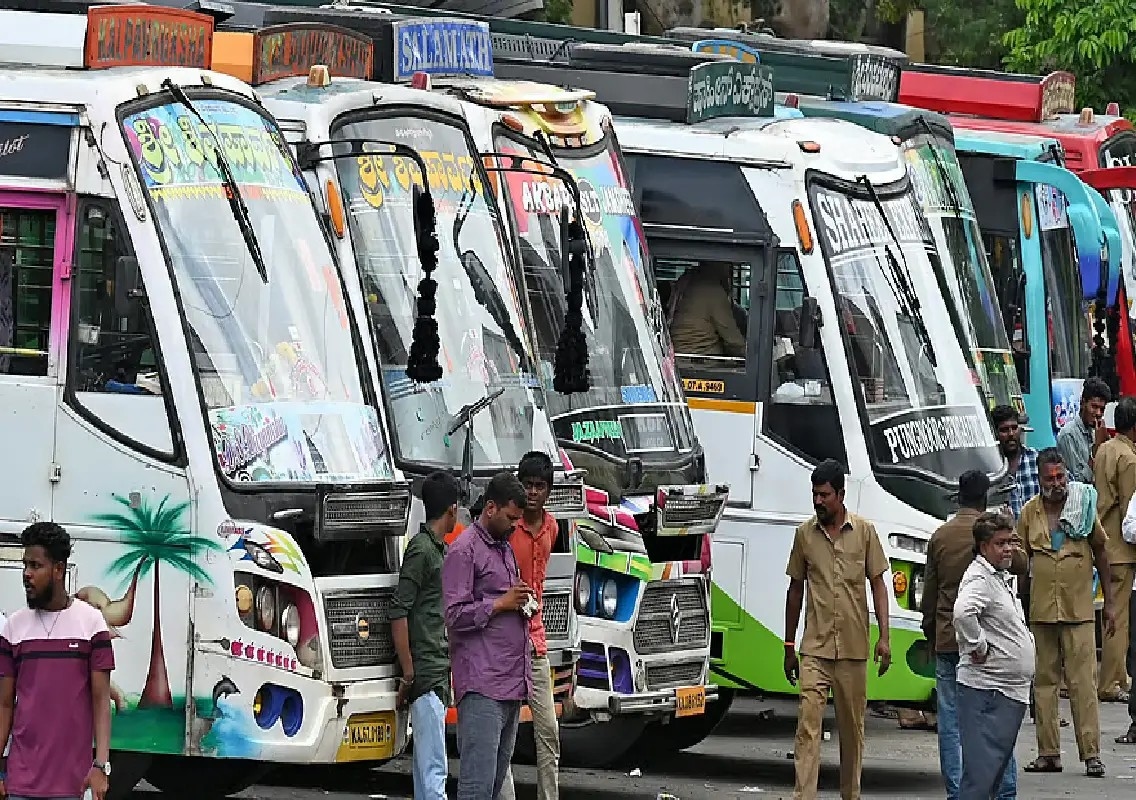


Bengaluru: Private bus operators across Karnataka are set to increase passenger fares by 10 to 20 per cent from May 20 following the recent rise in diesel prices and increasing operational costs. While some operators have already introduced revised pricing on select routes, the fare hike is expected to come into effect more widely across the state later this week.
The increase is expected to affect daily travellers and long-distance passengers who rely heavily on private bus services, particularly on high-demand routes connecting major cities.
Operators cite increasing fuel and operating costs
Transport operators stated that the revision has become necessary due to increasing diesel prices and mounting operational expenses.
According to industry representatives, the Bengaluru–Mangaluru route has already witnessed fare increases on some booking platforms. Ticket prices that were previously around Rs 899 have reportedly increased to between Rs 1,100 and Rs 1,200.
Representatives from transport associations said long-distance journeys covering around 300 to 400 kilometres may witness fare increases ranging from Rs 150 to Rs 200.
T G Chandra Shekar said fare adjustments are being made while taking future market fluctuations into account.
Industry bodies also indicated that further fuel price changes in the coming days could affect transport costs.
Government says stage carriage operators cannot revise fares
Meanwhile, Ramalinga Reddy clarified that only operators holding All India Tourist Permits are currently increasing fares.
According to the minister, operators functioning under state-issued stage carriage permits will not be permitted to independently revise ticket prices.
He also said the government is closely monitoring the situation.
Reddy further stated that there is currently no proposal to increase fares for buses operated by Karnataka State Road Transport Corporation despite potential financial pressures.
Officials indicated that maintaining affordable public transport remains a priority.
Associations highlight growing financial burden
The Federation of Karnataka State Private Bus Association defended the proposed hike, stating that operating under previous fare structures had become financially difficult.
S Nataraj Sharma stated that increasing fuel prices are only one part of the broader financial challenge faced by operators.
According to industry representatives, a recent increase of around 5 per cent in toll charges has also affected operating margins.
Bus owners additionally pointed to quarterly road taxes ranging between Rs 1 lakh and Rs 1.9 lakh, along with maintenance costs and employee-related expenses.
Operators explained that long-distance buses generally consume around 150 litres of diesel per trip. The recent fuel price increase has reportedly resulted in additional expenses ranging from Rs 450 to Rs 1,000 per journey.
Associations also claimed that reduced fuel discounts and supply-related issues at private fuel stations have further increased costs.
Passengers express concern over additional expenses
The proposed fare revision has triggered concern among passengers, particularly among those who travel frequently between cities for work or family reasons.
Many commuters said long-distance travel expenses are already increasing due to inflation and other living costs.
Passengers travelling on busy routes such as Bengaluru–Mangaluru noted that government buses often experience high demand and bookings can fill up quickly, making private buses an important travel option.
Industry representatives also pointed to the impact of the Shakti scheme, stating that free travel facilities available in state-run buses have affected passenger movement patterns and revenue generation for private operators.
With the revised fares expected to come into effect from May 20, passengers and transport operators are now closely watching developments regarding fuel prices and future transport policies.