







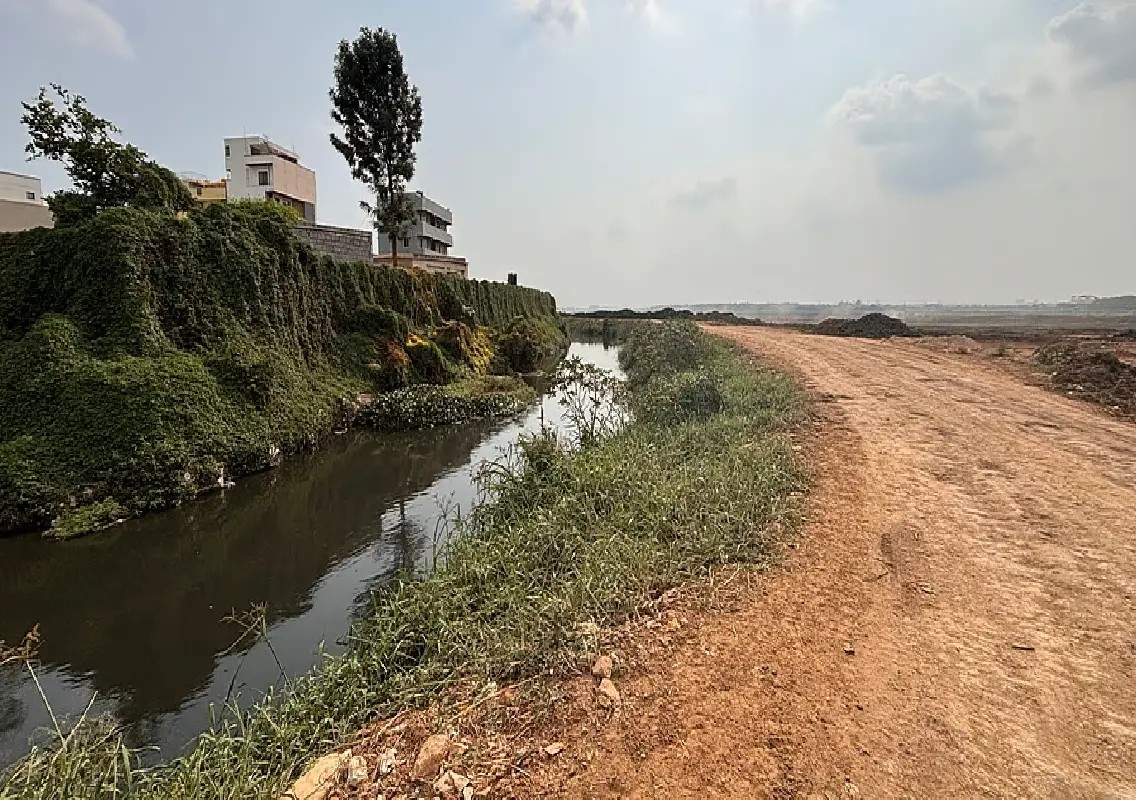


Bengaluru: Rainwater is set to flow back into Bellandur Lake nearly five years after the Bangalore Development Authority (BDA) blocked the natural inflow as part of the large-scale lake rejuvenation project. However, concerns remain over untreated sewage and industrial effluents entering the waterbody due to inadequate sewage treatment infrastructure upstream.
The development is expected to provide significant relief to residents living around the 906-acre Bellandur Lake, particularly in areas heavily dependent on borewell water. Experts believe the return of rainwater inflow could help improve groundwater recharge levels, which have steadily declined over recent summers.
At the same time, environmentalists and civic activists have raised concerns regarding the quality of water likely to enter the lake, pointing out that untreated sewage continues to flow through upstream stormwater drains.
Desilting work reaches advanced stage
A senior engineer from the Bangalore Development Authority stated that nearly 92 per cent of the desilting work at Bellandur Lake has been completed.
According to officials, around 35 lakh tonnes of silt have already been removed from the lakebed in accordance with tender conditions. However, desilting work still remains pending across nearly 70 acres of the lake area.
The BDA has reportedly sought additional funding from the government to complete the remaining portions of the rejuvenation project.
Officials said the authority is currently constructing a bund, also known as a coffer dam, to separate the already desilted portions of the lake from areas where work is still in progress. This is intended to prevent inflowing water from entering sections that have not yet been cleared.
Inlet work completed in Koramangala Valley
BDA engineers stated that inlet-related work in the Koramangala Valley has already been completed, while similar work is currently underway in the Challaghatta Valley.
During a recent site visit, several earthmovers were reportedly seen operating across the lakebed as part of the ongoing rejuvenation activities.
Officials said much of the silt removed from the lake had initially been utilised for constructing temporary sewage diversion channels and roads required for transporting excavated material. Large quantities of silt have also been dumped along the lake periphery and adjoining areas.
The Bellandur Lake rejuvenation project, which began in 2021, is estimated to cost around Rs 350 crore.
Untreated sewage remains major concern
Despite the progress in desilting work, concerns persist regarding untreated sewage entering the lake once rainwater inflow resumes.
Officials acknowledged that the diversion drain near the lake continues to carry sewage, highlighting gaps in the preparedness of the Bangalore Water Supply and Sewerage Board (BWSSB) to fully treat wastewater entering the lake system.
A BWSSB official stated that the existing Bellandur Sewage Treatment Plant (STP) currently lacks sufficient capacity to process all sewage flowing through the stormwater drains connected to the lake.
The officer added that an additional 60 MLD-capacity sewage treatment plant is under construction but is expected to become operational only after two years.
Environmentalists have warned that unless untreated sewage inflow is completely stopped, the rejuvenation exercise may fail to restore the ecological health of the lake.
Experts question effectiveness of project
Environmentalist Yellappa Reddy questioned whether the claimed quantity of silt had actually been removed entirely from the lake premises.
He alleged that a considerable portion of the silt appeared to have been dumped along the lake periphery and that only cosmetic improvements had been made to parts of the lakebed.
According to Reddy, complete desilting and restoration of Bellandur Lake could take several more years due to the enormous scale of the waterbody and the logistics involved in transporting toxic sludge.
He stressed that the primary focus should be on preventing sewage discharge and garbage dumping into the lake before other beautification measures are undertaken.
Long-term ecological restoration planned
As part of the rejuvenation contract, private agency RMN Infrastructure Ltd has been assigned multiple responsibilities including removal of toxic sludge, construction of wetlands, diversion channels for sewage, strengthening of embankments, landscaping and tree plantation.
Authorities said the overall objective of the project is to restore Bellandur Lake’s ecological balance while improving groundwater recharge and reducing flooding risks in surrounding areas.
Residents living near the lake are hopeful that restoration efforts will eventually improve water quality, groundwater availability and environmental conditions in one of Bengaluru’s most polluted and controversial waterbodies.
However, experts maintain that long-term success will depend heavily on effective sewage treatment, strict monitoring and sustained maintenance efforts in the coming years.